Department of Pediatrics, The First Hospital Affiliated to Bengbu Medical College, Bengbu, Anhui, China (mainland).
Department of Children's Health Care, The First Affiliated Hospital of Nanjing Medical University, Jiangsu Maternity and Child Care Hospital, Nanjing, Jiangsu, China (mainland).
Med Sci Monit. 2019 Mar 13;25:1886-1893. doi: 10.12659/MSM.912774.
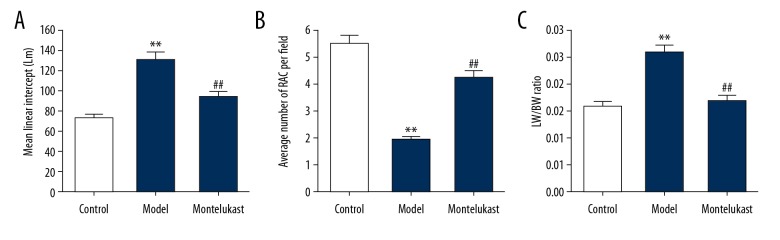
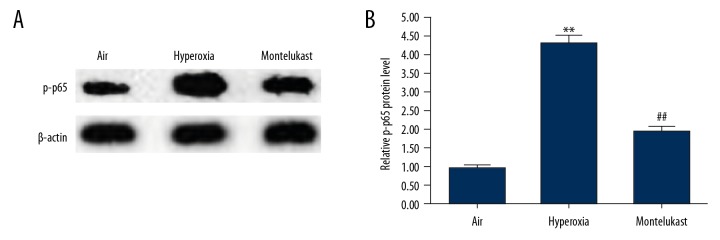
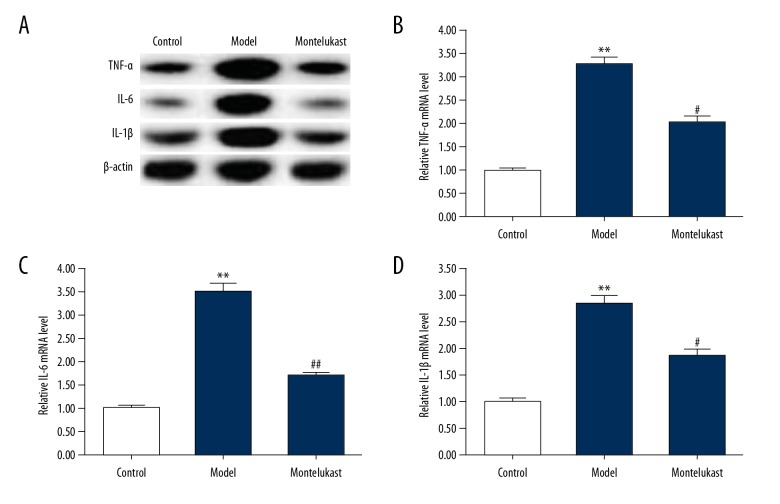
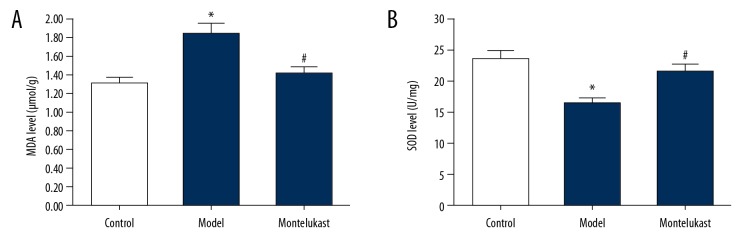
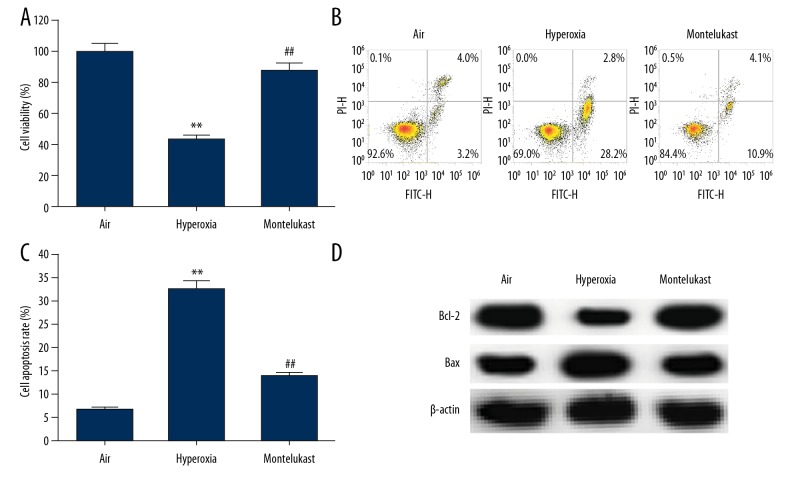
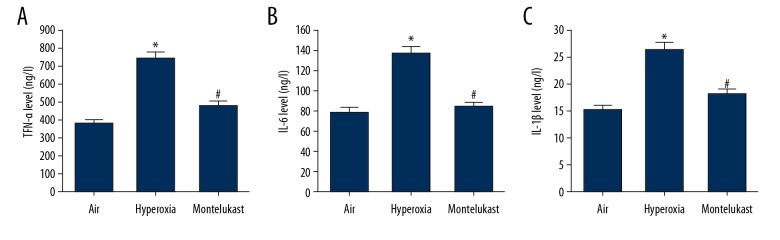
BACKGROUND Bronchopulmonary dysplasia (BPD) is a chronic lung disease common in preterm infants. Montelukast, an effective cysteinyl leukotriene (cysLT) receptor antagonist, has a variety of pharmacological effects and has protective effects against a variety of diseases. Currently, the efficacy and safety of montelukast sodium in treating BPD has been revealed, however, the precise molecular mechanism of the effect of montelukast on BPD development remain largely unclear. Therefore, this study aimed to investigate the effect and mechanism of montelukast on BPD in vivo and in vitro. MATERIAL AND METHODS A mouse BPD model and hyperoxia-induced lung cell injury model were established and treated with montelukast. Then mean linear intercept (MLI), radial alveolar count (RAC), lung weight/body weight (LW/BW) ratio, pro-inflammatory factors, and oxidative stress-related factors in lung tissues were determined. Cell viability and apoptosis were detected using MTT assay and flow cytometer respectively. RESULTS The results showed that montelukast treatment relieved mouse BPD, evidenced by increased RAC and decreased MLI and LW/BW ratios. We also found that montelukast treatment reduced pro-inflammatory factors (TNF-alpha, IL-6, and IL-1ß) production, enhanced superoxide dismutase (SOD) activity, and reduced malondialdehyde (MDA) content in the lung tissues of BPD mice. Besides, montelukast eliminated the reduced cell viability and enhanced cell apoptosis induced by hyperoxia exposure in vitro. Moreover, the upregulated pro-inflammatory factors production and p-p65 protein level in lung cells caused by hyperoxia were decreased by montelukast treatment. CONCLUSIONS Montelukast protected against mouse BPD induced by hyperoxia through inhibiting inflammation, oxidative stress, and lung cell apoptosis.
支气管肺发育不良(BPD)是一种常见于早产儿的慢性肺部疾病。孟鲁司特是一种有效的半胱氨酰白三烯(cysLT)受体拮抗剂,具有多种药理学作用,并对多种疾病具有保护作用。目前,孟鲁司特钠治疗 BPD 的疗效和安全性已经得到证实,然而,孟鲁司特对 BPD 发展的确切作用机制仍很大程度上不清楚。因此,本研究旨在探讨孟鲁司特在体内和体外对 BPD 的作用及其机制。
建立了小鼠 BPD 模型和高氧诱导的肺细胞损伤模型,并给予孟鲁司特治疗。然后测定肺组织中平均线性截距(MLI)、肺泡计数(RAC)、肺重/体重(LW/BW)比、促炎因子和氧化应激相关因子。使用 MTT 法和流式细胞术分别检测细胞活力和细胞凋亡。
孟鲁司特治疗缓解了小鼠 BPD,表现为 RAC 增加和 MLI 和 LW/BW 比值降低。我们还发现,孟鲁司特治疗降低了 BPD 小鼠肺组织中促炎因子(TNF-α、IL-6 和 IL-1β)的产生,增加了超氧化物歧化酶(SOD)的活性,降低了丙二醛(MDA)的含量。此外,孟鲁司特消除了高氧暴露引起的体外细胞活力降低和细胞凋亡增加。此外,高氧引起的肺细胞中促炎因子产生增加和 p-p65 蛋白水平升高被孟鲁司特治疗所降低。
孟鲁司特通过抑制炎症、氧化应激和肺细胞凋亡,对高氧诱导的小鼠 BPD 起到保护作用。