Institute of Agrobiological Sciences, National Agriculture and Food Research Organization (NARO), Tsukuba, Ibaraki, 305-8634, Japan.
Tea Research Center, Shizuoka Research Institute of Agriculture and Forestry, Kurasawa, Kikugawa, Shizuoka, 439-0002, Japan.
Sci Rep. 2019 Mar 12;9(1):4203. doi: 10.1038/s41598-019-40863-5.
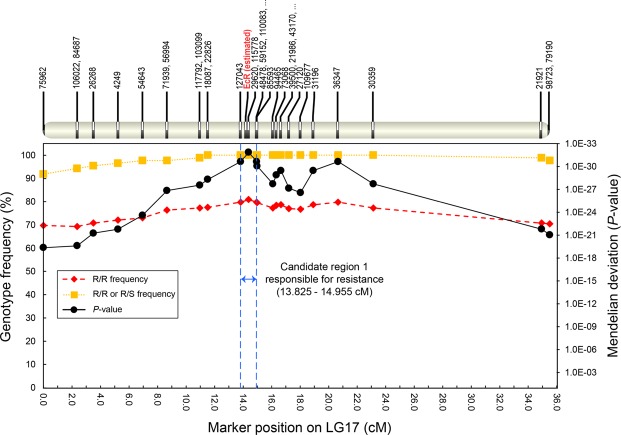
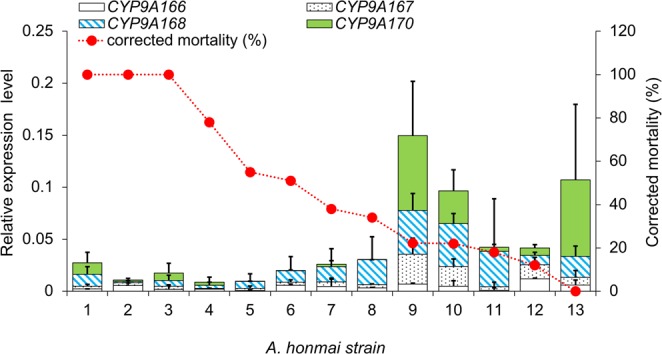
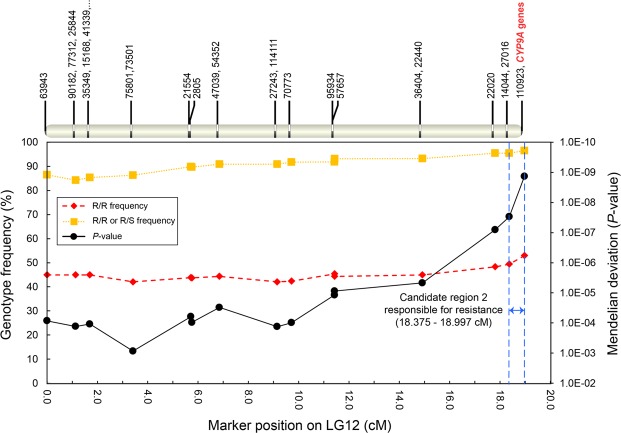
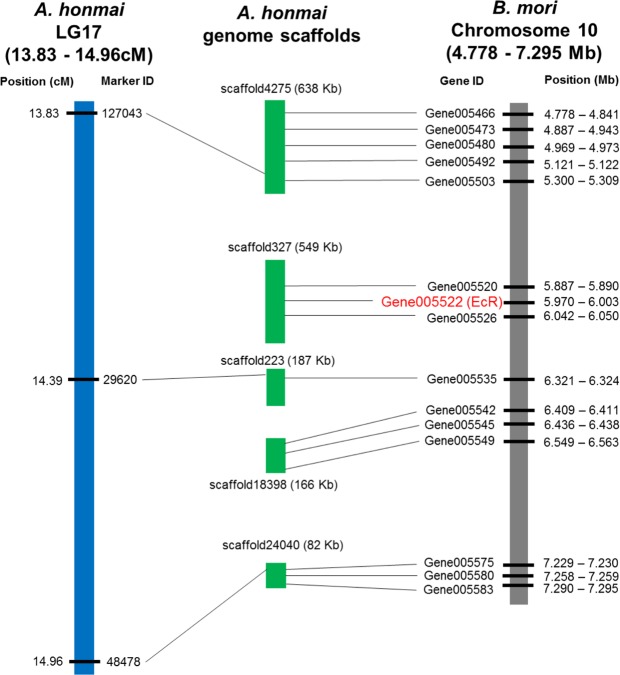
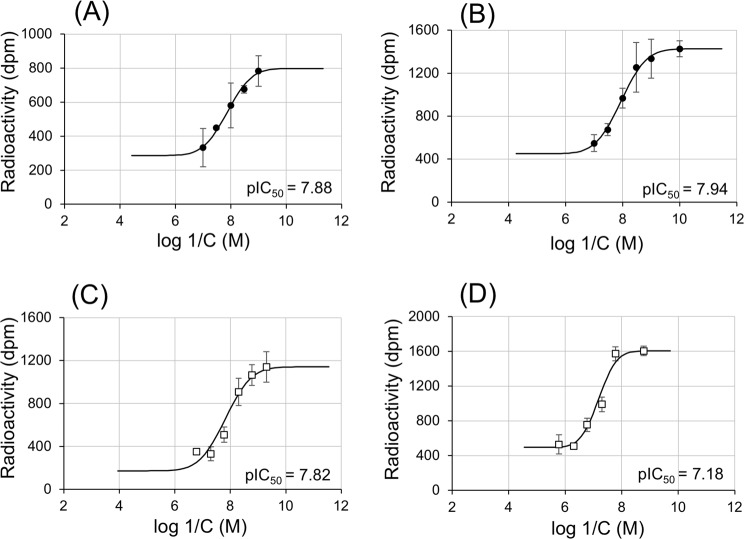
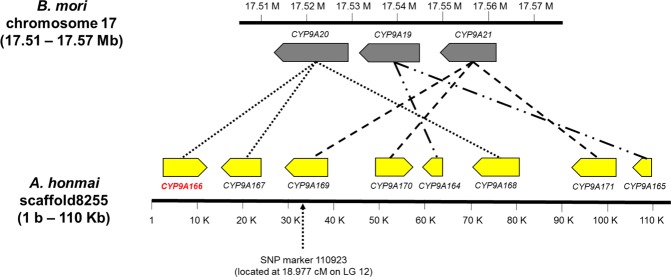
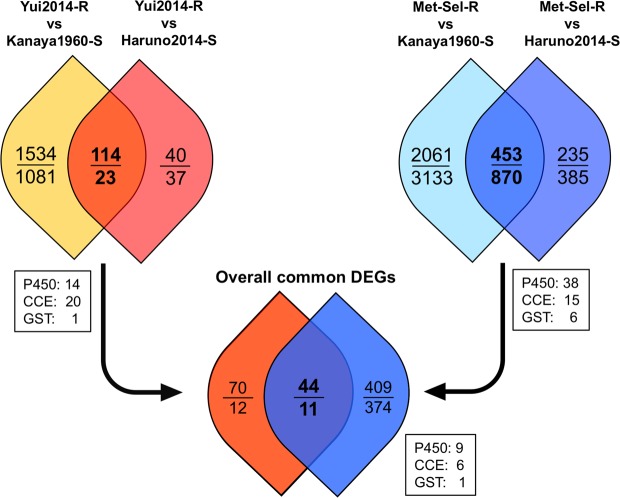
The smaller tea tortrix, Adoxophyes honmai, has developed strong resistance to tebufenozide, a diacylhydrazine-type (DAH) insecticide. Here, we investigated its mechanism by identifying genes responsible for the tebufenozide resistance using various next generation sequencing techniques. First, double-digest restriction site-associated DNA sequencing (ddRAD-seq) identified two candidate loci. Then, synteny analyses using A. honmai draft genome sequences revealed that one locus contained the ecdysone receptor gene (EcR) and the other multiple CYP9A subfamily P450 genes. RNA-seq and direct sequencing of EcR cDNAs found a single nucleotide polymorphism (SNP), which was tightly linked to tebufenozide resistance and generated an amino acid substitution in the ligand-binding domain. The binding affinity to tebufenozide was about 4 times lower in in vitro translated EcR of the resistant strain than in the susceptible strain. RNA-seq analyses identified commonly up-regulated genes in resistant strains, including CYP9A and choline/carboxylesterase (CCE) genes. RT-qPCR analysis and bioassays showed that the expression levels of several CYP9A and CCE genes were moderately correlated with tebufenozide resistance. Collectively, these results suggest that the reduced binding affinity of EcR is the main factor and the enhanced detoxification activity by some CYP9As and CCEs plays a supplementary role in tebufenozide resistance in A. honmai.
小菜蛾(Adoxophyes honmai)对哒螨灵(一种二酰肼类杀虫剂)产生了很强的抗性。在这里,我们使用各种下一代测序技术,通过鉴定对哒螨灵产生抗性的相关基因,研究了其产生抗性的机制。首先,双酶切限制位点相关 DNA 测序(ddRAD-seq)鉴定出了两个候选基因座。然后,使用小菜蛾基因组草案序列进行的同线性分析表明,一个基因座包含蜕皮激素受体基因(EcR)和多个 CYP9A 亚家族 P450 基因。EcR cDNA 的 RNA-seq 和直接测序发现了一个单核苷酸多态性(SNP),该 SNP 与哒螨灵抗性紧密相关,并导致配体结合域中的氨基酸取代。与敏感株相比,抗性株中体外翻译的 EcR 对哒螨灵的结合亲和力降低了约 4 倍。RNA-seq 分析鉴定出了抗性株中常见的上调基因,包括 CYP9A 和胆碱/羧酸酯酶(CCE)基因。RT-qPCR 分析和生物测定表明,几种 CYP9A 和 CCE 基因的表达水平与哒螨灵抗性中度相关。总的来说,这些结果表明,EcR 的结合亲和力降低是主要因素,一些 CYP9A 和 CCE 的解毒活性增强在小菜蛾对哒螨灵的抗性中发挥了辅助作用。