Computational Biophysics and Molecular Modeling Group. Scientific Computing Program (PROCC), Fundação Oswaldo Cruz, Rio de Janeiro, 21040-222, Brazil.
Laboratory of Functional Genomics and Bioinformatics, Oswaldo Cruz Institute, Fundação Oswaldo Cruz, Rio de Janeiro, 21040-360, Brazil.
Sci Rep. 2019 Mar 12;9(1):4197. doi: 10.1038/s41598-019-40875-1.
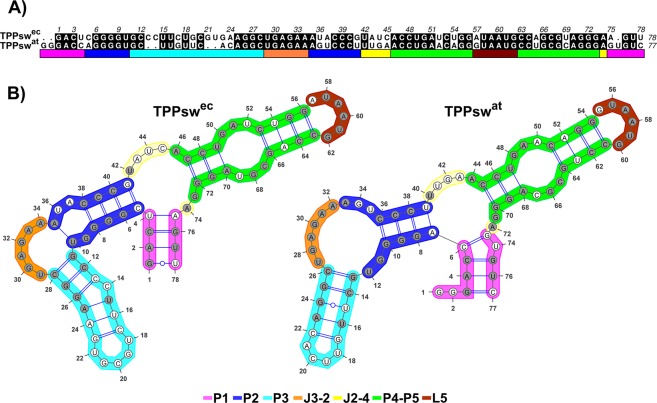
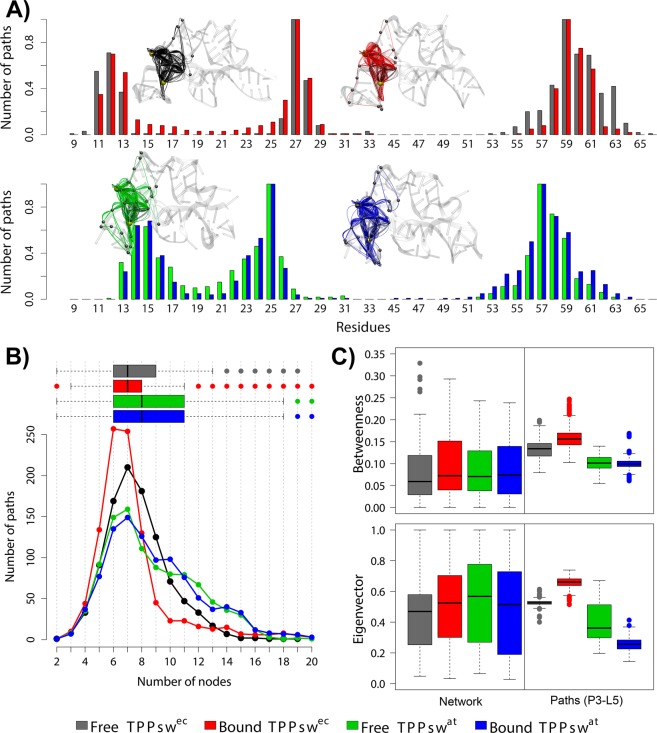
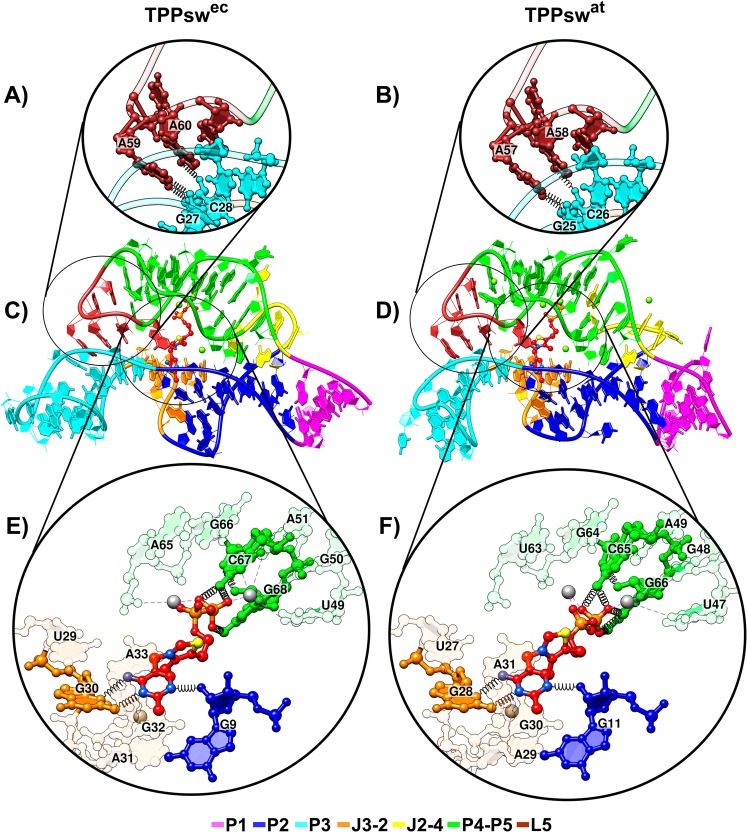
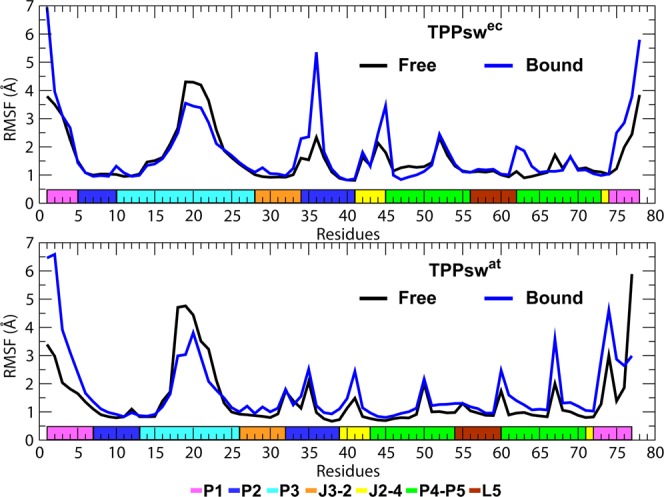
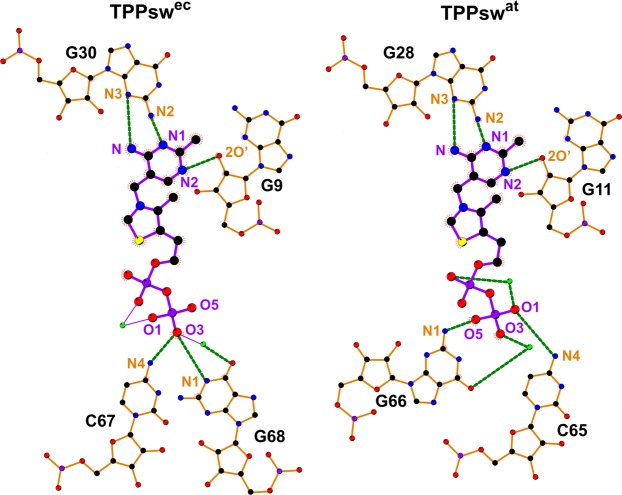
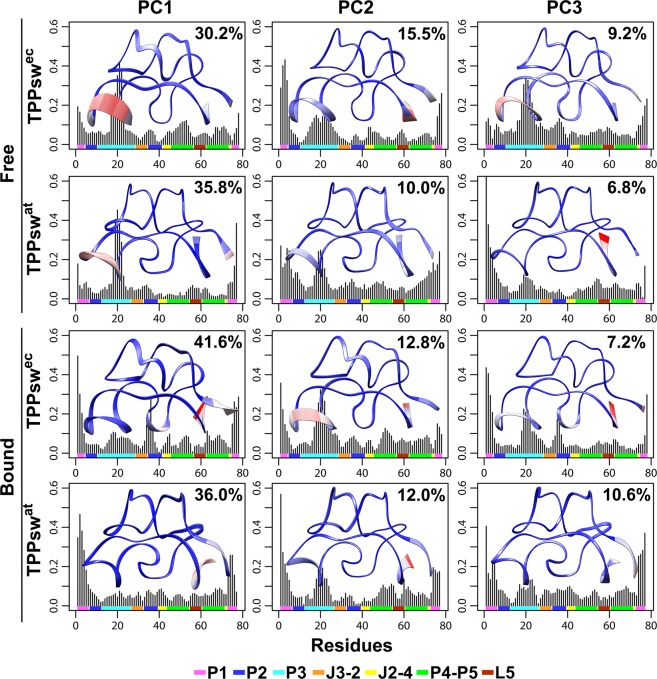
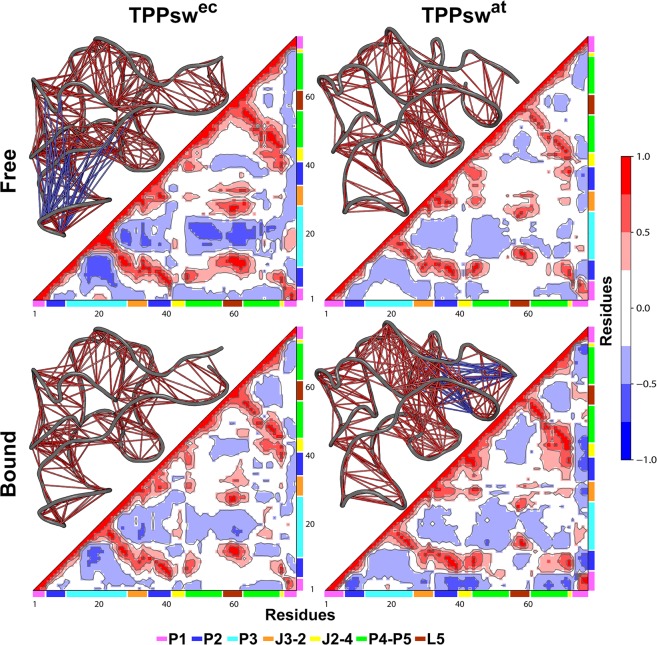
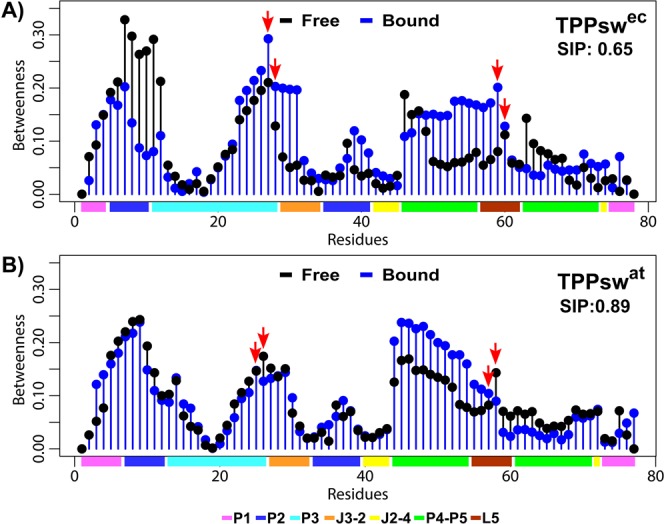
Riboswitches are RNA sensors that affect post-transcriptional processes through their ability to bind to small molecules. Thiamine pyrophosphate (TPP) riboswitch class is the most widespread riboswitch occurring in all three domains of life. Even though it controls different genes involved in the synthesis or transport of thiamine and its phosphorylated derivatives in bacteria, archaea, fungi, and plants, the TPP aptamer has a conserved structure. In this study, we aimed at understanding differences in the structural dynamics of TPP riboswitches from Escherichia coli and Arabidopsis thaliana, based on their crystallographic structures (TPPsw and TPPsw, respectively) and dynamics in aqueous solution, both in apo and holo states. A combination of Molecular Dynamics Simulations and Network Analysis empowered to find out slight differences in the dynamical behavior of TPP riboswitches, although relevant for their dynamics in bacteria and plants species. Our results suggest that distinct interactions in the microenvironment surrounding nucleotide U36 of TPPsw (and U35 in TPPsw) are related to different responses to TPP. The network analysis showed that minor structural differences in the aptamer enable enhanced intramolecular communication in the presence of TPP in TPPsw, but not in TPPsw. TPP riboswitches of plants present subtler and slower regulation mechanisms than bacteria do.
Riboswitches 是一类 RNA 传感器,能够通过结合小分子来影响转录后过程。硫胺素焦磷酸(TPP)riboswitch 类是存在于所有生命三大领域中最广泛的 riboswitch。尽管它控制着细菌、古菌、真菌和植物中与硫胺素及其磷酸化衍生物的合成或运输有关的不同基因,但 TPP aptamer 具有保守的结构。在这项研究中,我们旨在基于 TPP riboswitches 的晶体结构(分别为 TPPsw 和 TPPsw)和在水溶液中的动力学,包括 apo 和 holo 状态,来理解大肠杆菌和拟南芥 TPP riboswitches 的结构动力学差异。分子动力学模拟和网络分析的结合使我们能够发现 TPP riboswitches 动力学中的细微差异,尽管这些差异与它们在细菌和植物物种中的动力学有关。我们的结果表明,TPPsw 中核苷酸 U36(TPPsw 中的 U35)周围微环境中的不同相互作用与对 TPP 的不同响应有关。网络分析表明,在 TPPsw 中,适体中的微小结构差异能够在存在 TPP 的情况下增强分子内通信,但在 TPPsw 中则不行。与细菌相比,植物的 TPP riboswitches 具有更微妙和更缓慢的调节机制。