Ma Chao, Gao Tao, Ju Jun, Zhang Yi, Ni Qianwei, Li Yun, Zhao Zhenyan, Chai Juan, Yang Xiangming, Sun Moyi
State Key Laboratory of Military Stomatology, National Clinical Research Center for Oral Diseases, Shaanxi Clinical Research Center for Oral Diseases, Department of Oral and Maxillofacial Surgery, School of Stomatology, The Fourth Military Medical University, Xi'an, Shaanxi, China,
Department of Stomatology, The First Hospital of Yu Lin, Yu Lin, Shaanxi, China.
Onco Targets Ther. 2019 Feb 21;12:1475-1495. doi: 10.2147/OTT.S190847. eCollection 2019.
Perineural invasion (PNI) is reported to correlate with local recurrence and poor prognosis of salivary adenoid cystic carcinoma (SACC). However, the pathogenesis of PNI remains unclear. The aims of this study were to investigate the correlation between sympathetic innervation and SACC PNI and to elucidate how the sympathetic neurotransmitter norepinephrine (NE) regulates the PNI process.
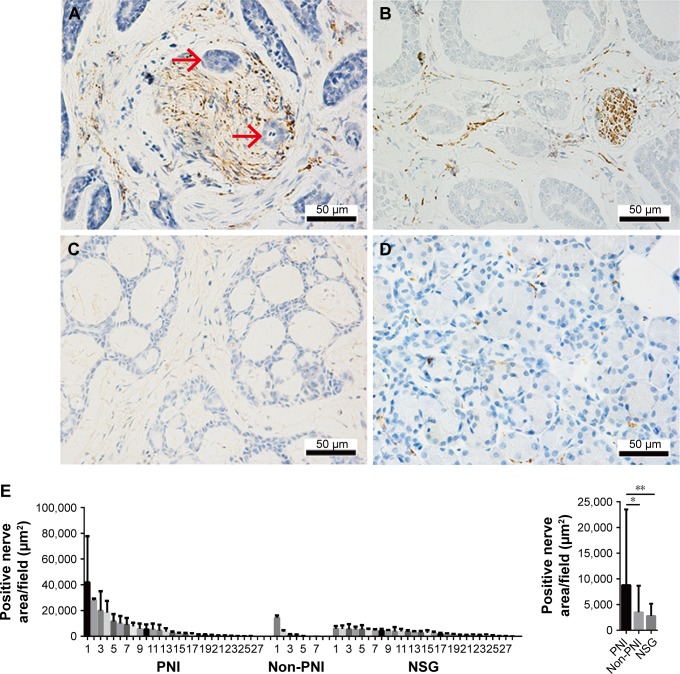
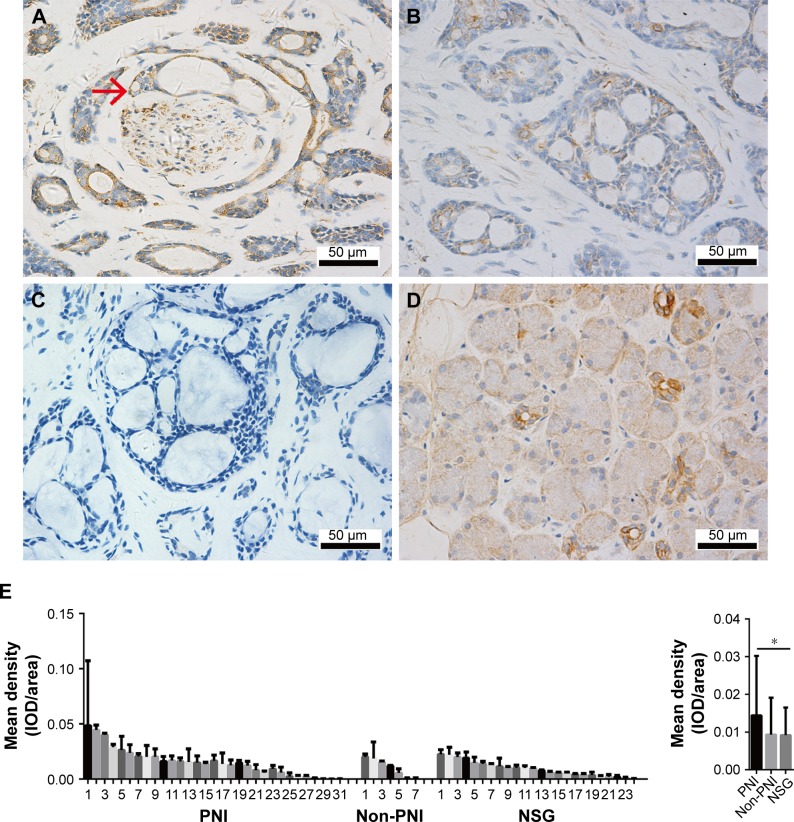
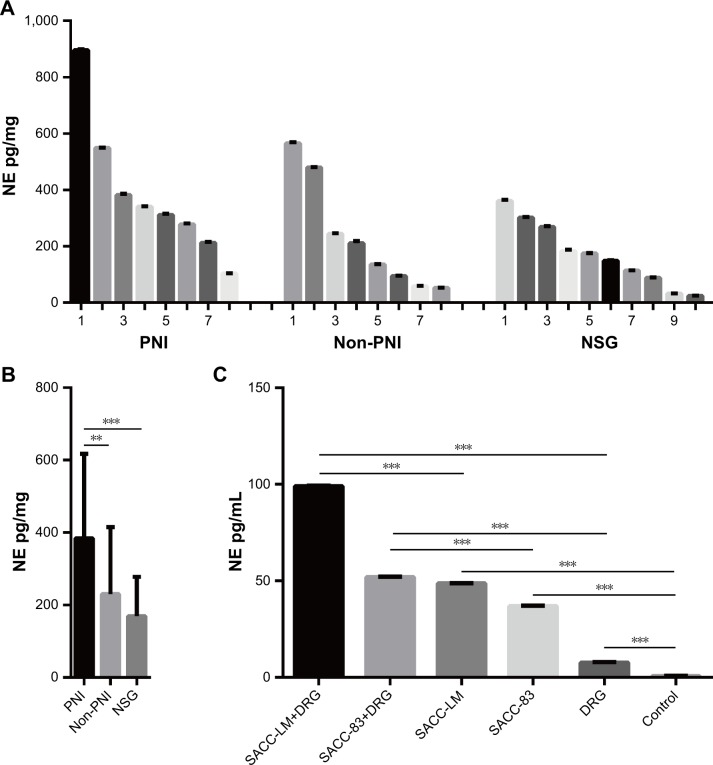
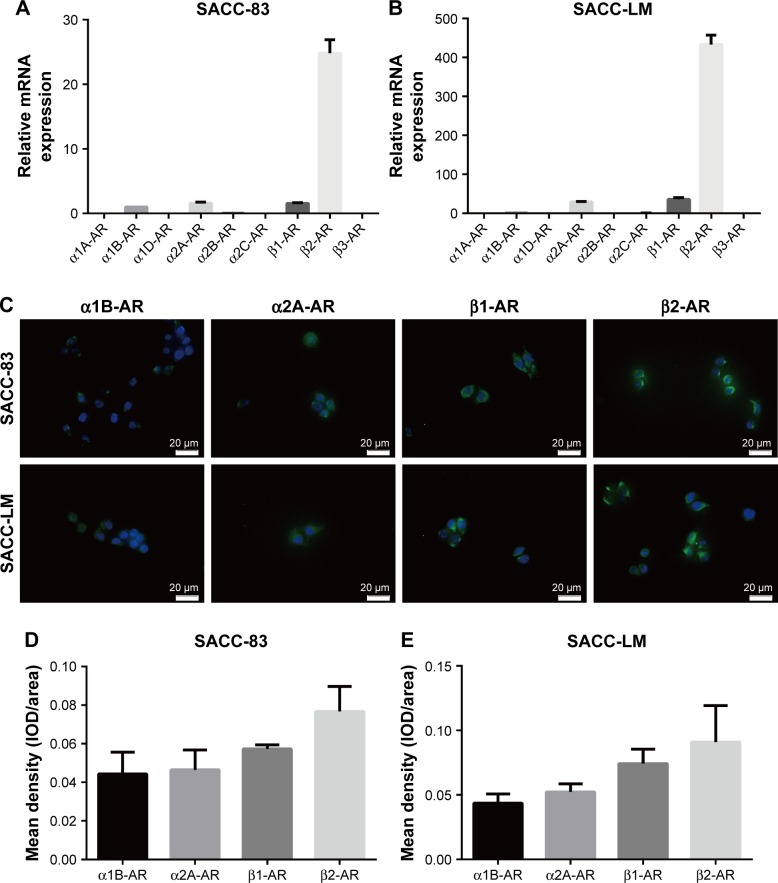
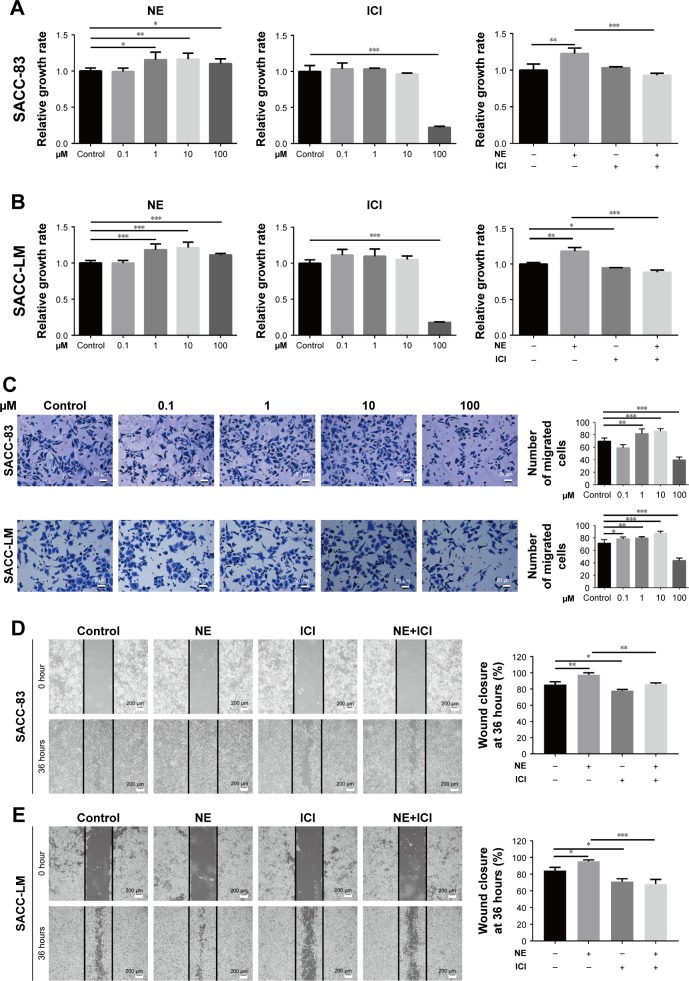
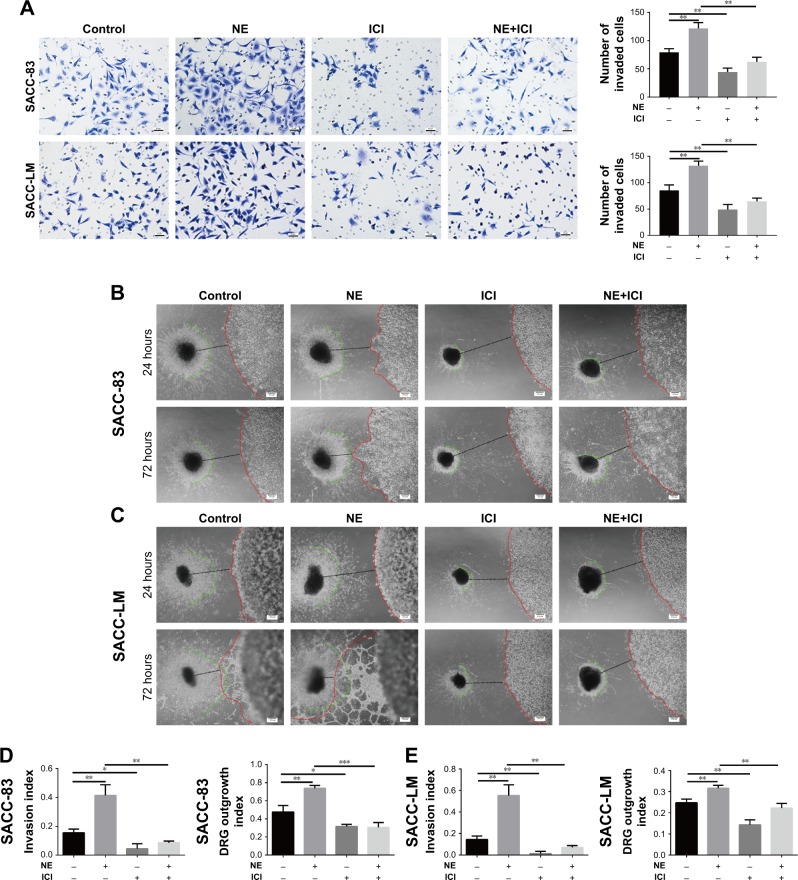
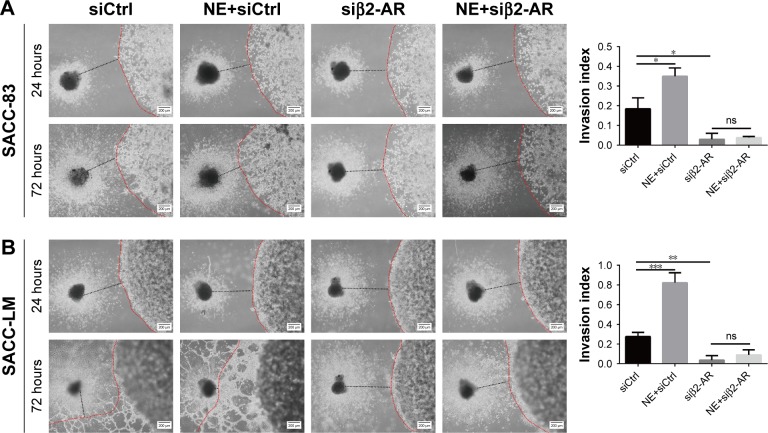
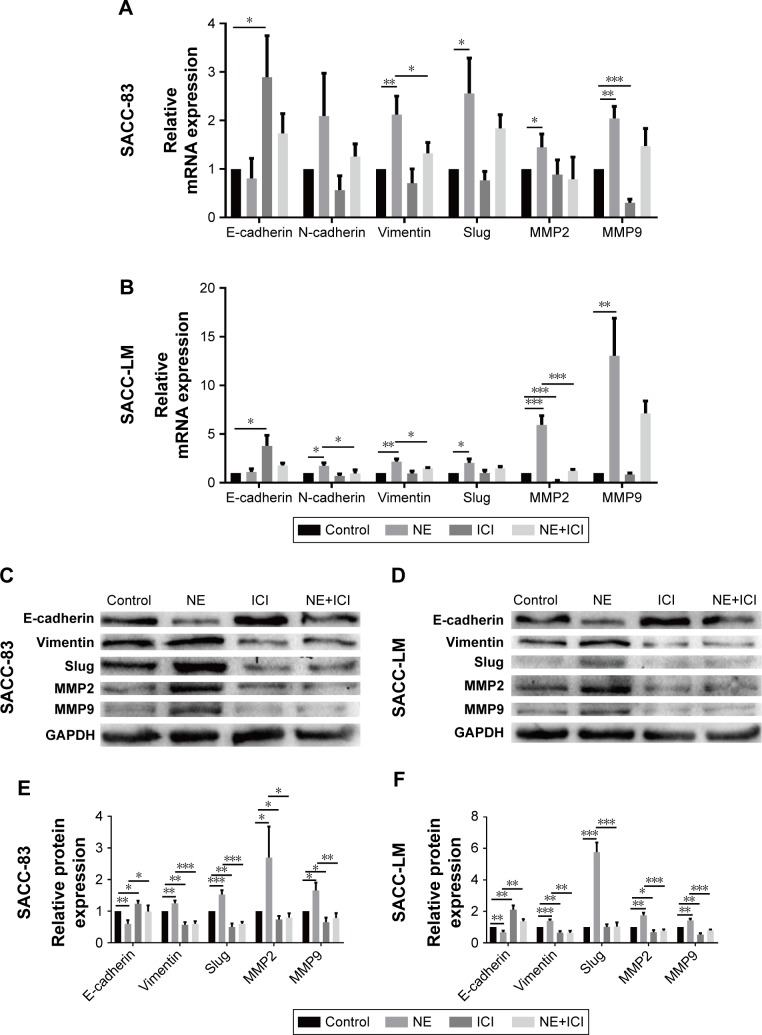
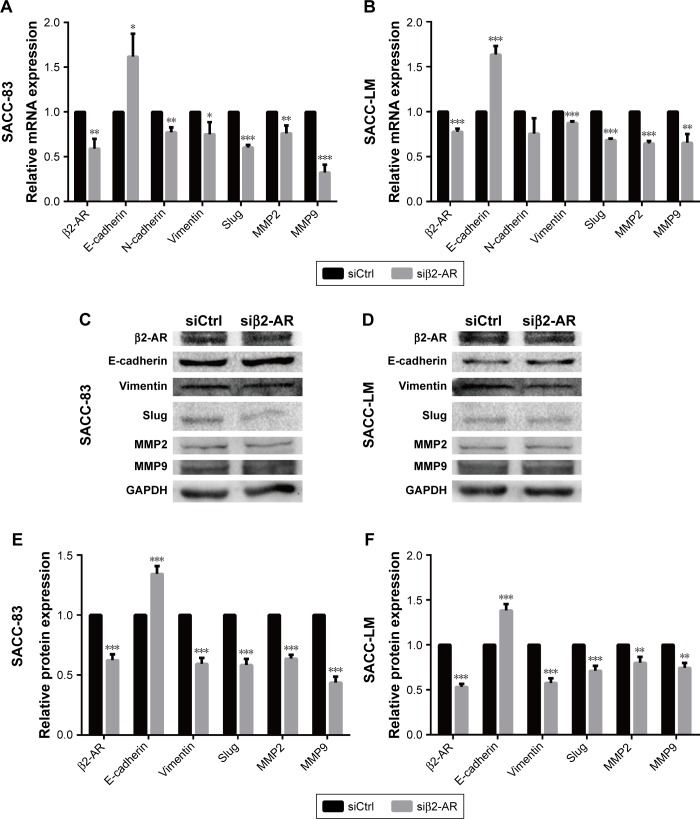
Sympathetic innervation and β2-adrenergic receptor (β2-AR) expression in SACC tissues were evaluated by immunohistochemistry. The NE concentrations in SACC tissues and dorsal root ganglia (DRG) coculture models were measured by ELISA. β2-AR expression in SACC cells was detected by performing quantitative real-time polymerase chain reaction (qRT-PCR) and immunofluorescence assay. SACC cells were treated with NE, the nonselective α-AR blocker phentolamine, the β2-AR antagonist ICI118,551, or were transfected with β2-AR small interfering RNA (siRNA). Proliferation was evaluated in methyl thiazolyl tetrazolium assay, and migration was evaluated in Transwell assay and wound-healing assay. PNI was tested through both Transwell assay and a DRG coculture model. The expressions of epithelial-mesenchymal transition (EMT) markers and matrix metalloproteinases (MMPs) were measured by performing qRT-PCR and Western blot assay.
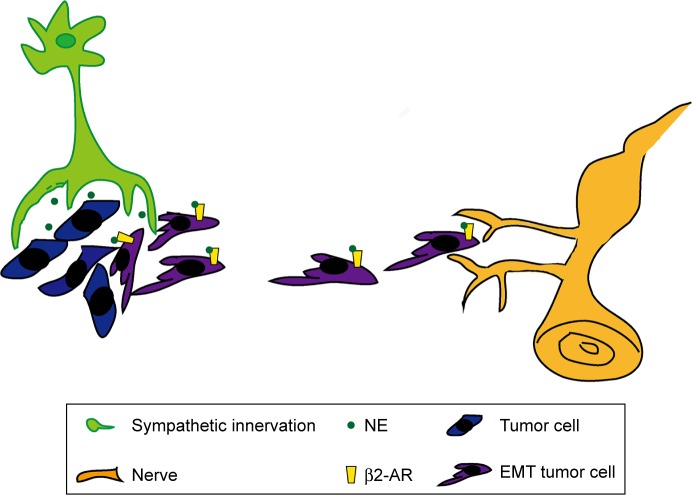
Sympathetic innervation and β2-AR were highly distributed in SACC tissues and correlated positively with PNI (=0.035 and =0.003, respectively). The sympathetic neurotransmitter NE was overexpressed in SACC tissues and DRG coculture models. Exogenously added NE promoted proliferation, migration, and PNI of SACC cells via β2-AR activation. NE/β2-AR signaling may promote proliferation, migration, and PNI by inducing EMT and upregulating MMPs. However, β2-AR inhibition with either an antagonist or siRNA abrogated NE-induced PNI.
Collectively, our findings reveal the supportive role of sympathetic innervation in the pathogenesis of SACC PNI and suggest β2-AR as a potential therapeutic target for treating PNI in SACC.
据报道,神经周侵犯(PNI)与涎腺腺样囊性癌(SACC)的局部复发及不良预后相关。然而,PNI的发病机制仍不清楚。本研究旨在探讨交感神经支配与SACC的PNI之间的相关性,并阐明交感神经递质去甲肾上腺素(NE)如何调节PNI过程。
采用免疫组织化学法评估SACC组织中的交感神经支配及β2-肾上腺素能受体(β2-AR)表达。采用酶联免疫吸附测定法(ELISA)检测SACC组织及背根神经节(DRG)共培养模型中的NE浓度。通过定量实时聚合酶链反应(qRT-PCR)及免疫荧光测定法检测SACC细胞中的β2-AR表达。用NE、非选择性α-AR阻滞剂酚妥拉明、β2-AR拮抗剂ICI118,551处理SACC细胞,或用β2-AR小干扰RNA(siRNA)转染SACC细胞。采用甲基噻唑基四氮唑法评估细胞增殖,采用Transwell法及伤口愈合试验评估细胞迁移。通过Transwell法及DRG共培养模型检测PNI。采用qRT-PCR及蛋白质印迹法检测上皮-间质转化(EMT)标志物及基质金属蛋白酶(MMPs)的表达。
交感神经支配及β2-AR在SACC组织中高度分布,且与PNI呈正相关(分别为=0.035及=0.003)。交感神经递质NE在SACC组织及DRG共培养模型中过表达。外源性添加的NE通过激活β2-AR促进SACC细胞的增殖、迁移及PNI。NE/β2-AR信号传导可能通过诱导EMT及上调MMPs促进增殖、迁移及PNI。然而,用拮抗剂或siRNA抑制β2-AR可消除NE诱导的PNI。
总体而言,我们的研究结果揭示了交感神经支配在SACC的PNI发病机制中的支持作用,并提示β2-AR作为治疗SACC中PNI的潜在治疗靶点。