Yang Xi-Hu, Ding Liang, Fu Yong, Chen Sheng, Zhang Lei, Zhang Xiao-Xin, Huang Xiao-Feng, Lu Zhan-Yi, Ni Yan-Hong, Hu Qin-Gang
Department of Oral and Maxillofacial Surgery, Nanjing Stomatological Hospital, Medical School of Nanjing University, Nanjing, Jiangsu 210000, China,
Central Laboratory of Stomatology, Nanjing Stomatological Hospital, Medical School of Nanjing University, Nanjing, Jiangsu 210000, China,
Cancer Manag Res. 2019 Feb 13;11:1465-1472. doi: 10.2147/CMAR.S192500. eCollection 2019.
This was a retrospective analysis of the impact of the expression of p53 in the dys-plastic surgical margins of early oral squamous cell carcinoma (OSCC) (pT1-2, N0).
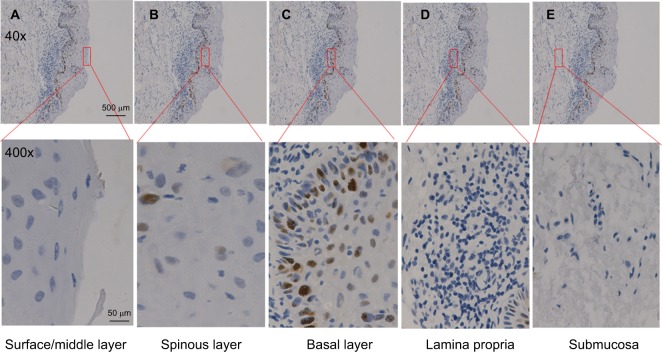
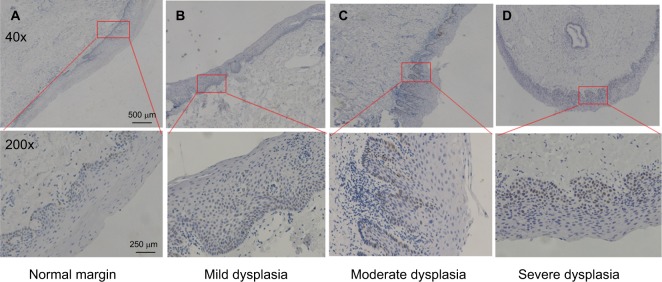
Seventy-two patients with early oral squamous cell carcinoma (OSCC) were recruited. Margin characteristics were abstracted from the pathology report. Expression of p53 in dysplastic surgical margins was examined with the immunohistochemical method and was correlated with clinicopathological parameters and clinical outcomes.
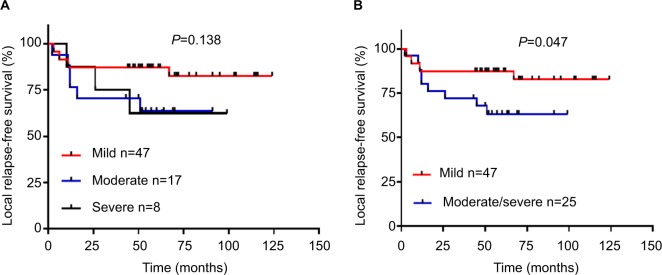
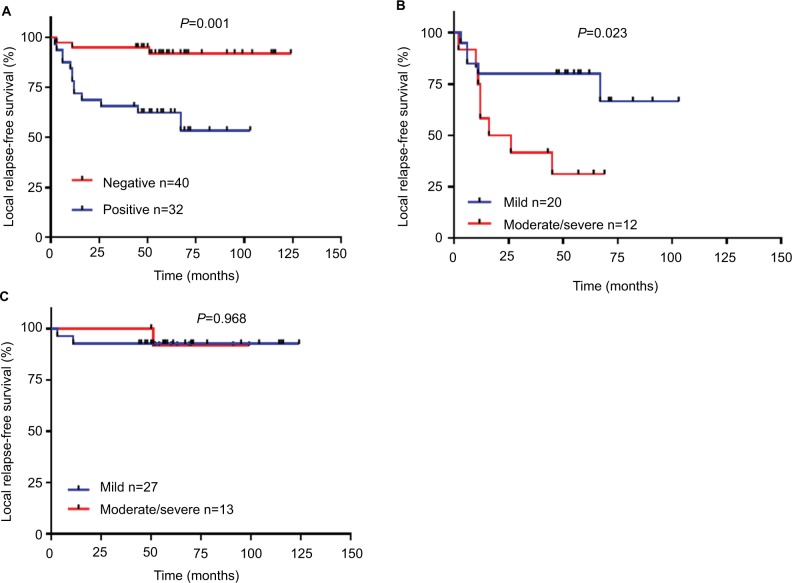
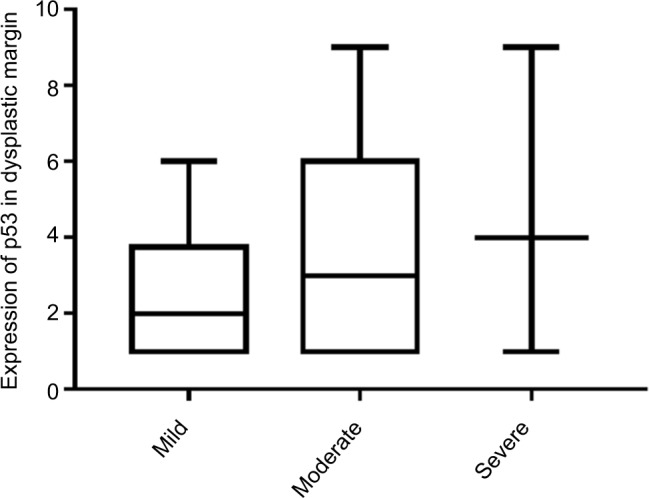
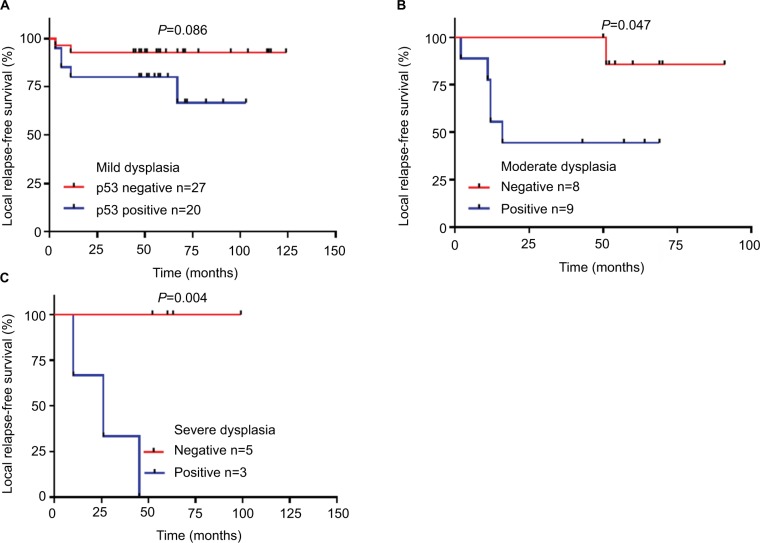
Patients with moderate/severe dysplasia had poor local relapse-free survival (RFS) compared to those with mild dysplasia. Thirty-two (44.4%) had at least one p53-positive margin, and there was a significant association between the expression of p53 and tumor recurrence (<0.001). p53-positive expression was correlated with RFS in patients with dysplastic margins, and its expression in moderate/severe dysplastic groups had a worse RFS than mild dysplastic groups. We also found that the grade of the dysplasia margin was not correlated with RFS in p53-negative groups. Multivariable analysis validated p53 expression in dysplastic surgical margins as an independent risk factor for recurrence.
Our results validated that p53 expression was an independent risk factor for early OSCC with dysplastic surgical margins. Additional therapy and close follow-up are needed for these patients.
本研究对早期口腔鳞状细胞癌(OSCC)(pT1 - 2,N0)发育异常手术切缘中p53表达的影响进行回顾性分析。
招募了72例早期口腔鳞状细胞癌患者。从病理报告中提取切缘特征。采用免疫组织化学方法检测发育异常手术切缘中p53的表达,并将其与临床病理参数及临床结局相关联。
与轻度发育异常患者相比,中度/重度发育异常患者的局部无复发生存期(RFS)较差。32例(44.4%)患者至少有一个p53阳性切缘,p53表达与肿瘤复发之间存在显著关联(<0.001)。p53阳性表达与发育异常切缘患者的RFS相关,且在中度/重度发育异常组中的表达导致RFS比轻度发育异常组更差。我们还发现,在p53阴性组中,发育异常切缘的分级与RFS无关。多变量分析证实发育异常手术切缘中的p53表达是复发的独立危险因素。
我们的结果证实p53表达是具有发育异常手术切缘的早期OSCC的独立危险因素。这些患者需要额外的治疗和密切随访。