Schirinzi Tommaso, Martella Giuseppina, Imbriani Paola, Di Lazzaro Giulia, Franco Donatella, Colona Vito Luigi, Alwardat Mohammad, Sinibaldi Salimei Paola, Mercuri Nicola Biagio, Pierantozzi Mariangela, Pisani Antonio
Department of Systems Medicine, University of Rome Tor Vergata, Rome, Italy.
IRCCS Fondazione Santa Lucia, Rome, Italy.
Front Neurol. 2019 Feb 26;10:148. doi: 10.3389/fneur.2019.00148. eCollection 2019.
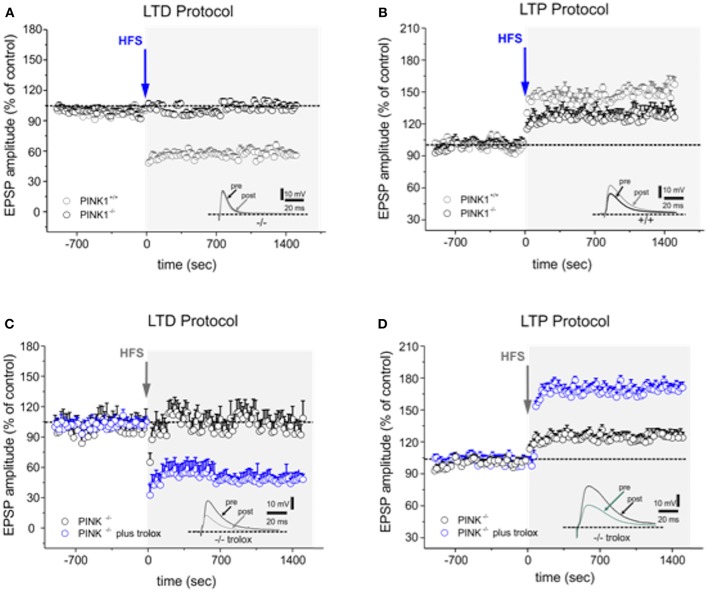
Effective disease-modifying treatments are an urgent need for Parkinson's disease (PD). A putative successful strategy is to counteract oxidative stress, not only with synthetic compounds, but also with natural agents or dietary choices. Vitamin E, in particular, is a powerful antioxidant, commonly found in vegetables and other components of the diet. In this work, we performed a questionnaire based case-control study on 100 PD patients and 100 healthy controls. The analysis showed that a higher dietary intake of Vitamin E was inversely associated with PD occurrence independently from age and gender (OR = 1.022; 95% CI = 0.999-1.045; < 0.05), though unrelated to clinical severity. Then, in order to provide a mechanistic explanation for such observation, we tested the effects of Vitamin E and other alimentary antioxidants , by utilizing the homozygous PTEN-induced kinase 1 knockout ( ) mouse model of PD. mice exhibit peculiar alterations of synaptic plasticity at corticostriatal synapses, consisting in the loss of both long-term potentiation (LTP) and long-term depression (LTD), in the absence of overt neurodegeneration. Chronic administration of Vitamin E (alpha-tocopherol and the water-soluble analog trolox) fully restored corticostriatal synaptic plasticity in mice, suggestive of a specific protective action. Vitamin E might indeed compensate PINK1 haploinsufficiency and mitochondrial impairment, reverting some central steps of the pathogenic process. Altogether, both clinical and experimental findings suggest that Vitamin E could be a potential, useful agent for PD patients. These data, although preliminary, may encourage future confirmatory trials.
帕金森病(PD)迫切需要有效的疾病修饰治疗方法。一种可能成功的策略是对抗氧化应激,不仅可以使用合成化合物,还可以使用天然物质或通过饮食选择来实现。特别是维生素E,它是一种强大的抗氧化剂,常见于蔬菜和饮食中的其他成分中。在这项研究中,我们对100名帕金森病患者和100名健康对照者进行了一项基于问卷的病例对照研究。分析表明,维生素E的饮食摄入量较高与帕金森病的发生呈负相关,且独立于年龄和性别(OR = 1.022;95% CI = 0.999 - 1.045;P < 0.05),尽管与临床严重程度无关。然后,为了对这一观察结果提供机制解释,我们利用帕金森病纯合子PTEN诱导激酶1基因敲除(PINK1 -/-)小鼠模型测试了维生素E和其他膳食抗氧化剂的作用。PINK1 -/-小鼠在皮质纹状体突触处表现出突触可塑性的特殊改变,包括长期增强(LTP)和长期抑制(LTD)的丧失,且无明显的神经退行性变。长期给予维生素E(α - 生育酚和水溶性类似物曲克芦丁)可完全恢复PINK1 -/-小鼠的皮质纹状体突触可塑性,提示其具有特定的保护作用。维生素E可能确实补偿了PINK1单倍体不足和线粒体损伤,逆转了致病过程的一些核心步骤。总之,临床和实验结果均表明维生素E可能是对帕金森病患者潜在有用的药物。这些数据虽然是初步的,但可能会鼓励未来进行验证性试验。