Tianjin First Central Hospital Clinic Institute, Tianjin Medical University, Tianjin 300070, P.R. China.
Department of Organ Transplantation, Tianjin First Central Hospital, Tianjin 300192, P.R. China.
Int J Mol Med. 2019 May;43(5):2086-2102. doi: 10.3892/ijmm.2019.4120. Epub 2019 Mar 4.
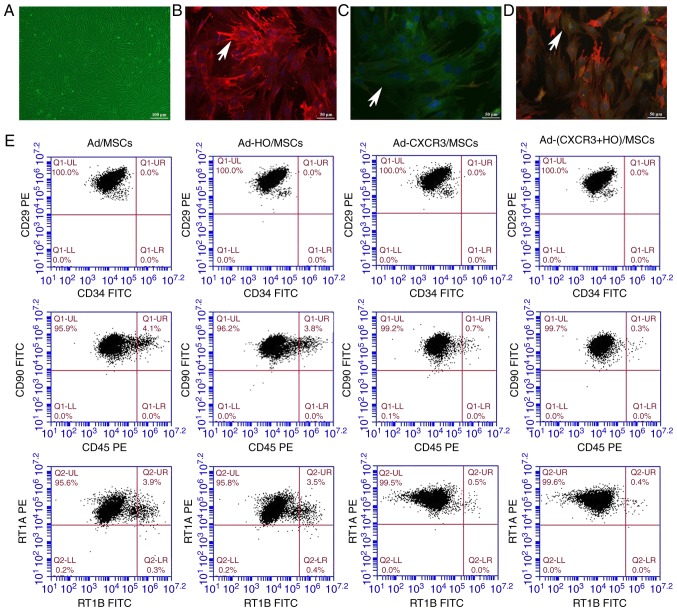
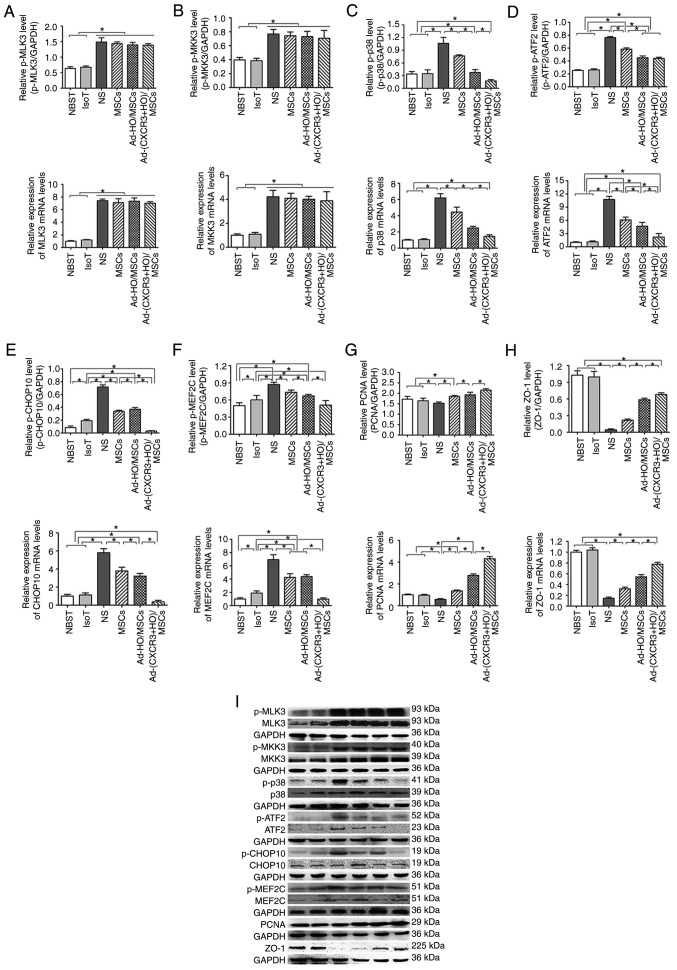
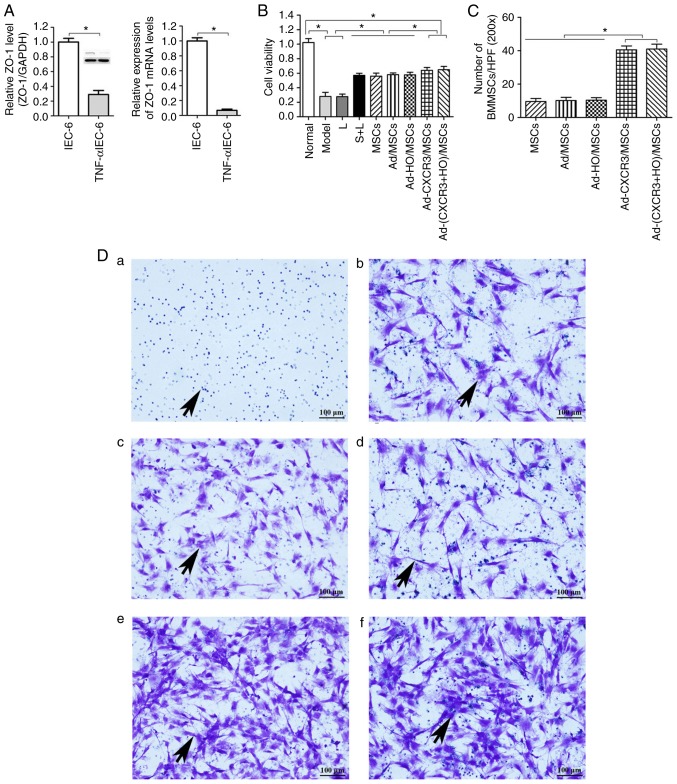
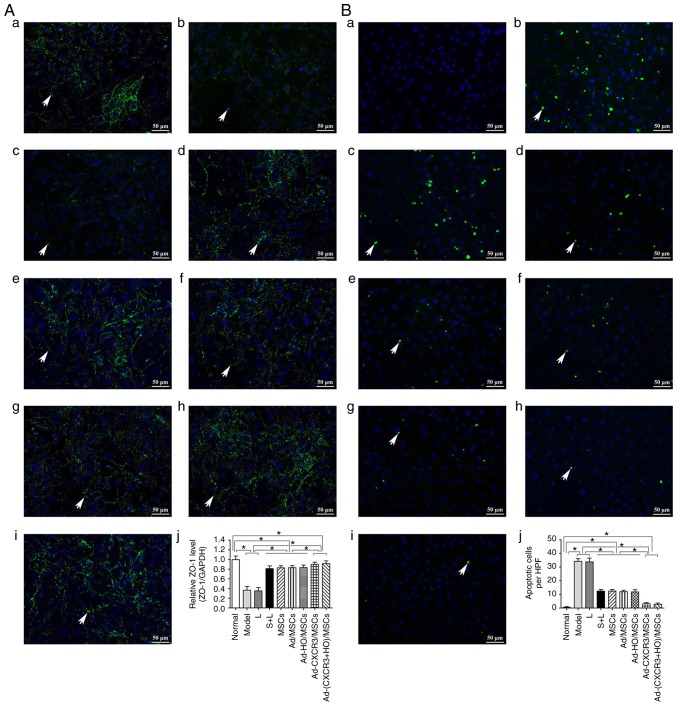
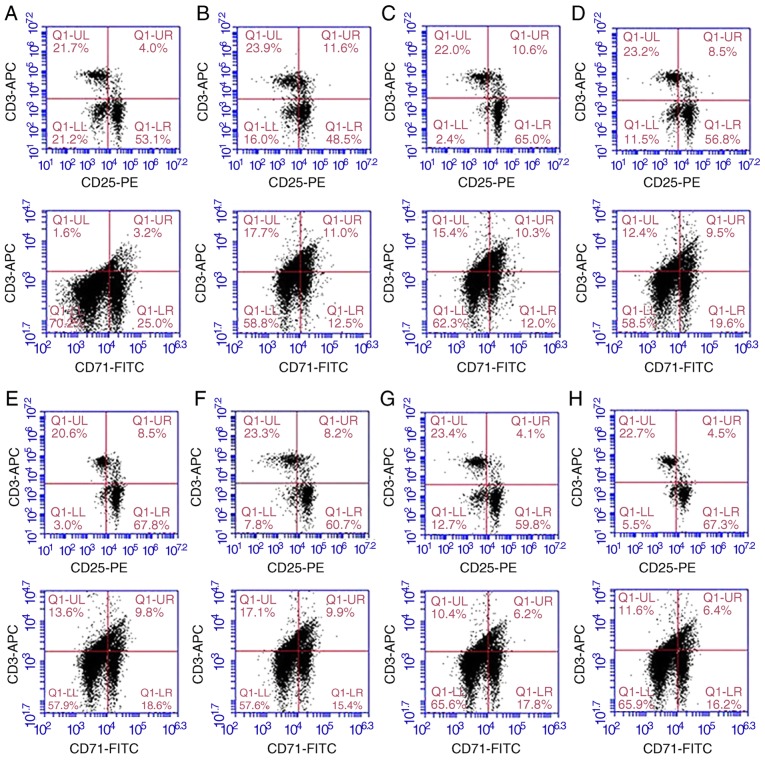
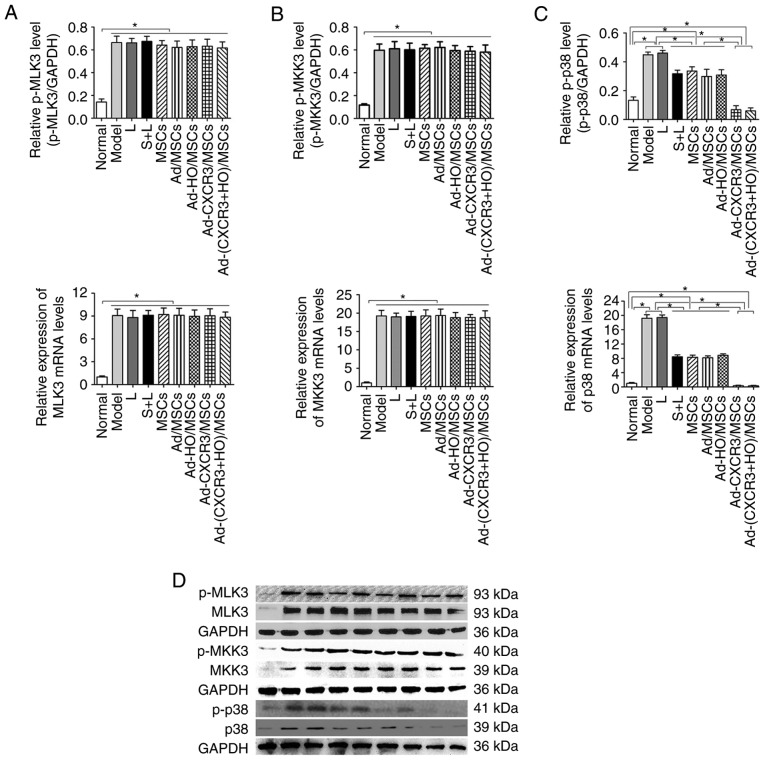
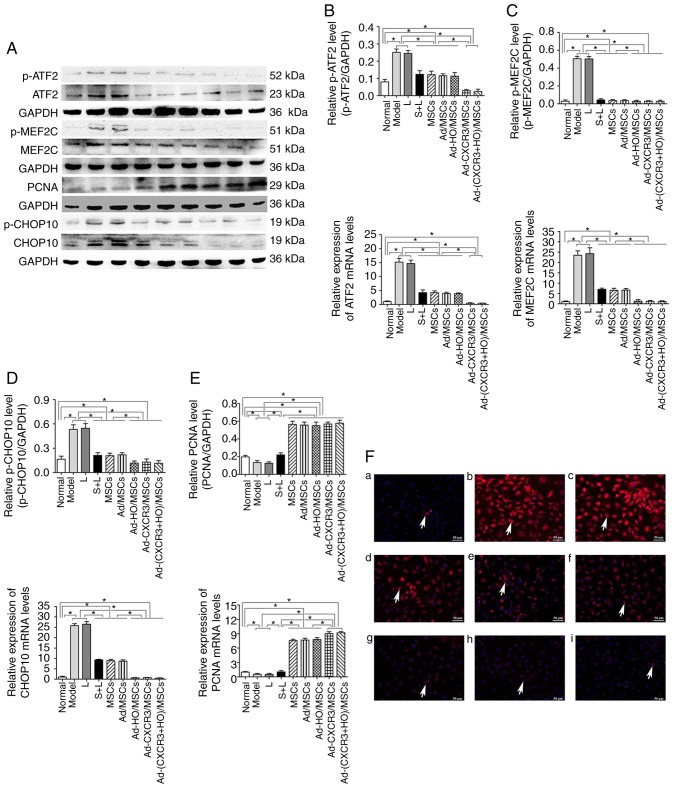
The purpose of the present study was to investigate whether bone marrow mesenchymal stem cells (BMMSCs) modified by CXC‑chemokine receptor type 3 (CXCR3) and heme oxygenase‑1 (HO‑1) genes can repair damaged intestinal epithelial cells in vitro, and the role of the p38 mitogen‑activated protein kinase (p38‑MAPK) pathway in this process. A model of intestinal epithelial crypt cell line‑6 (IEC‑6) damage was created, and BMMSCs were transfected with either the CXCR3 and/or HO‑1 gene in vitro. There were nine experimental groups in which the damaged IEC‑6 cells were co‑cultured with differentially‑treated BMMSCs and lymphocytes for 24 h. Reverse transcription‑quantitative polymerase chain reaction analysis, immunohistochemistry and a western blot analysis were performed to detect stem cell transfection, the repair of damaged intestinal epithelial cells and the expression of related molecules in the P38‑MAPK pathway, respectively. Crystal violet staining and live cell imaging were used to detect the chemotaxis of BMMSCs. Flow cytometry was used to detect T lymphocyte activity and the surface markers expressed on BMMSCs. An ELISA was used to quantify cytokine production. The adenovirus (Ad)‑CXCR3/MSCs exhibited the characteristics of stem cells and exhibited chemotaxis. The Ad‑CXCR3/MSCs and Ad‑(CXCR3 + HO)/MSCs exhibited increased expression of tight junction protein zonula occludens‑1 (ZO‑1) and anti‑proliferating cell nuclear antigen in the damaged IEC‑6 cells, and apoptosis of the damaged IEC‑6 cells was decreased. BMMSCs inhibited the phosphorylation of p38, in addition to downstream molecules of the p38MAPK signaling pathway. The Ad‑CXCR3/MSCs and Ad‑(CXCR3 + HO)/MSCs exhibited significantly decreased expression levels of downstream molecules, including phosphorylated (p)‑p38, p‑activated transcription factor 2, p‑C/EBP homologous protein‑10, and p‑myocyte enhancer factor 2C, and target molecules (e.g., apoptotic bodies). The effects of Ad‑(CXCR3 + HO)/MSCs on the repair of the damaged intestinal tract and inhibition of the p38‑MAPK pathway was more marked than those in other groups on day 7 post‑surgery in the rejection model for small bowel transplantation. BMMSCs modified by the CXCR3 and HO‑1 genes exhibited superior ability to repair damaged intestinal epithelial cells and served this role via the p38‑MAPK pathway.
本研究旨在探讨是否可以通过 CXC-趋化因子受体 3 (CXCR3) 和血红素加氧酶-1 (HO-1) 基因修饰的骨髓间充质干细胞 (BMMSCs) 来修复体外受损的肠上皮细胞,以及 p38 丝裂原激活的蛋白激酶 (p38-MAPK) 通路在这一过程中所起的作用。建立肠上皮隐窝细胞系-6 (IEC-6) 损伤模型,并在体外转染 CXCR3 和/或 HO-1 基因。将受损的 IEC-6 细胞与经不同处理的 BMMSCs 和淋巴细胞共培养 24 小时,共设置 9 个实验组。采用逆转录-定量聚合酶链反应分析、免疫组织化学和 Western blot 分析检测干细胞转染、受损肠上皮细胞的修复以及 p38-MAPK 通路中相关分子的表达情况。采用结晶紫染色和活细胞成像检测 BMMSCs 的趋化性。采用流式细胞术检测 T 淋巴细胞活性和 BMMSCs 表面标志物的表达。采用 ELISA 法检测细胞因子的产生。腺病毒 (Ad)-CXCR3/MSCs 表现出干细胞的特征,并表现出趋化性。Ad-CXCR3/MSCs 和 Ad-(CXCR3+HO)/MSCs 可增加受损 IEC-6 细胞中紧密连接蛋白封闭蛋白-1 (ZO-1) 和抗增殖细胞核抗原的表达,并减少受损 IEC-6 细胞的凋亡。BMMSCs 可抑制 p38 及其下游分子的磷酸化。Ad-CXCR3/MSCs 和 Ad-(CXCR3+HO)/MSCs 下游分子的表达水平,包括磷酸化 (p)-p38、激活转录因子 2(p-ATF2)、p-C/EBP 同源蛋白-10(p-C/EBP10) 和 p-肌细胞增强因子 2C(p-MEF2C),以及靶分子(如凋亡小体)明显降低。在小肠移植排斥模型中,手术后第 7 天,Ad-(CXCR3+HO)/MSCs 对受损肠道的修复和 p38-MAPK 通路的抑制作用明显优于其他组。CXCR3 和 HO-1 基因修饰的 BMMSCs 具有更强的修复受损肠上皮细胞的能力,通过 p38-MAPK 通路发挥这一作用。