Department of Clinical and Movement Neurosciences, UCL Queen Square Institute of Neurology, University College London, London, UK
Department of Clinical and Movement Neurosciences, UCL Queen Square Institute of Neurology, University College London, London, UK.
J Neurol Neurosurg Psychiatry. 2019 Jul;90(7):768-773. doi: 10.1136/jnnp-2018-320151. Epub 2019 Mar 13.
The high degree of clinical overlap between atypical parkinsonian syndromes (APS) and Parkinson's disease (PD) makes diagnosis challenging. We aimed to identify novel diagnostic protein biomarkers of APS using multiplex proximity extension assay (PEA) testing.
Cerebrospinal fluid (CSF) samples from two independent cohorts, each consisting of APS and PD cases, and controls, were analysed for neurofilament light chain (NF-L) and Olink Neurology and Inflammation PEA biomarker panels. Whole-cohort comparisons of biomarker concentrations were made between APS (n=114), PD (n=37) and control (n=34) groups using logistic regression analyses that included gender, age and disease duration as covariates.
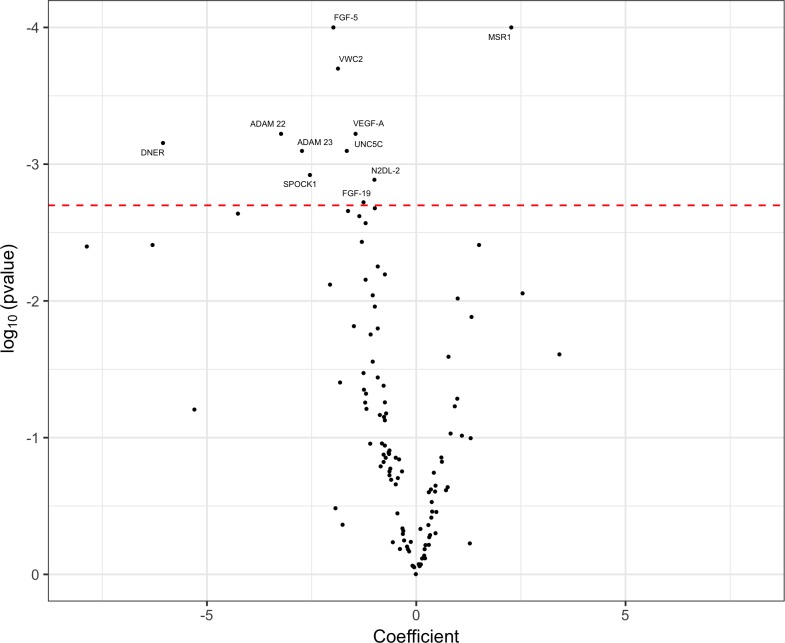
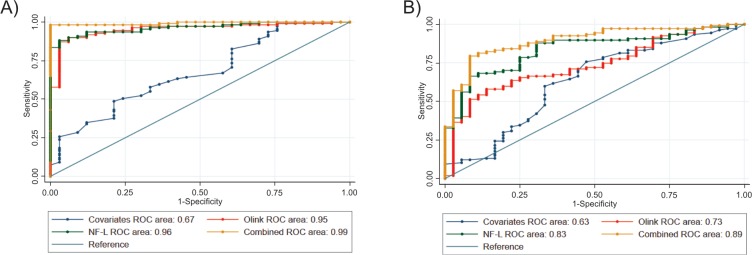
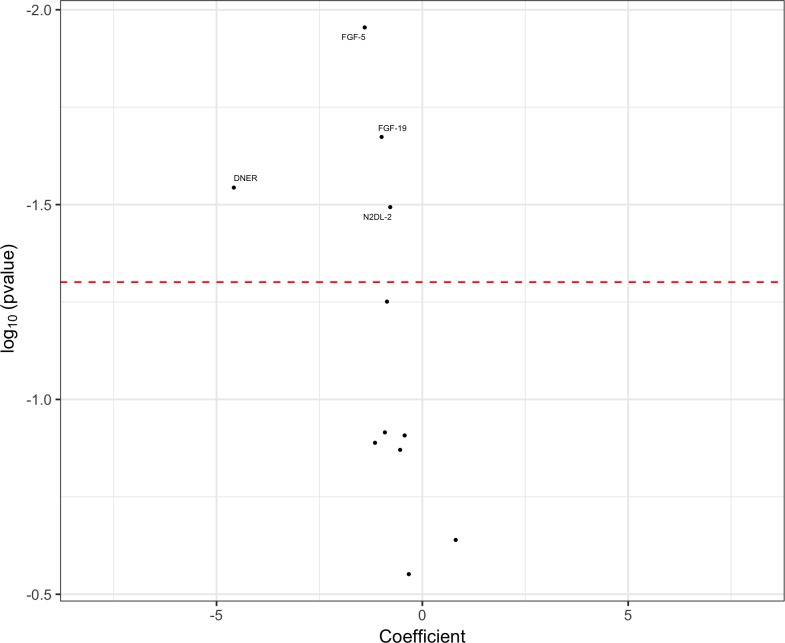
APS versus controls analyses revealed 11 CSF markers with significantly different levels in cases and controls (p<0.002). Four of these markers also reached significance (p<0.05) in APS versus PD analyses. Disease-specific analyses revealed lower group levels of FGF-5, FGF-19 and SPOCK1 in multiple system atrophy compared with progressive supranuclear palsy and corticobasal syndrome. Receiver operating characteristic curve analyses suggested that the diagnostic accuracy of NF-L was superior to the significant PEA biomarkers in distinguishing APS, PD and controls. The biological processes regulated by the significant proteins include cell differentiation and immune cell migration. Delta and notch-like epidermal growth factor-related receptor (DNER) had the strongest effect size in APS versus controls and APS versus PD analyses. DNER is highly expressed in substantia nigra and is an activator of the NOTCH1 pathway which has been implicated in the aetiology of other neurodegenerative disorders including Alzheimer's disease.
PEA testing has identified potential novel diagnostic biomarkers of APS.
非典型帕金森综合征(APS)与帕金森病(PD)之间存在高度的临床重叠,使得诊断具有挑战性。我们旨在使用多重邻近延伸分析(PEA)检测来确定 APS 的新型诊断蛋白生物标志物。
对两个独立队列的脑脊液(CSF)样本进行分析,每个队列均由 APS 和 PD 病例以及对照组组成,分析了神经丝轻链(NF-L)和 Olink 神经病学和炎症 PEA 生物标志物面板。使用逻辑回归分析,包括性别、年龄和疾病持续时间作为协变量,对 APS(n=114)、PD(n=37)和对照组(n=34)组之间的生物标志物浓度进行了全队列比较。
APS 与对照组分析显示,11 种 CSF 标志物在病例和对照组之间的水平有显著差异(p<0.002)。其中 4 种标志物在 APS 与 PD 分析中也具有显著性(p<0.05)。疾病特异性分析显示,与进行性核上性麻痹和皮质基底节综合征相比,多系统萎缩患者的 FGF-5、FGF-19 和 SPOCK1 水平较低。接受者操作特征曲线分析表明,NF-L 的诊断准确性优于区分 APS、PD 和对照组的显著 PEA 生物标志物。受显著蛋白调节的生物学过程包括细胞分化和免疫细胞迁移。Delta 和类似 Notch 表皮生长因子受体(DNER)在 APS 与对照组和 APS 与 PD 分析中的效应大小最强。DNER 在黑质中高度表达,是 NOTCH1 途径的激活剂,该途径与包括阿尔茨海默病在内的其他神经退行性疾病的发病机制有关。
PEA 检测已确定 APS 的潜在新型诊断生物标志物。