Department of Biochemistry, West Virginia University School of Medicine, Morgantown, West Virginia.
Department of Biochemistry, West Virginia University School of Medicine, Morgantown, West Virginia
Pharmacol Rev. 2019 Apr;71(2):170-197. doi: 10.1124/pr.117.015370.
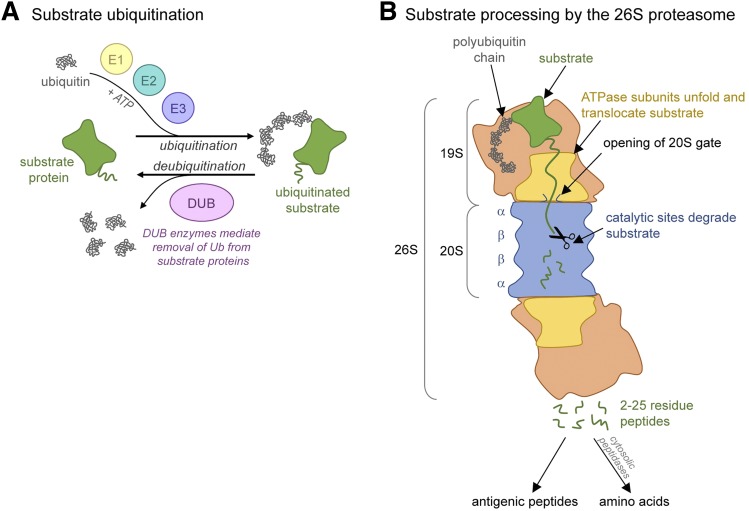
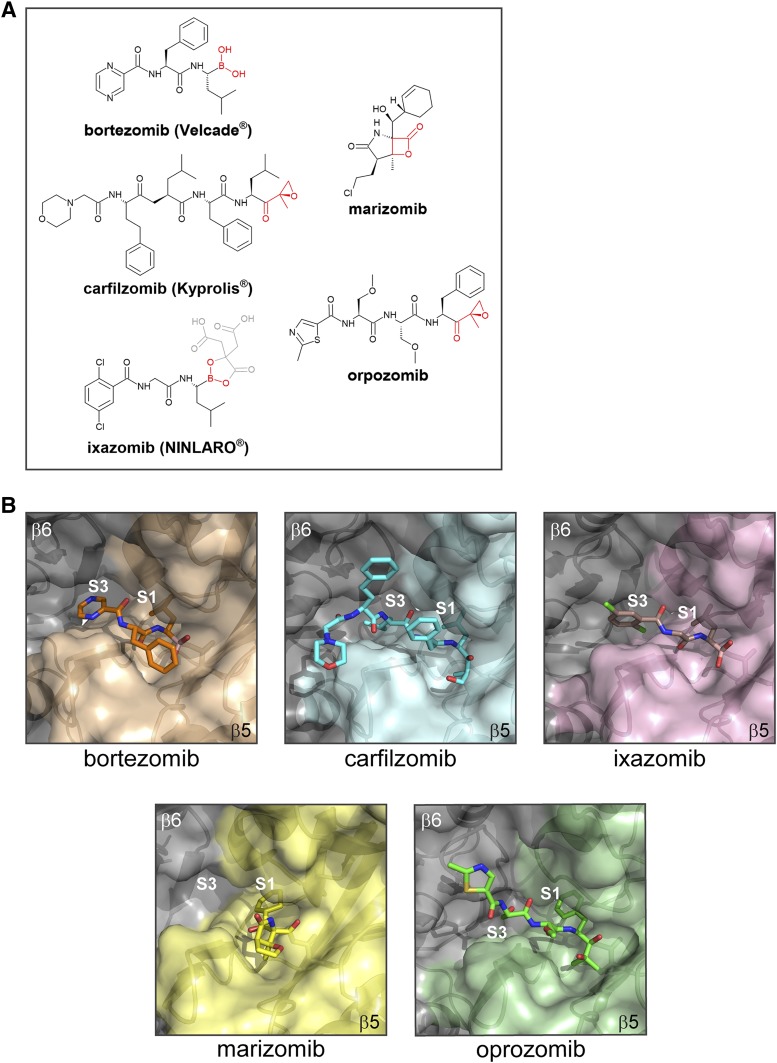
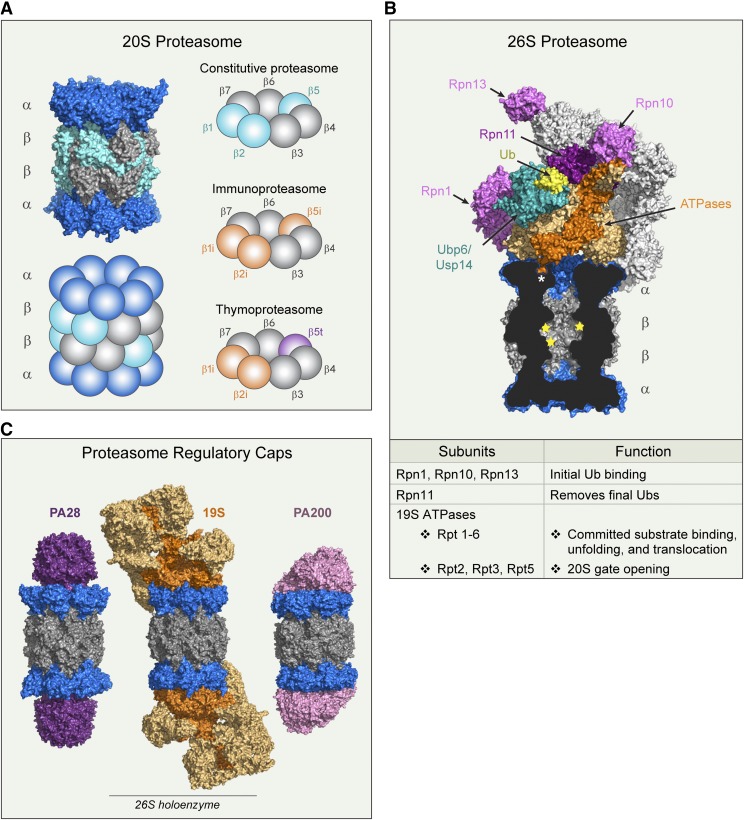
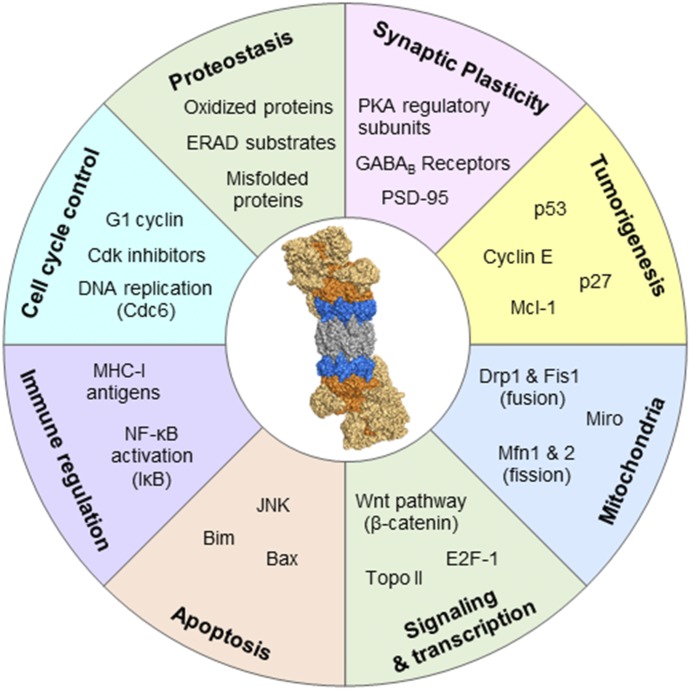
The ubiquitin proteasome system (UPS) degrades individual proteins in a highly regulated fashion and is responsible for the degradation of misfolded, damaged, or unneeded cellular proteins. During the past 20 years, investigators have established a critical role for the UPS in essentially every cellular process, including cell cycle progression, transcriptional regulation, genome integrity, apoptosis, immune responses, and neuronal plasticity. At the center of the UPS is the proteasome, a large and complex molecular machine containing a multicatalytic protease complex. When the efficiency of this proteostasis system is perturbed, misfolded and damaged protein aggregates can accumulate to toxic levels and cause neuronal dysfunction, which may underlie many neurodegenerative diseases. In addition, many cancers rely on robust proteasome activity for degrading tumor suppressors and cell cycle checkpoint inhibitors necessary for rapid cell division. Thus, proteasome inhibitors have proven clinically useful to treat some types of cancer, especially multiple myeloma. Numerous cellular processes rely on finely tuned proteasome function, making it a crucial target for future therapeutic intervention in many diseases, including neurodegenerative diseases, cystic fibrosis, atherosclerosis, autoimmune diseases, diabetes, and cancer. In this review, we discuss the structure and function of the proteasome, the mechanisms of action of different proteasome inhibitors, various techniques to evaluate proteasome function in vitro and in vivo, proteasome inhibitors in preclinical and clinical development, and the feasibility for pharmacological activation of the proteasome to potentially treat neurodegenerative disease.
泛素蛋白酶体系统 (UPS) 以高度调控的方式降解单个蛋白质,负责降解错误折叠、受损或不需要的细胞蛋白质。在过去的 20 年中,研究人员已经确定 UPS 在本质上几乎所有细胞过程中都起着关键作用,包括细胞周期进展、转录调节、基因组完整性、细胞凋亡、免疫反应和神经元可塑性。UPS 的核心是蛋白酶体,它是一种包含多催化蛋白酶复合物的大型复杂分子机器。当这个蛋白质稳态系统的效率受到干扰时,错误折叠和受损的蛋白质聚集体可能会积累到有毒水平,并导致神经元功能障碍,这可能是许多神经退行性疾病的基础。此外,许多癌症依赖于强大的蛋白酶体活性来降解肿瘤抑制因子和细胞周期检查点抑制剂,这些抑制剂是快速细胞分裂所必需的。因此,蛋白酶体抑制剂已被证明在临床上可用于治疗某些类型的癌症,特别是多发性骨髓瘤。许多细胞过程依赖于精细调节的蛋白酶体功能,使其成为许多疾病(包括神经退行性疾病、囊性纤维化、动脉粥样硬化、自身免疫性疾病、糖尿病和癌症)未来治疗干预的关键靶点。在这篇综述中,我们讨论了蛋白酶体的结构和功能、不同蛋白酶体抑制剂的作用机制、评估体外和体内蛋白酶体功能的各种技术、临床前和临床开发中的蛋白酶体抑制剂,以及药理学激活蛋白酶体治疗神经退行性疾病的可行性。