Radboud University, Radboud Institute for Molecular Life Sciences, Department of Molecular Biology, Geert Grooteplein 28, 6525 GA, Nijmegen, The Netherlands.
Radboud University Medical Center, Radboud Institute for Molecular Life Sciences, Geert Grooteplein 28, 6525 GA, Nijmegen, The Netherlands.
Sci Rep. 2019 Mar 13;9(1):4327. doi: 10.1038/s41598-019-40867-1.
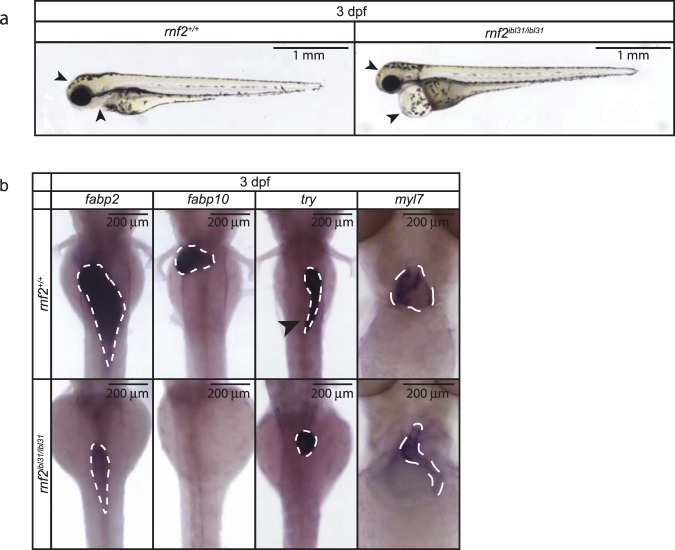
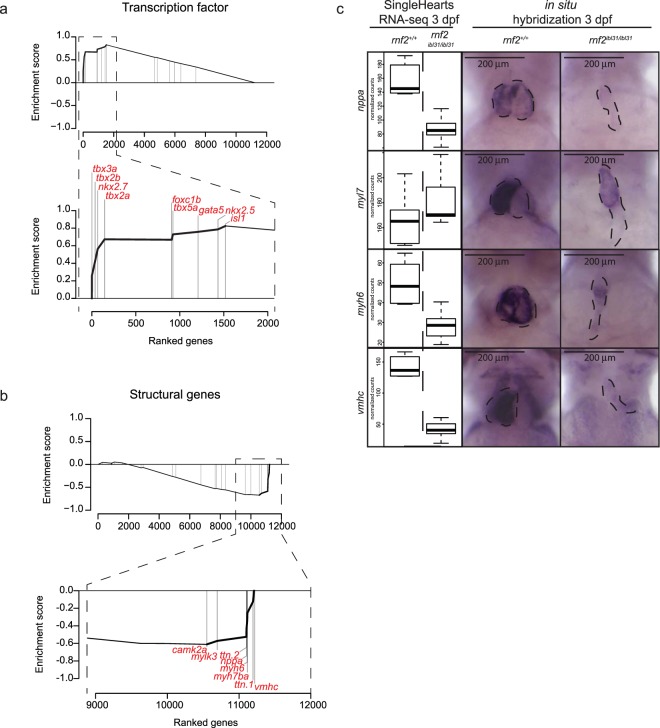
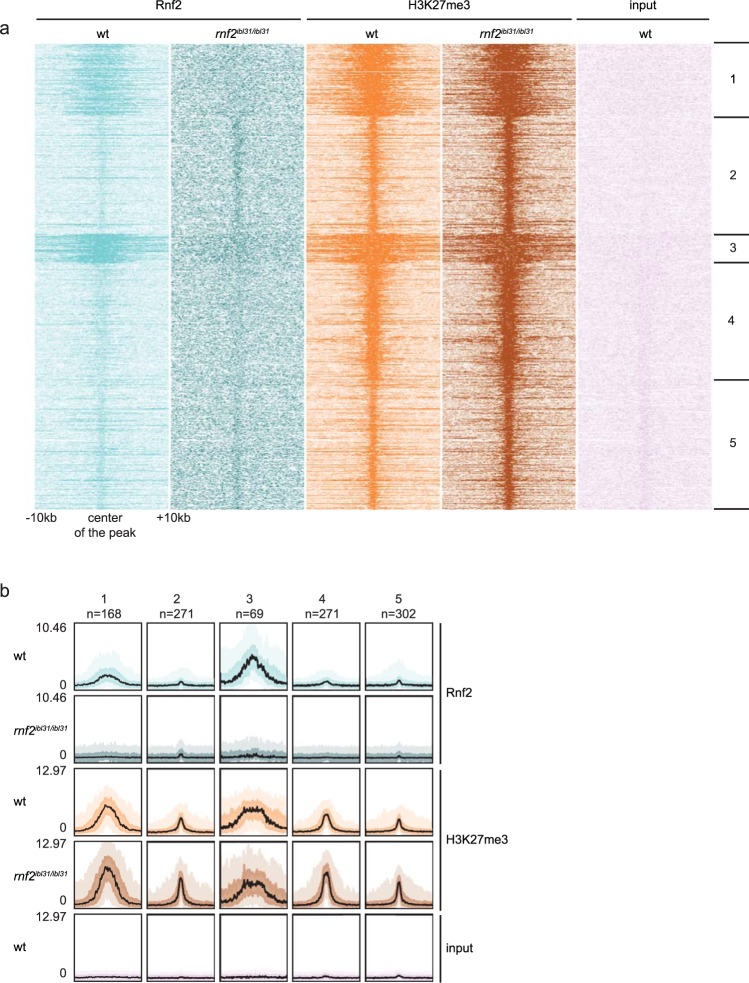
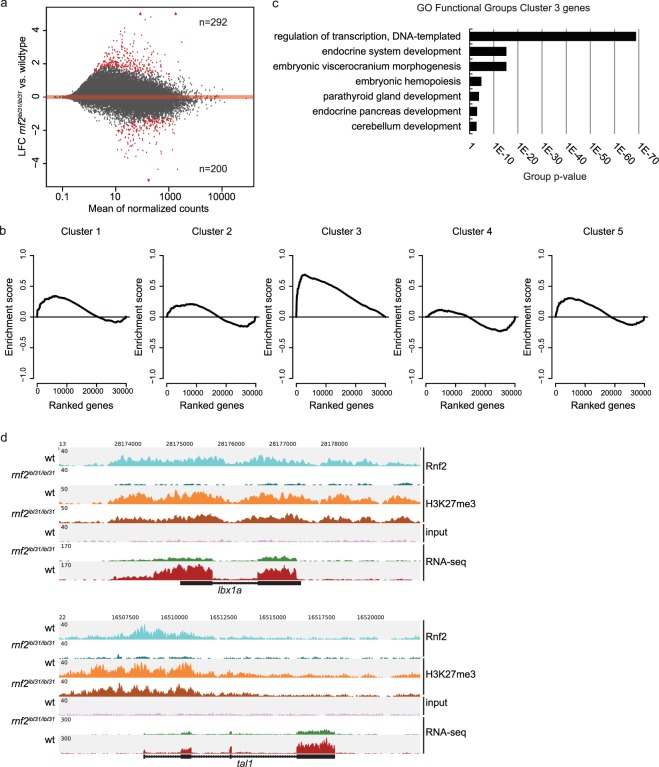
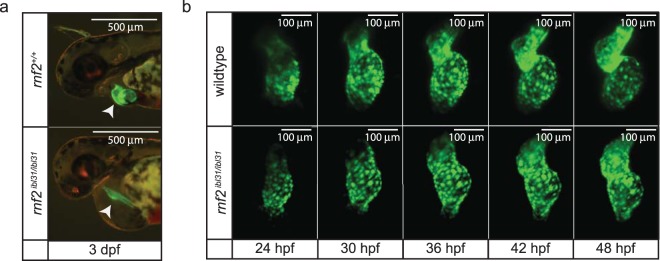
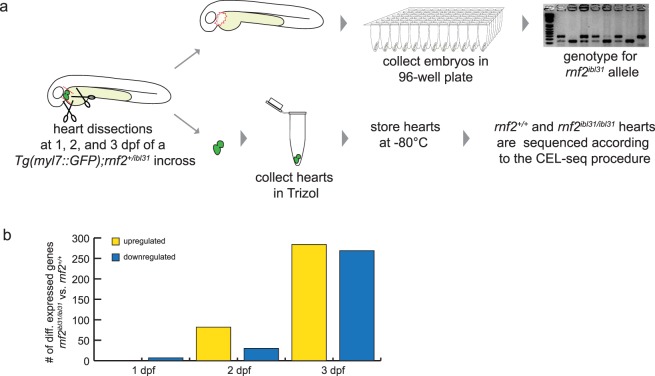
The Polycomb group (PcG) protein family is a well-known group of epigenetic modifiers. We used zebrafish to investigate the role of Rnf2, the enzymatic subunit of PRC1. We found a positive correlation between loss of Rnf2 and upregulation of genes, especially of those whose promoter is normally bound by Rnf2. The heart of rnf2 mutants shows a tubular shaped morphology and to further understand the underlying mechanism, we studied gene expression of single wildtype and rnf2 mutant hearts. We detected the most pronounced differences at 3 dpf, including upregulation of heart transcription factors, such as tbx2a, tbx2b, and tbx3a. These tbx genes were decorated by broad PcG domains in wildtype whole embryo lysates. Chamber specific genes such as vmhc, myh6, and nppa showed downregulation in rnf2 mutant hearts. The marker of the working myocard, nppa, is negatively regulated by Tbx2 and Tbx3. Based on our findings and literature we postulate that loss of Rnf2-mediated repression results in upregulation and ectopic expression of tbx2/3, whose expression is normally restricted to the cardiac conductive system. This could lead to repression of chamber specific gene expression, a misbalance in cardiac cell types, and thereby to cardiac defects observed in rnf2 mutants.
多梳抑制复合物(PcG)蛋白家族是一组著名的表观遗传修饰因子。我们使用斑马鱼来研究 PRC1 的酶亚基 Rnf2 的作用。我们发现 Rnf2 的缺失与基因的上调呈正相关,尤其是那些启动子通常被 Rnf2 结合的基因。rnf2 突变体的心脏呈现管状形态,为了进一步了解潜在的机制,我们研究了单个野生型和 rnf2 突变型心脏的基因表达。我们在 3 dpf 时检测到最明显的差异,包括心脏转录因子如 tbx2a、tbx2b 和 tbx3a 的上调。这些 tbx 基因在野生型胚胎整体裂解物中被广泛的 PcG 结构域所修饰。腔室特异性基因,如 vmhc、myh6 和 nppa,在 rnf2 突变型心脏中下调。工作心肌的标志物 nppa 受 Tbx2 和 Tbx3 的负调控。基于我们的发现和文献,我们推测 Rnf2 介导的抑制丧失导致 tbx2/3 的上调和异位表达,其表达通常局限于心脏传导系统。这可能导致腔室特异性基因表达的抑制、心脏细胞类型的失衡,并导致 rnf2 突变体中观察到的心脏缺陷。