Yu Zhiqiang, Zeng Jun, Liu Hui, Wang Tian, Yu Ziqi, Chen Jianyong
Department of Gastroenterology, Jiangxi Provincial People's Hospital, Nanchang, Jiangxi 330006, P.R. China.
Oncol Lett. 2019 Mar;17(3):3296-3304. doi: 10.3892/ol.2019.9962. Epub 2019 Jan 23.
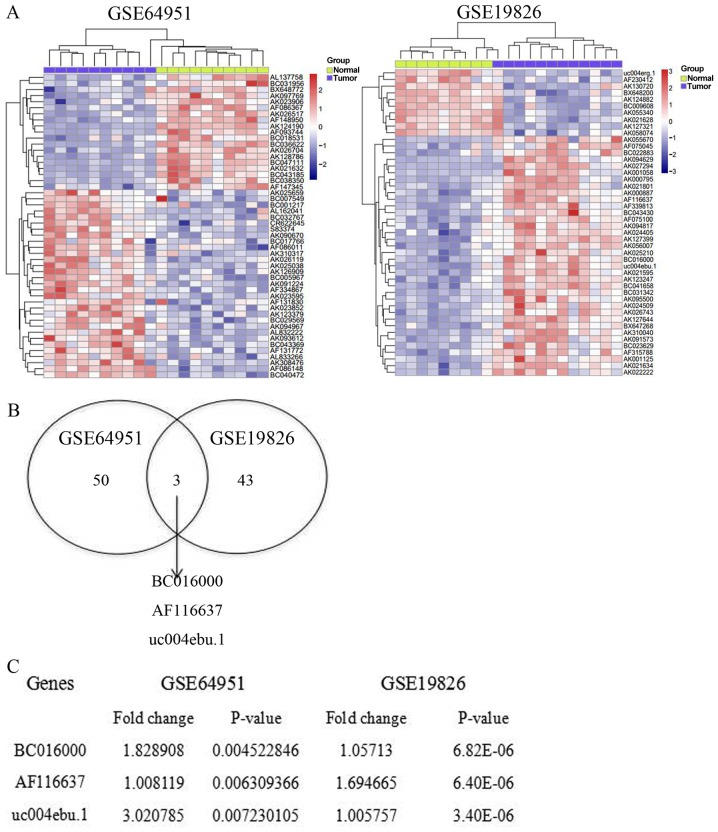
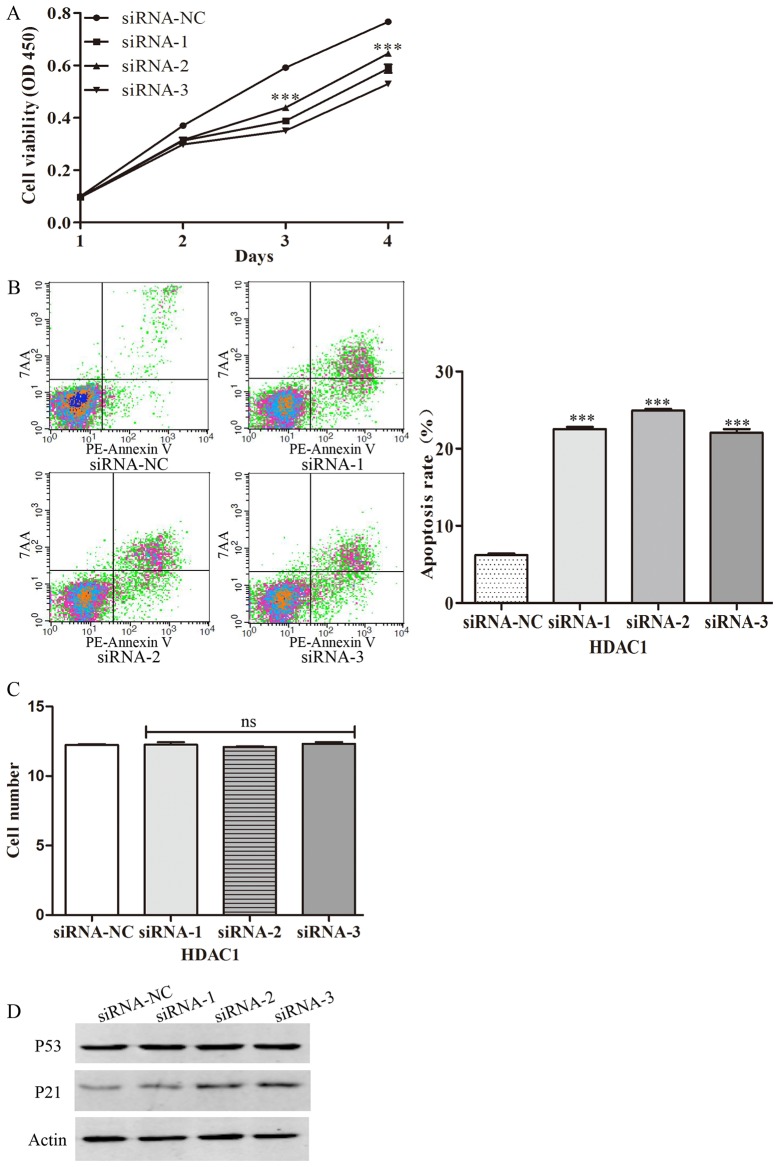
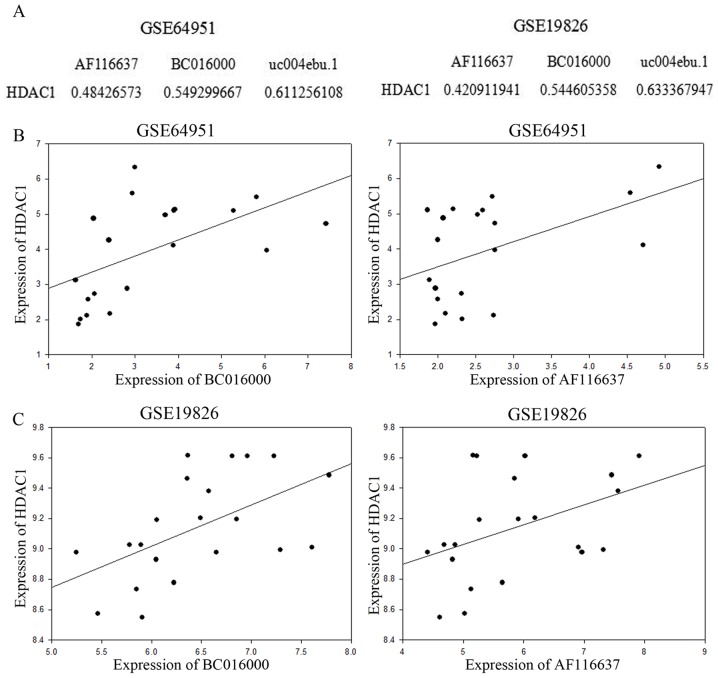
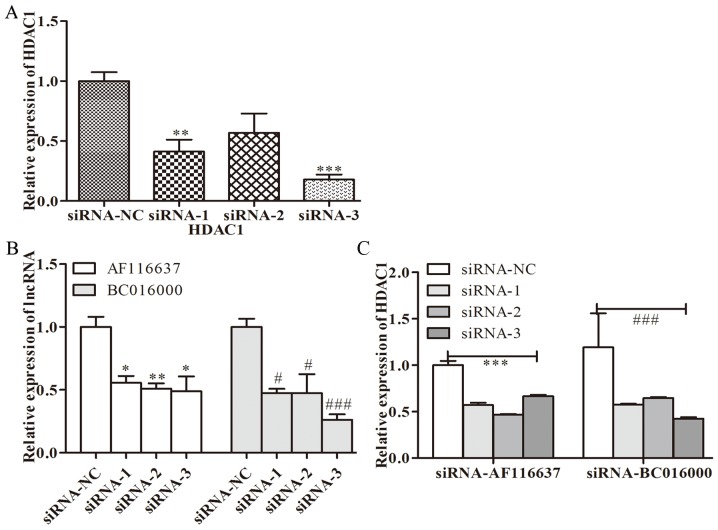
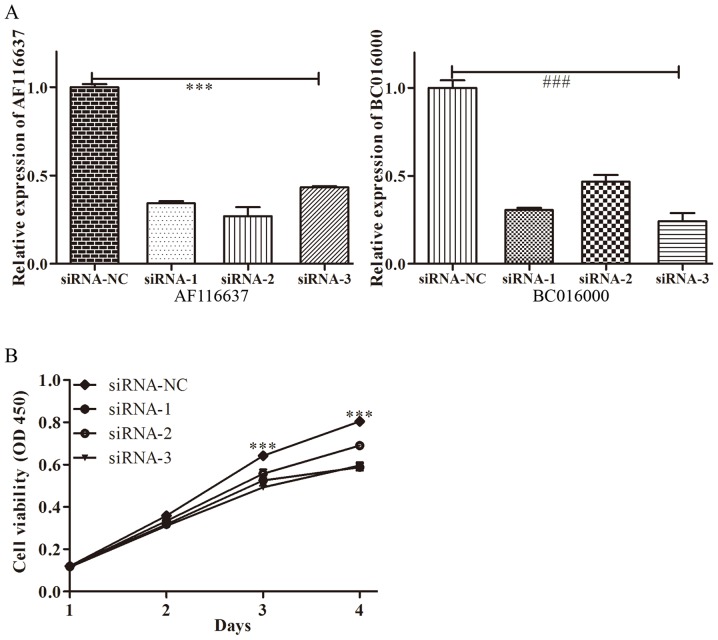
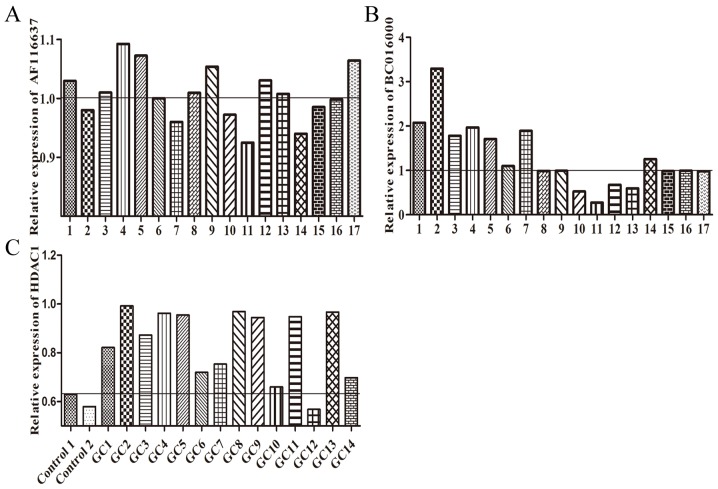
Gastric cancer (GC) is a common life-threatening cancer type worldwide, with an increasing prevalence and a high rate of mortality. Due to limitations in clinical treatment, surgery has become the most efficient strategy for the treatment of GC. It is urgent to identify novel biomarkers, which are useful for the diagnosis of GC and for improving the survival rate of patients with GC. HDACs are multi-functional proteins and are involved in regulating gene expression, cell proliferation and the epigenetic regulation. However, the precise role of HDACs in the progression of GC remains unknown. The present study demonstrated that HDAC1 is involved in the promotion of GC cell proliferation, possibly by upregulating the expression of the lncRNAs, BC01600 and AF116637, in the tissues of patients with GC. Abnormal expression profiles of lncRNAs were observed in the tissues of patients with GC. lncRNAs were analyzed in the GSE64951 and GSE19826 databases, and it was revealed that BC01600 and AF116637 were two typically upregulated lncRNAs. Furthermore, it was revealed that BC01600 and AF116637 are regulated by HDAC1, as evidenced by decreased expression of these two lncRNAs in HDAC1-knockout SC-M1 cell lines, and by reduced expression of HDAC1 in these two lncRNA-knockout SC-M1 cell lines. Silencing of HDAC1 decreased the proliferation and increased the apoptosis of SC-M1 cell lines, but had no effect on the migration of the SC-M1 cell lines. The present study provided evidence of the importance of HDAC1 in the progression of SC-M1, and the association between HDAC1 and the expression of lncRNAs. The results of the present study indicated that HDAC1 may be a promising target for the clinical treatment of GC.
胃癌(GC)是全球常见的危及生命的癌症类型,其患病率不断上升且死亡率很高。由于临床治疗存在局限性,手术已成为治疗GC最有效的策略。迫切需要鉴定新的生物标志物,这些标志物有助于GC的诊断并提高GC患者的生存率。组蛋白去乙酰化酶(HDACs)是多功能蛋白,参与调节基因表达、细胞增殖和表观遗传调控。然而,HDACs在GC进展中的确切作用仍不清楚。本研究表明,HDAC1可能通过上调GC患者组织中lncRNAs BC01600和AF116637的表达来促进GC细胞增殖。在GC患者组织中观察到lncRNAs的异常表达谱。在GSE64951和GSE19826数据库中分析lncRNAs,发现BC01600和AF116637是两种典型上调的lncRNAs。此外,发现BC01600和AF116637受HDAC1调控,这在HDAC1敲除的SC-M1细胞系中这两种lncRNAs的表达降低以及在这两种lncRNA敲除的SC-M1细胞系中HDAC1的表达降低得到证实。HDAC1的沉默降低了SC-M1细胞系的增殖并增加了其凋亡,但对SC-M1细胞系的迁移没有影响。本研究提供了HDAC1在SC-M1进展中的重要性以及HDAC1与lncRNAs表达之间关联的证据。本研究结果表明,HDAC1可能是GC临床治疗的一个有前景的靶点。