Engelhardt Institute of Molecular Biology, Russian Academy of Sciences, Moscow, Russia.
Vishnevsky Institute of Surgery, Ministry of Health of the Russian Federation, Moscow, Russia.
BMC Med Genomics. 2019 Mar 13;12(Suppl 2):39. doi: 10.1186/s12920-019-0483-x.
Carotid body tumor (CBT) is a rare neoplasm arising from paraganglion located near the bifurcation of the carotid artery. There is great intra-tumor heterogeneity, and CBT development could be associated with both germline and somatic allelic variants. Studies on the molecular genetics of CBT are limited, and the molecular mechanisms of its pathogenesis are not fully understood. This work is focused on the estimation of mutational load (ML) in CBT.
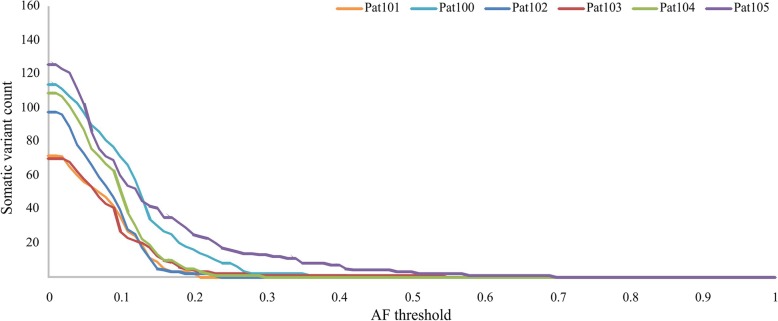
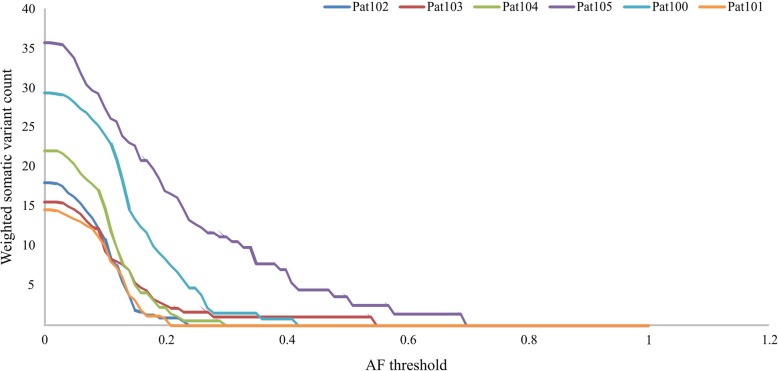
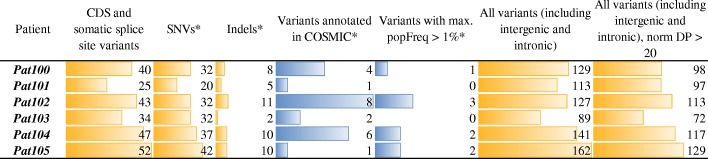
Using the NextSeq 500 platform, we performed exome sequencing of tumors with matched lymph node tissues and peripheral blood obtained from six patients with CBT. To obtain reliable results in tumors with low ML, we developed and successfully applied a complex approach for the analysis of sequencing data. ML was evaluated as the number of somatic variants per megabase (Mb) of the target regions covered by the Illumina TruSeq Exome Library Prep Kit.
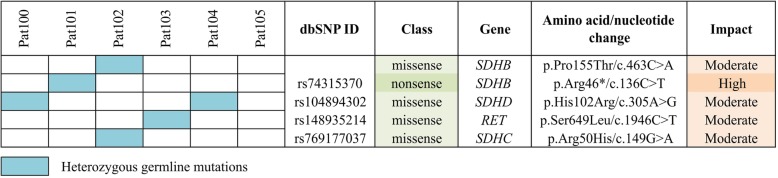
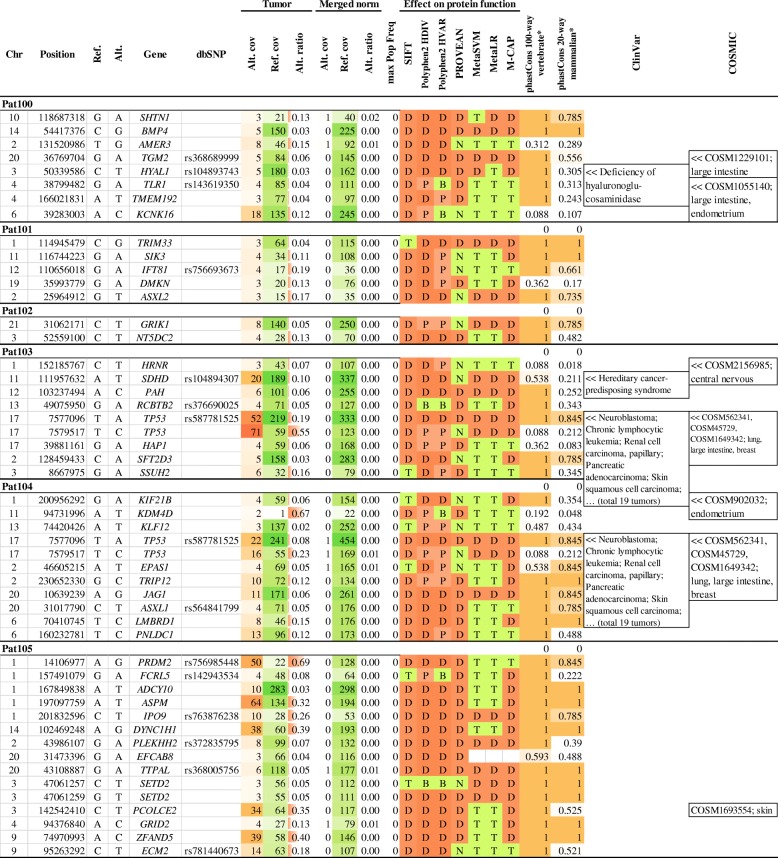
The ML in CBT varied in the range of 0.09-0.28/Mb. Additionally, we identified several pathogenic/likely pathogenic somatic and germline allelic variants across six patients studied (including TP53 variants).
Using the developed approach, we estimated the ML in CBT, which is much lower than in common malignant tumors. Identified variants in known paraganglioma/pheochromocytoma-causative genes and novel genes could be associated with the pathogenesis of CBT. The obtained results expand our knowledge of the mutation process in CBT as well as the biology of tumor development.
颈动脉体肿瘤(CBT)是一种罕见的起源于颈动脉分叉处附近副神经节的肿瘤。肿瘤内存在很大的异质性,并且 CBT 的发生可能与种系和体细胞等位基因突变有关。关于 CBT 的分子遗传学研究有限,其发病机制的分子机制尚未完全阐明。这项工作集中在估计 CBT 的突变负荷(ML)。
我们使用 NextSeq 500 平台,对 6 例 CBT 患者的肿瘤及其匹配的淋巴结组织和外周血进行了外显子组测序。为了在 ML 较低的肿瘤中获得可靠的结果,我们开发并成功应用了一种复杂的测序数据分析方法。ML 评估为每兆碱基(Mb)覆盖的目标区域的体细胞变异数(Illumina TruSeq Exome Library Prep Kit)。
CBT 的 ML 范围为 0.09-0.28/Mb。此外,我们在研究的 6 名患者中鉴定了几个致病性/可能致病性的体细胞和种系等位基因突变(包括 TP53 变异)。
使用开发的方法,我们估计了 CBT 的 ML,其远低于常见的恶性肿瘤。在已知的副神经节瘤/嗜铬细胞瘤致病基因和新基因中鉴定出的变异可能与 CBT 的发病机制有关。获得的结果扩展了我们对 CBT 中突变过程以及肿瘤发展生物学的认识。