Charles River Nederland BV, Leiden, The Netherlands.
Biogen, Cambridge, MA, USA.
Sci Rep. 2019 Mar 14;9(1):4521. doi: 10.1038/s41598-019-41153-w.
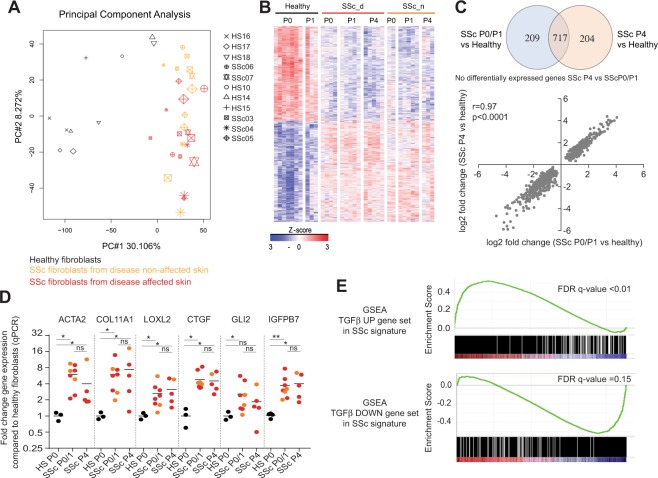
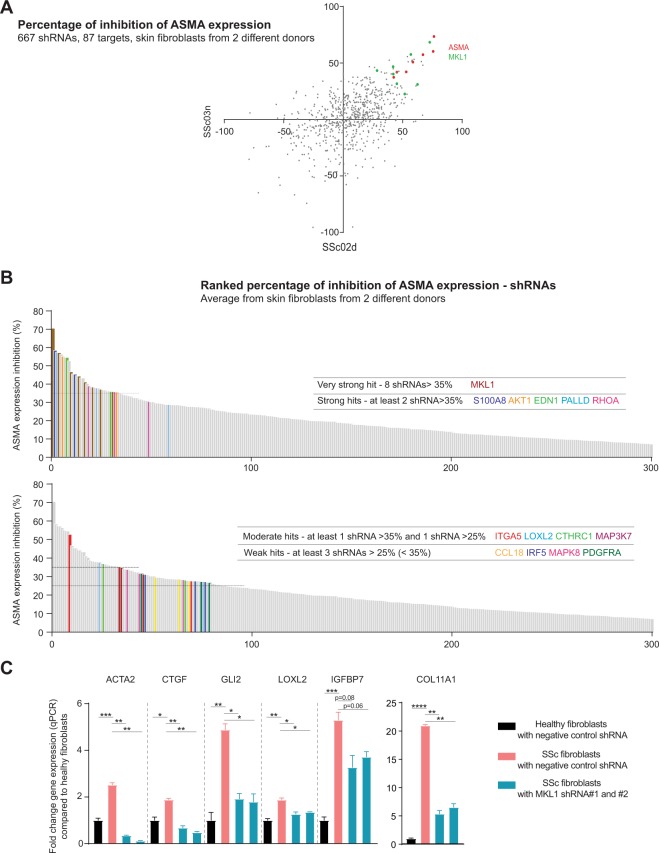
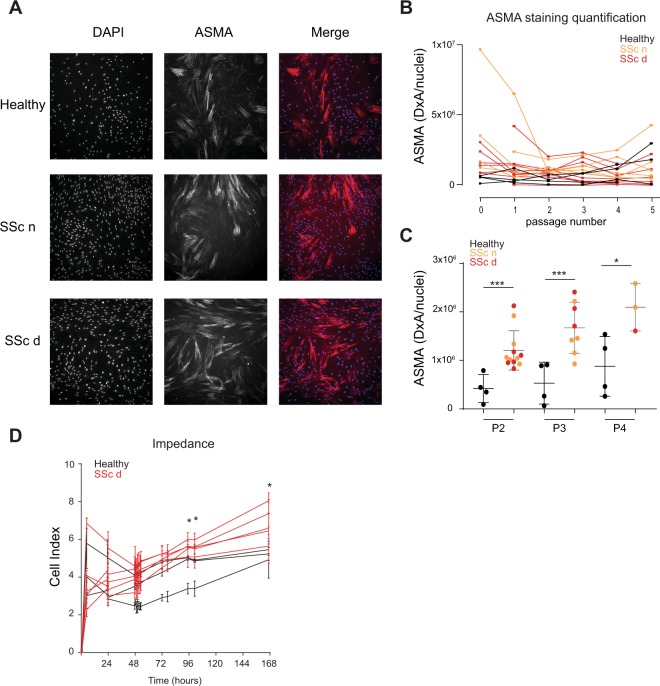
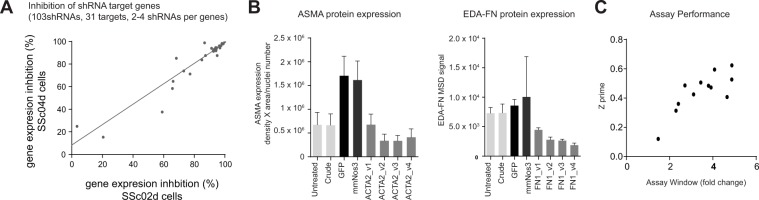
Systemic sclerosis (SSc or scleroderma) is an auto-immune disease characterized by skin fibrosis. While primary cells from patients are considered as a unique resource to better understand human disease biology, the effect of in vitro culture on these cells and their evaluation as a platform to identify disease regulators remain poorly characterized. The goal of our studies was to provide insights into the utility of SSc dermal fibroblast primary cells for therapeutic target discovery. The disease phenotypes of freshly isolated and in vitro cultured SSc dermal fibroblasts were characterized using whole transcriptome profiling, alpha smooth muscle actin (ASMA) expression and cell impedance. SSc dermal fibroblasts retained most of the molecular disease phenotype upon in vitro culture for at least four cell culture passages (approximatively 10 cell doublings). We validated an RNA interference high throughput assay that successfully identified genes affecting the myofibroblast phenotype of SSc skin fibroblasts. These genes included MKL1, RHOA and LOXL2 that were previously proposed as therapeutic anti-fibrotic target, and ITGA5, that has been less studied in fibrosis biology and may be a novel potential modifier of SSc fibroblast biology. Together our results demonstrated the value of carefully-phenotyped SSc dermal fibroblasts as a platform for SSc target and drug discovery.
系统性硬化症(SSc 或硬皮病)是一种自身免疫性疾病,其特征为皮肤纤维化。虽然患者的原代细胞被认为是更好地了解人类疾病生物学的独特资源,但体外培养对这些细胞的影响以及将其作为鉴定疾病调节剂的平台的评估仍未得到充分描述。我们研究的目的是深入了解 SSc 皮肤成纤维细胞原代细胞在治疗靶点发现中的应用。使用全转录组谱分析、α平滑肌肌动蛋白(ASMA)表达和细胞阻抗来描述新鲜分离和体外培养的 SSc 皮肤成纤维细胞的疾病表型。SSc 皮肤成纤维细胞在体外培养至少 4 个细胞培养传代(约 10 个细胞倍增)时保留了大部分分子疾病表型。我们验证了一种 RNA 干扰高通量测定法,该方法成功鉴定了影响 SSc 皮肤成纤维细胞成肌纤维细胞表型的基因。这些基因包括 MKL1、RHOA 和 LOXL2,它们之前被提议作为抗纤维化治疗靶点,而 ITGA5 在纤维化生物学中的研究较少,可能是 SSc 成纤维细胞生物学的一个新的潜在修饰因子。总之,我们的研究结果表明,精心表型分析的 SSc 皮肤成纤维细胞作为 SSc 靶点和药物发现的平台具有价值。