Department of Clinical Chemistry and Laboratory Medicine, Jena University Hospital, Jena, Germany.
Centre for Sepsis Control and Care (CSCC), Jena University Hospital, Jena, Germany.
Front Immunol. 2019 Feb 25;10:273. doi: 10.3389/fimmu.2019.00273. eCollection 2019.
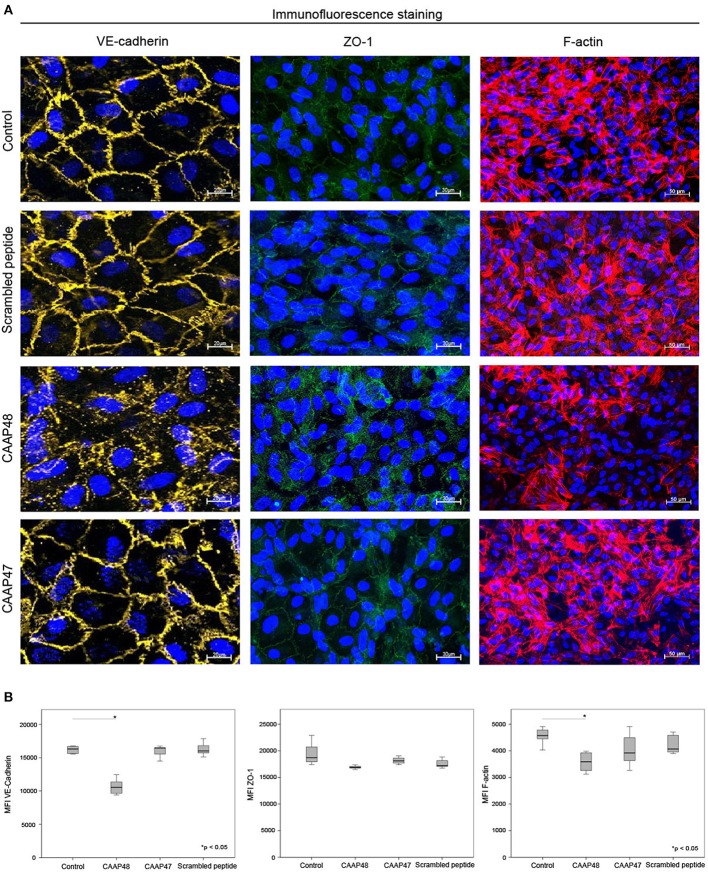
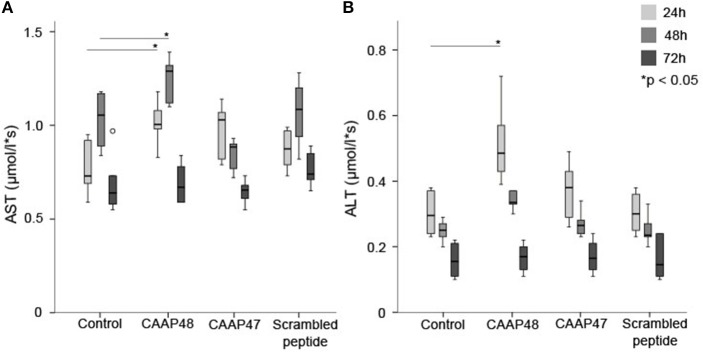
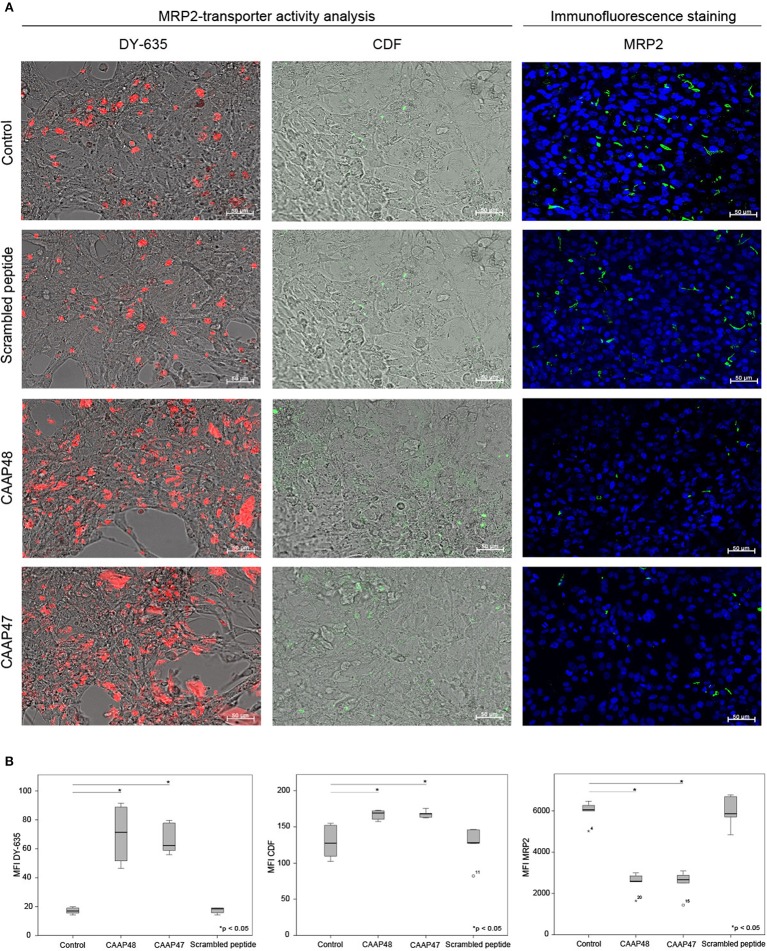
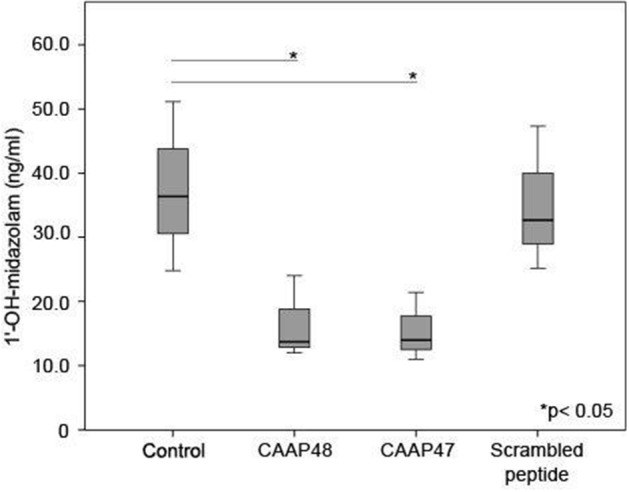
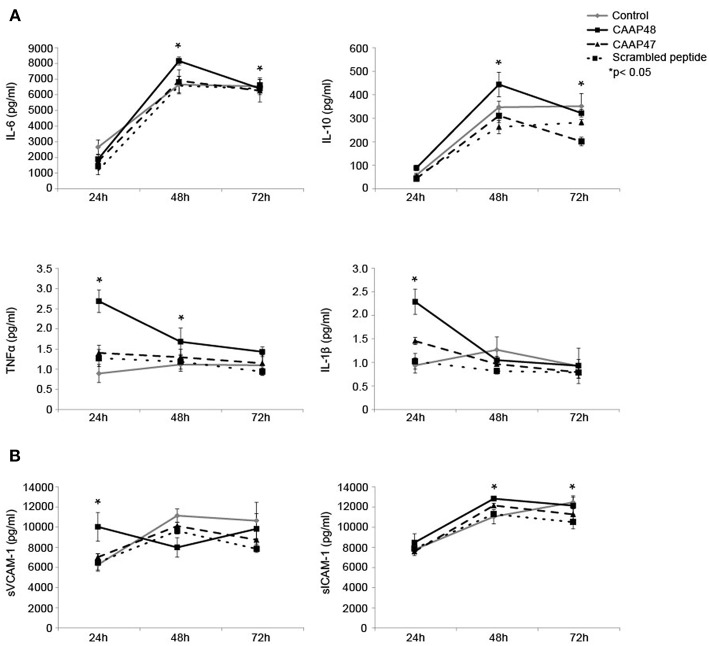
Sepsis is a leading cause of mortality in the critically ill, characterized by life-threatening organ dysfunctions due to dysregulation of the host response to infection. Using mass spectrometry, we identified a C-terminal fragment of alpha-1-antitrypsin, designated CAAP48, as a new sepsis biomarker that actively participates in the pathophysiology of sepsis. It is well-known that liver dysfunction is an early event in sepsis-associated multi-organ failure, thus we analyzed the pathophysiological function of CAAP48 in a microfluidic-supported liver-on-chip model. Hepatocytes were stimulated with synthetic CAAP48 and several control peptides. CAAP48-treatment resulted in an accumulation of the hepatocyte-specific intracellular enzymes aspartate- and alanine-transaminase and impaired the activity of the hepatic multidrug resistant-associated protein 2 and cytochrome P450 3A4. Moreover, CAAP48 reduced hepatic expression of the multidrug resistant-associated protein 2 and disrupted the endothelial structural integrity as demonstrated by reduced expression of VE-cadherin, F-actin and alteration of the tight junction protein zonula occludens-1, which resulted in a loss of the endothelial barrier function. Furthermore, CAAP48 induced the release of adhesion molecules and pro- and anti-inflammatory cytokines. Our results show that CAAP48 triggers inflammation-related endothelial barrier disruption as well as hepatocellular dysfunction in a liver-on-chip model emulating the pathophysiological conditions of inflammation. Besides its function as new sepsis biomarker, CAAP48 thus might play an important role in the development of liver dysfunction as a consequence of the dysregulated host immune-inflammatory response in sepsis.
脓毒症是危重病患者死亡的主要原因,其特征是由于宿主对感染的反应失调而导致危及生命的器官功能障碍。我们使用质谱法鉴定了一种称为 CAAP48 的α-1-抗胰蛋白酶的 C 端片段,作为一种新的脓毒症生物标志物,它积极参与脓毒症的病理生理过程。众所周知,肝功能障碍是脓毒症相关多器官衰竭的早期事件,因此我们在微流控支持的肝芯片模型中分析了 CAAP48 的病理生理功能。用合成的 CAAP48 和几种对照肽刺激肝细胞。CAAP48 处理导致肝细胞特异性细胞内酶天冬氨酸转氨酶和丙氨酸转氨酶的积累,并损害多药耐药相关蛋白 2 和细胞色素 P450 3A4 的活性。此外,CAAP48 降低了多药耐药相关蛋白 2 的肝表达,并破坏了内皮结构完整性,如 VE-钙粘蛋白、F-肌动蛋白的表达减少和紧密连接蛋白 zonula occludens-1 的改变,导致内皮屏障功能丧失。此外,CAAP48 诱导粘附分子和促炎及抗炎细胞因子的释放。我们的结果表明,CAAP48 在模拟炎症病理生理条件的肝芯片模型中触发与炎症相关的内皮屏障破坏以及肝细胞功能障碍。除了作为新的脓毒症生物标志物的功能外,CAAP48 还可能在脓毒症中宿主免疫炎症反应失调导致肝功能障碍的发展中发挥重要作用。