Center for Biomedical Engineering, School of Engineering, Institute for Molecular and Nanoscale Innovation, Brown University, Providence, RI, United States.
Division of Infectious Diseases, Rhode Island Hospital, Alpert Medical School and Brown University, Providence, RI, United States.
Front Cell Infect Microbiol. 2019 Feb 28;9:37. doi: 10.3389/fcimb.2019.00037. eCollection 2019.
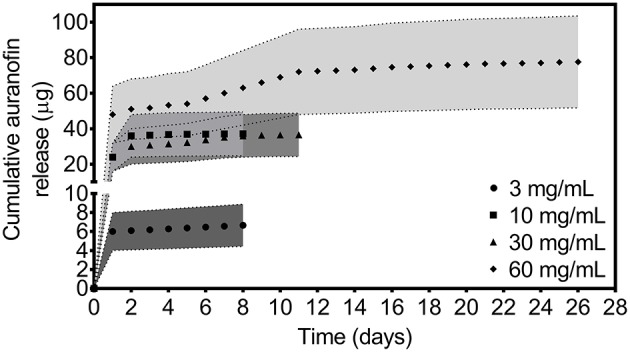
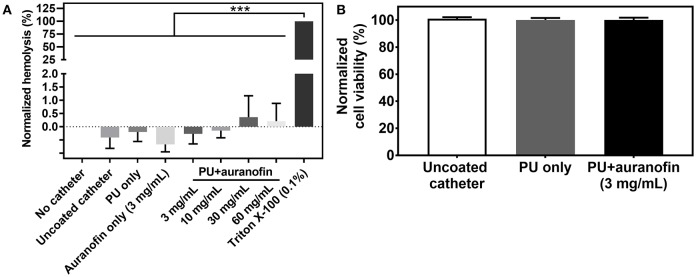
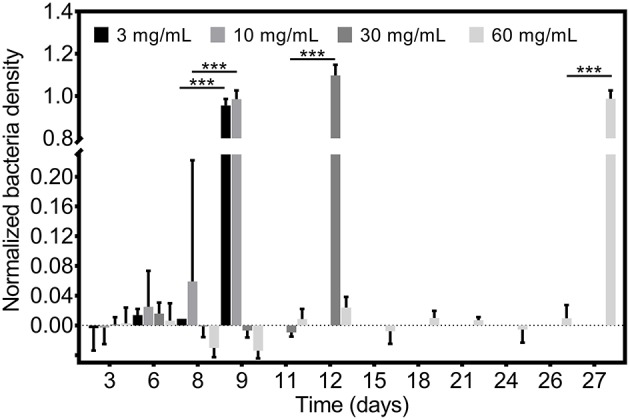
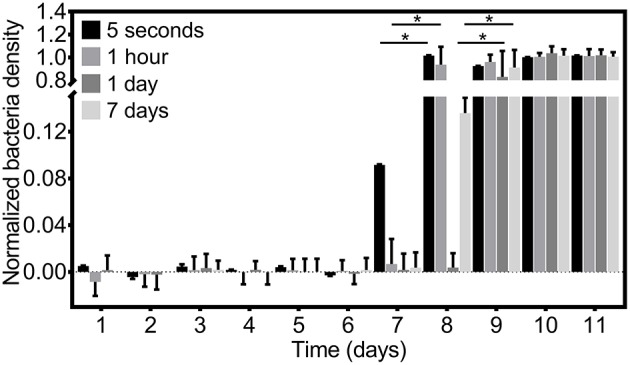
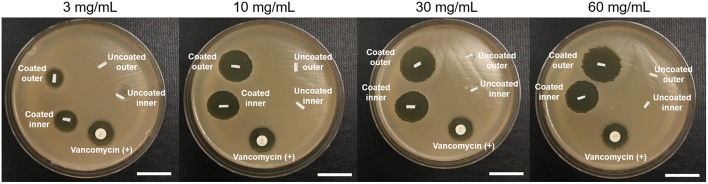
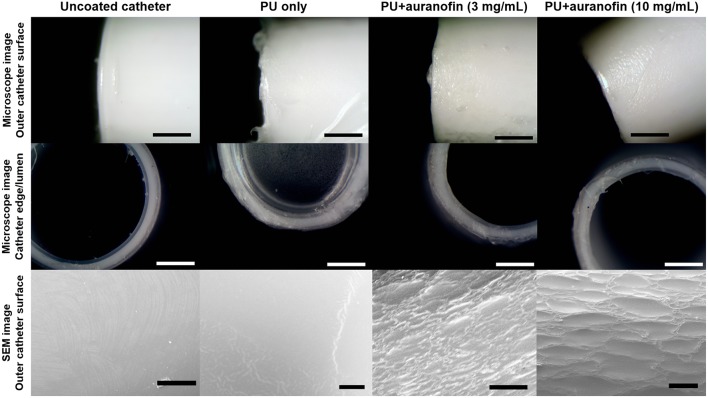
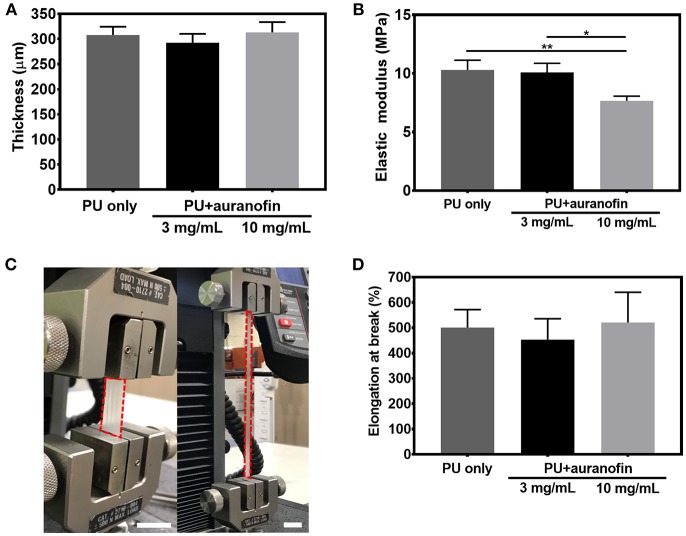
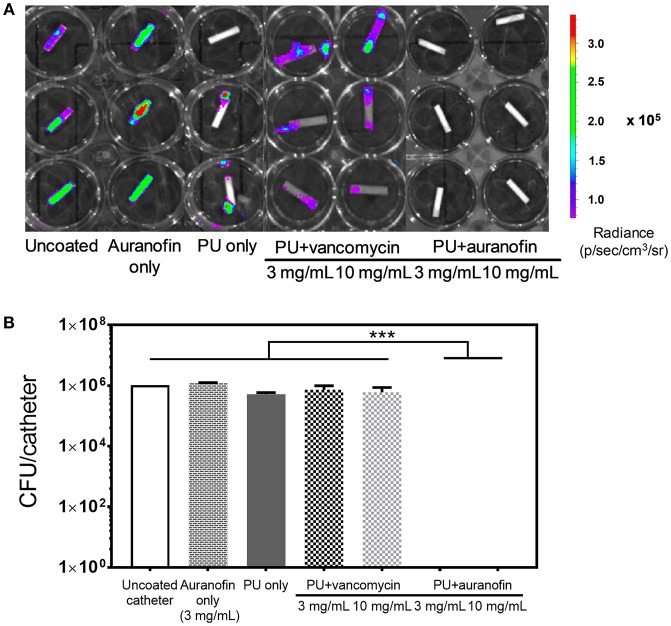
Intravascular catheter related bloodstream infections (CRBSIs) are a leading cause of hospital-acquired infections worldwide, resulting not only in the burden of cost and morbidity for patients but also in the over-consumption of medical resources for hospitals and health care organizations. In this study, a novel auranofin releasing antibacterial and antibiofilm polyurethane (PU) catheter coating was developed and investigated for future use in preventing CRBSIs. Auranofin is an antirheumatic drug with recently identified antimicrobial properties. The drug carrier, PU, acts as a barrier surrounding the antibacterial agent, auranofin, to extend the drug release profile and improve its long-term antibacterial and antibiofilm efficacy and potentially the length of catheter implantation within a patient. The PU+auranofin coatings developed here were found to be highly stretchable (exhibiting ~500% percent elongation), which is important for the compliance of the material on a flexible catheter. PU+auranofin coated catheters were able to inhibit the growth of methicillin-resistant (MRSA) for 8 to 26 days depending on the specific drug concentration utilized during the dip coating process. The PU+auranofin coated catheters were also able to completely inhibit MRSA biofilm formation , an effect that was not observed with auranofin or PU alone. Lastly, these coatings were found to be hemocompatible with human erythrocytes and maintain liver cell viability.
血管内导管相关血流感染(CRBSI)是全球范围内导致医院获得性感染的主要原因,不仅给患者带来了成本和发病的负担,也给医院和医疗机构过度消耗了医疗资源。在这项研究中,开发了一种新型金诺芬释放型抗菌和抗生物膜聚氨酯(PU)导管涂层,以用于预防 CRBSI。金诺芬是一种抗风湿药物,最近被发现具有抗菌特性。药物载体 PU 作为抗菌剂金诺芬的屏障,以延长药物释放曲线,提高其长期抗菌和抗生物膜效果,并可能延长患者体内导管植入的时间。这里开发的 PU+金诺芬涂层具有很高的拉伸性(表现出约 500%的伸长率),这对于材料在柔性导管上的顺应性很重要。PU+金诺芬涂层导管能够抑制耐甲氧西林金黄色葡萄球菌(MRSA)的生长,具体取决于在浸涂过程中使用的特定药物浓度,抑制时间为 8 至 26 天。PU+金诺芬涂层导管还能够完全抑制 MRSA 生物膜的形成,而单独使用金诺芬或 PU 则没有观察到这种效果。最后,这些涂层与人的红细胞具有血液相容性,并保持肝细胞活力。