Zoological Society of London, Outer Circle, Regent's Park, London, United Kingdom.
Nicholas School of the Environment, Duke University, Durham, North Carolina, United States of America.
PLoS One. 2019 Mar 15;14(3):e0213341. doi: 10.1371/journal.pone.0213341. eCollection 2019.
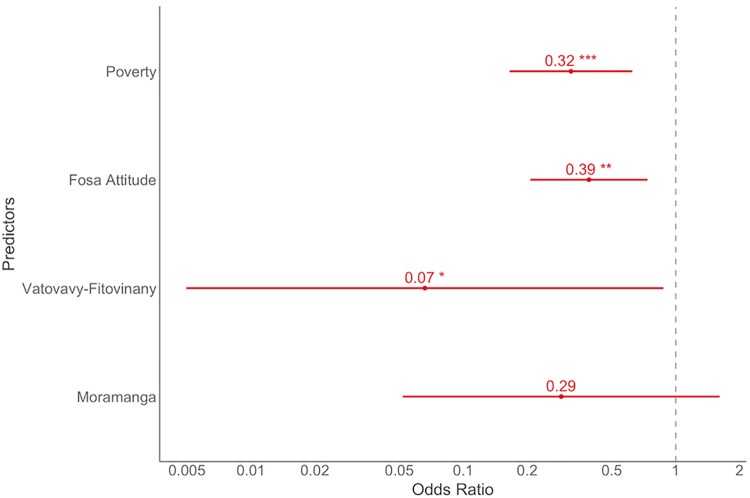
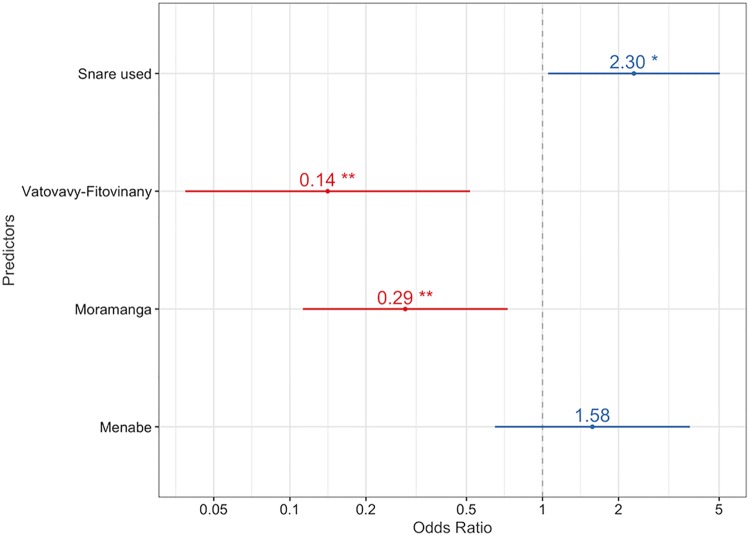
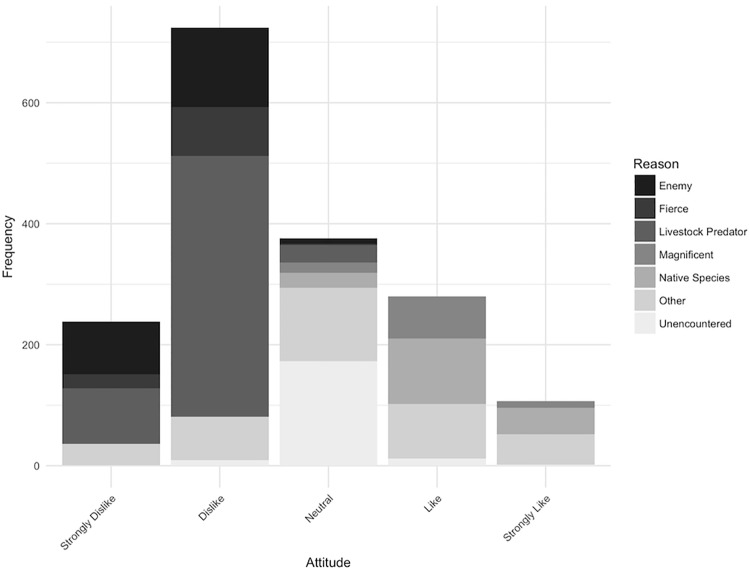
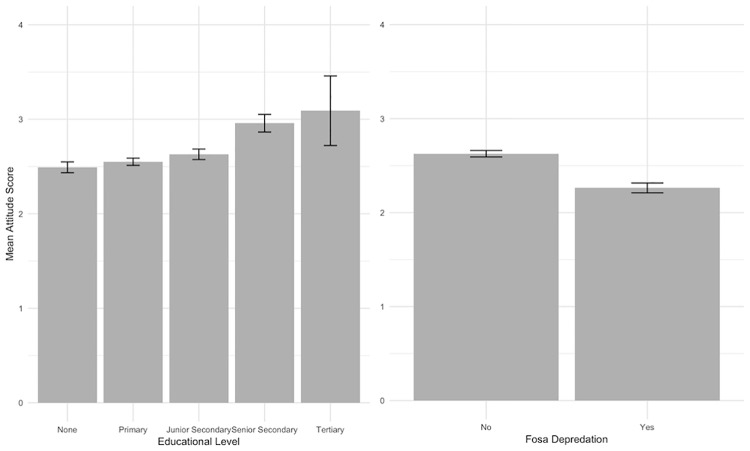
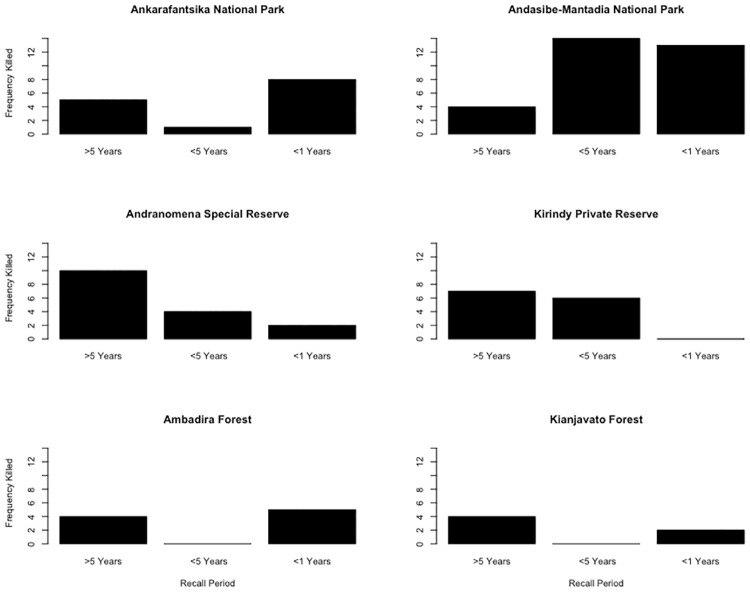
Fosas (Cryptoprocta ferox) are Madagascar's largest carnivores, occupying much of the island's forested landscape. This study provides the first evaluation of fosas' conflict with humans, a problem for many small and medium sized carnivores worldwide. We examined fosas' predation of poultry, and the subsequent retaliatory killing. Over 1750 households were interviewed across four regions, encompassing Madagascar's major forest types (deciduous/rainforest) and protected area classifications (national park, reserve and unprotected forest). Predation by fosa was the third highest reported cause (15%) of poultry mortality, with little evidence that coops were effective in reducing predation. Predation of poultry was more prevalent in deciduous forests, and most common during the evenings of the dry season. Over half of all interviewees said they disliked fosas, with loss of poultry the most commonly stated reason. Respondents' that had suffered poultry depredation and those with lower educational attainment were more likely to dislike fosas. Interviewees that disliked fosas and those that were wealthier were most likely to report having killed a fosa. A minimum of thirty fosas was killed in retaliation by our respondents during the year before the interviews. Given that the fosa population is in decline, and most of Madagascar's forests are likely to be too small to support sustainable populations, these killings may be detrimental to vulnerable sub-populations. These results shed insight into the cultural perceptions and predation patterns of a medium sized carnivore, with relevance to worldwide human-wildlife conflict of often overlooked smaller carnivores. We suggest that educational programs, guard dogs, poultry disease vaccinations and robust coop construction may be effective for improving attitudes and reducing retaliatory killing.
袋獾(Cryptoprocta ferox)是马达加斯加最大的食肉动物,占据了该岛大部分森林景观。本研究首次评估了袋獾与人类的冲突,这也是世界上许多中小型食肉动物面临的问题。我们调查了袋獾对家禽的捕食行为,以及随后的报复性杀戮行为。在四个地区,超过 1750 户家庭接受了采访,这些地区涵盖了马达加斯加的主要森林类型(落叶林/雨林)和保护区分类(国家公园、保护区和无保护森林)。袋獾捕食是家禽死亡的第三大主要原因(15%),几乎没有证据表明鸡舍能有效减少捕食。袋獾捕食家禽在落叶林中更为普遍,在旱季傍晚最为常见。超过一半的受访者表示不喜欢袋獾,家禽丢失是最常提到的原因。遭受过家禽损失的受访者和受教育程度较低的受访者更有可能不喜欢袋獾。不喜欢袋獾的受访者和更富裕的受访者最有可能报告说他们杀死了一只袋獾。在接受采访前一年,我们的受访者中至少有 30 只袋獾因报复而被杀死。鉴于袋獾数量正在减少,而且马达加斯加的大部分森林可能太小,无法支持可持续的种群,这些杀戮可能对脆弱的亚种群有害。这些结果深入了解了一种中型食肉动物的文化认知和捕食模式,对于全世界经常被忽视的小型食肉动物与人类的冲突具有相关性。我们建议,教育计划、护卫犬、家禽疾病疫苗接种和坚固的鸡舍建设可能有助于改善态度和减少报复性杀戮。