Department of Pediatrics, Graduate School of Medicine Kyoto University, Kyoto City, Japan.
PLoS One. 2019 Mar 15;14(3):e0213768. doi: 10.1371/journal.pone.0213768. eCollection 2019.
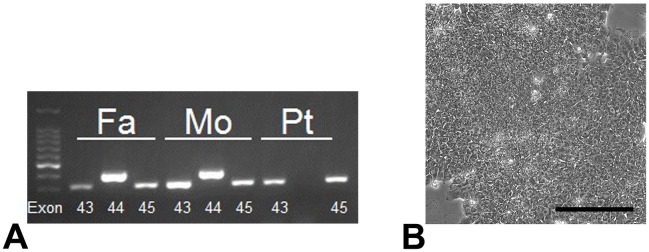
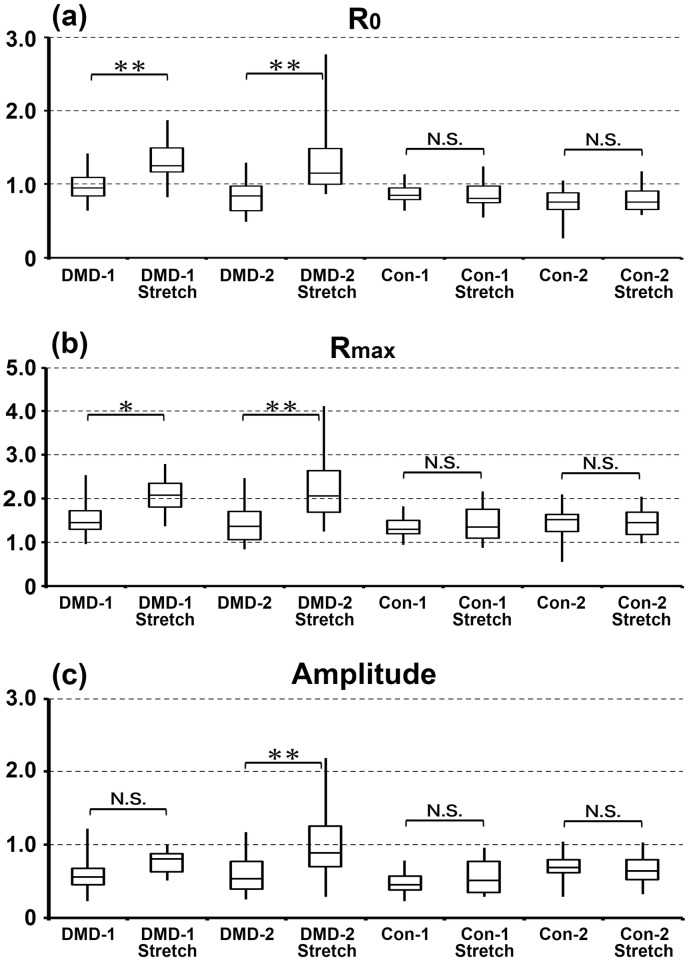
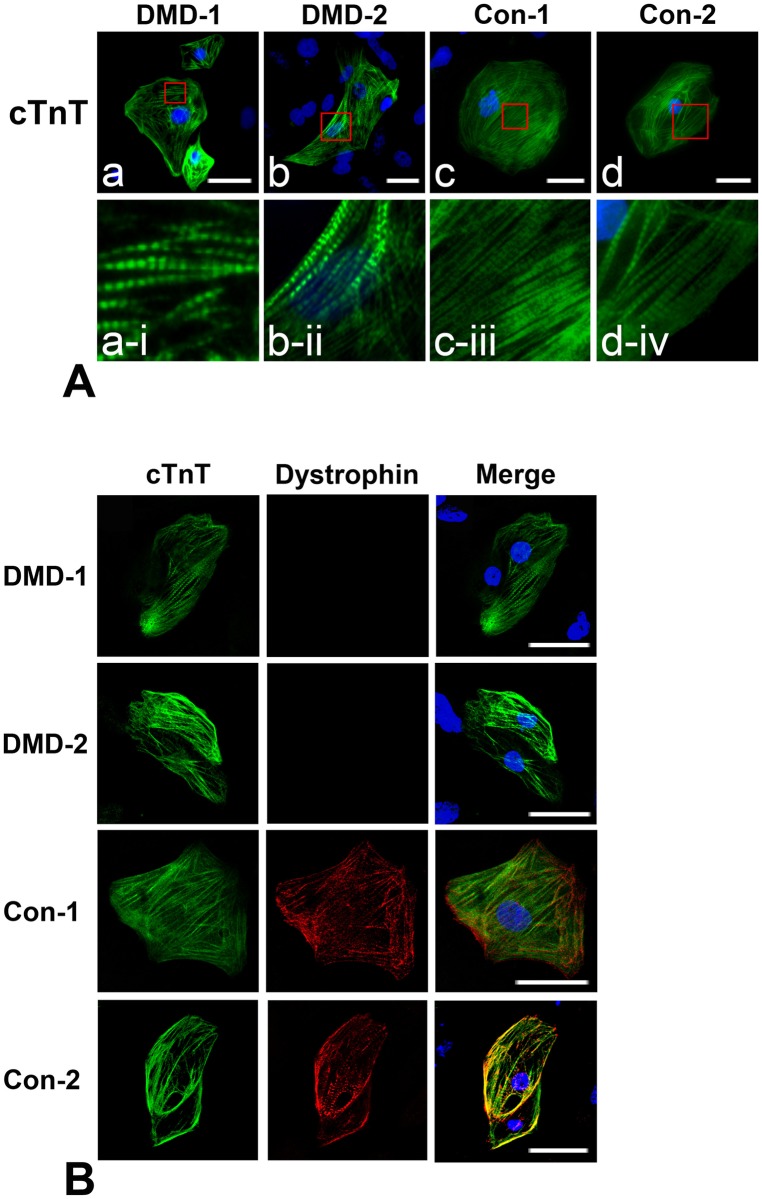
Duchenne muscular dystrophy (DMD) is the most common and severe form of muscular dystrophy. The major symptoms of this condition are walking difficulties, dyspnea caused by progressive skeletal muscle weakness, and cardiomyopathy. Recent advances in ventilator support devices have dramatically decreased mortality caused by respiratory distress. Consequently, cardiomyopathy resulting in heart failure is currently the major cause of death among DMD patients. One mechanism by which skeletal muscle is damaged in DMD patients involves elevation of the intracellular Ca2+ concentration. By contrast, the mechanisms underlying the development of cardiomyopathy are unclear. To investigate this, we examined the intracellular Ca2+ concentration and calcium transients in cardiomyocytes differentiated from human induced pluripotent stem cells (hiPSCs). hiPSCs were derived from a DMD patient (DMD-hiPSCs), in whom exon 44 of the gene encoding dystrophin was deleted, and from his parents (control-hiPSCs), who did not carry this mutation. The intracellular Ca2+ concentration was measured using the fluorescent indicator indo-1. The fluorescence ratio (410/490 nm) of indo-1 at rest (R0), the peak of this ratio (Rmax), and the amplitude (Rmax-R0) were significantly higher in cardiomyocytes differentiated from DMD-hiPSCs than in those differentiated from control-hiPSCs. Moreover, mechanical stretching significantly increased the intracellular Ca2+ concentration in cardiomyocytes differentiated from DMD-hiPSCs, but not in those differentiated from control-hiPSCs. These findings indicate that elevation of the intracellular Ca2+ concentration can cause cardiac damage leading to cardiomyopathy in DMD patients.
杜氏肌营养不良症(DMD)是最常见和最严重的肌肉营养不良症形式。这种疾病的主要症状是行走困难、进行性骨骼肌无力引起的呼吸困难和心肌病。呼吸机支持设备的最新进展显著降低了呼吸窘迫引起的死亡率。因此,导致心力衰竭的心肌病目前是 DMD 患者死亡的主要原因。DMD 患者的骨骼肌受损的一种机制涉及细胞内 Ca2+浓度的升高。相比之下,导致心肌病发展的机制尚不清楚。为了研究这一点,我们检查了从 DMD 患者(DMD-hiPSCs)和他的父母(对照 hiPSCs)诱导多能干细胞(hiPSCs)分化而来的心肌细胞中的细胞内 Ca2+浓度和钙瞬变。DMD-hiPSCs 中编码肌营养不良蛋白的基因外显子 44 缺失,而对照 hiPSCs 没有携带这种突变。使用荧光指示剂 indo-1 测量细胞内 Ca2+浓度。在静止时(R0),ind0-1 的荧光比率(410/490nm)、该比率的峰值(Rmax)和幅度(Rmax-R0)在 DMD-hiPSCs 分化而来的心肌细胞中显著高于在对照 hiPSCs 分化而来的心肌细胞中。此外,机械拉伸显著增加了 DMD-hiPSCs 分化而来的心肌细胞中的细胞内 Ca2+浓度,但对对照 hiPSCs 分化而来的心肌细胞没有影响。这些发现表明,细胞内 Ca2+浓度的升高可能导致心脏损伤,从而导致 DMD 患者发生心肌病。