Inoue Saki, Ikeda Hideki
Department of Nutritional Management, Sanyudo Hospital, Yonezawa, Japan.
Pulmonary Division, Department of Internal Medicine, Sanyudo Hospital, Yonezawa, Japan,
Int J Chron Obstruct Pulmon Dis. 2019 Mar 1;14:575-583. doi: 10.2147/COPD.S188422. eCollection 2019.
No consensus has been reached regarding appropriate nutritional intervention and rehabilitation during early acute exacerbation of COPD (AECOPD). Given the individual differences in symptoms of AECOPD, patients should be classified by their pathology. For example, it is known that there are differences in the inflammatory response between AECOPD with and without bacterial infection. However, there have been few reports on AECOPD from a nutritional perspective. The aim of this study was to investigate amino acid levels in patients with AECOPD.
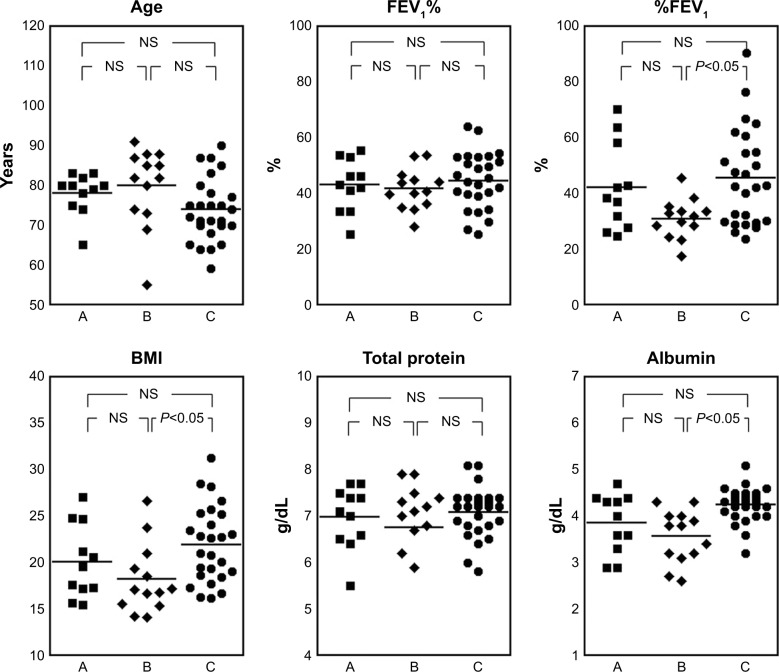
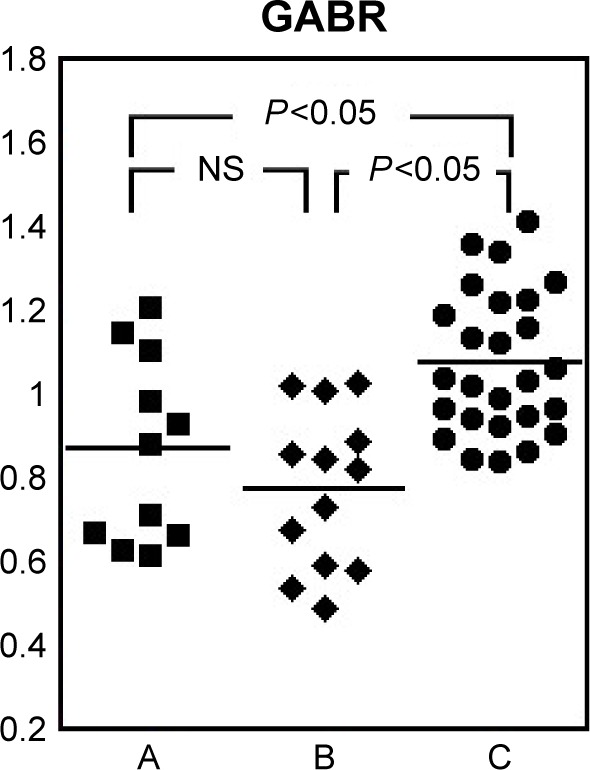
Blood was collected from patients who were hospitalized with AECOPD and from patients with COPD that was in a stable state. We divided the patients with AECOPD into those without bacterial infection (group A) and those with bacterial infection (group B). The patients with COPD that was stable served as controls (group C). The plasma levels of 9 essential amino acids, 13 nonessential amino acids, and total amino acids were compared between the three groups.
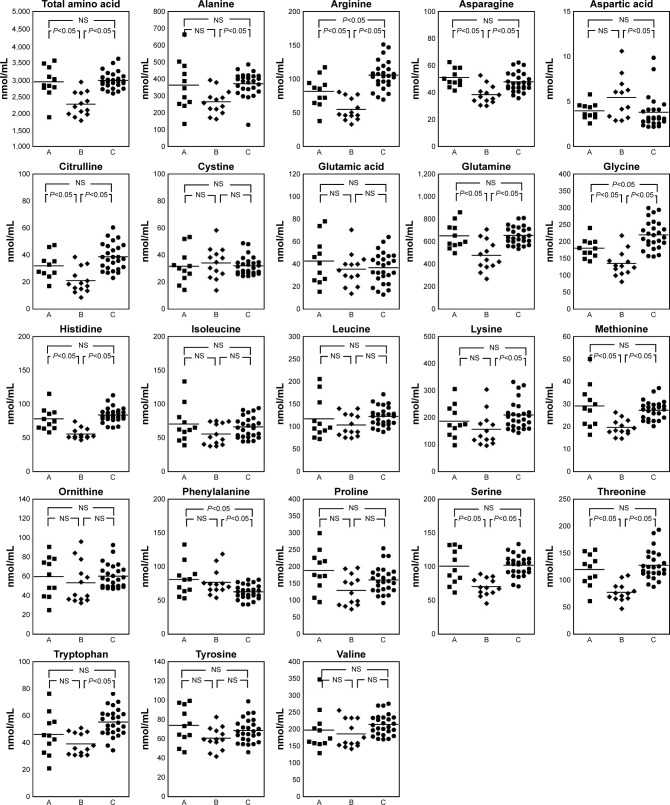
In the early stages of AECOPD, differences in plasma levels of only three amino acids (glycine, phenylalanine, and arginine) were observed between groups C and A. Differences in total amino acids and 13 amino acids were observed between groups C and B. Group B had lower levels of total amino acids and of seven amino acids (asparagine, citrulline, glutamine, histidine, methionine, serine, and threonine) compared with the other study groups.
The findings of this study show that amino acid levels in plasma differ in patients with AECOPD depending on whether or not bacterial infection is present. Our results suggest that specific amino acids (ie, asparagine, citrulline, glutamine, histidine, serine, and threonine) have potential utility as diagnostic markers to distinguish between bacterial and nonbacterial AECOPD.
关于慢性阻塞性肺疾病急性加重期(AECOPD)早期合适的营养干预和康复措施尚未达成共识。鉴于AECOPD症状存在个体差异,应根据患者的病理情况进行分类。例如,已知合并和未合并细菌感染的AECOPD在炎症反应方面存在差异。然而,从营养角度对AECOPD的报道较少。本研究的目的是调查AECOPD患者的氨基酸水平。
采集因AECOPD住院的患者以及处于稳定期的慢性阻塞性肺疾病(COPD)患者的血液。我们将AECOPD患者分为未合并细菌感染组(A组)和合并细菌感染组(B组)。处于稳定期的COPD患者作为对照组(C组)。比较三组患者血浆中9种必需氨基酸、13种非必需氨基酸和总氨基酸的水平。
在AECOPD早期,C组和A组之间仅观察到三种氨基酸(甘氨酸、苯丙氨酸和精氨酸)的血浆水平存在差异。C组和B组之间观察到总氨基酸和13种氨基酸存在差异。与其他研究组相比,B组的总氨基酸水平以及七种氨基酸(天冬酰胺、瓜氨酸、谷氨酰胺、组氨酸、蛋氨酸、丝氨酸和苏氨酸)水平较低。
本研究结果表明,AECOPD患者血浆中的氨基酸水平因是否存在细菌感染而有所不同。我们的结果表明,特定氨基酸(即天冬酰胺、瓜氨酸、谷氨酰胺、组氨酸、丝氨酸和苏氨酸)有可能作为区分细菌性和非细菌性AECOPD的诊断标志物。