Suter Theo M, Miller Thomas S, Cockcroft Jeremy K, Aliev Abil E, Wilding Martin C, Sella Andrea, Corà Furio, Howard Christopher A, McMillan Paul F
Department of Chemistry , University College London , Christopher Ingold Building, 20 Gordon Street , WC1H 0AJ , London , UK . Email:
Electrochemical Innovation Lab , Department of Chemical Engineering , University College London , Torrington Place , London WC1E 7JE , UK . Email:
Chem Sci. 2018 Dec 21;10(8):2519-2528. doi: 10.1039/c8sc05232h. eCollection 2019 Feb 28.
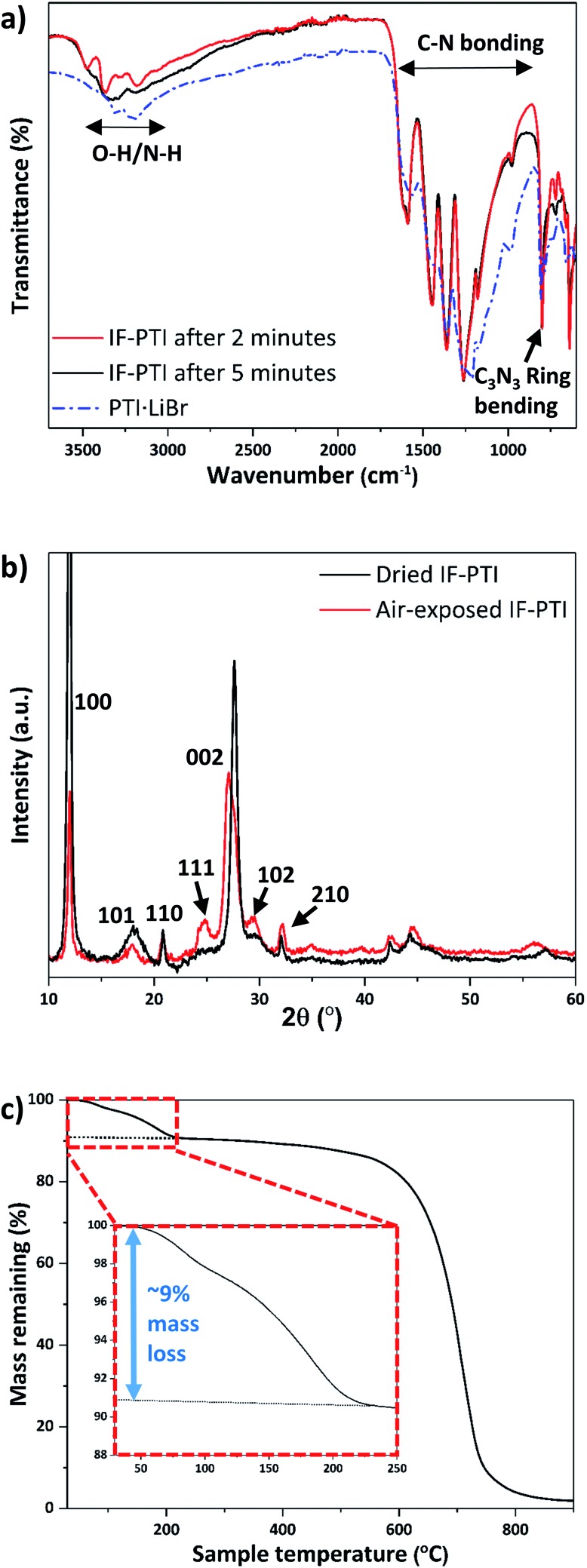
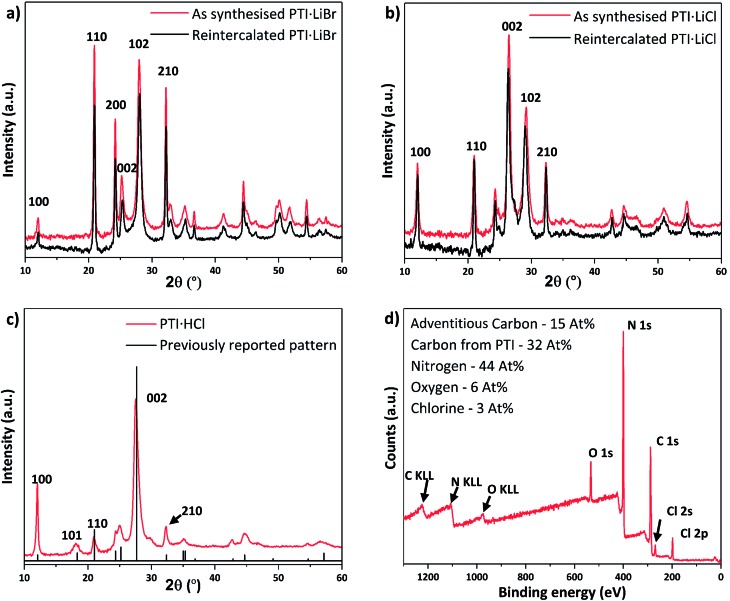
The development of processes to tune the properties of materials is essential for the progression of next-generation technologies for catalysis, optoelectronics and sustainability including energy harvesting and conversion. Layered carbon nitrides have also been identified as of significant interest within these fields of application. However, most carbon nitride materials studied to date have poor crystallinity and therefore their properties cannot be readily controlled or easily related to their molecular level or nanoscale structures. Here we report a process for forming a range of crystalline layered carbon nitrides with polytriazine imide (PTI) structures that can be interconverted by simple ion exchange processes, permitting the tunability of their optoelectronic and chemical properties. Notable outcomes of our work are (a) the creation of a crystalline, guest-ion-free PTI compound that (b) can be re-intercalated with ions or molecules using "soft chemistry" approaches. This includes the intercalation of HCl, demonstrating a new ambient pressure route to the layered PTI·HCl material that was previously only available by a high-pressure-high-temperature route (c). Our work also shows (d) that the intercalant-free (IF-) PTI material spontaneously absorbs up to 10 weight% HO from the ambient atmosphere and that this process is reversible, leading to potential applications for membranes and water capture in dry environments.
开发用于调节材料性能的工艺对于催化、光电子学以及包括能量收集和转换在内的可持续性等下一代技术的发展至关重要。层状碳氮化物在这些应用领域中也被认为具有重大意义。然而,迄今为止研究的大多数碳氮化物材料结晶度较差,因此它们的性能难以轻易控制,也不易与分子水平或纳米级结构相关联。在此,我们报告了一种形成一系列具有聚三嗪酰亚胺(PTI)结构的结晶层状碳氮化物的方法,这些结构可通过简单的离子交换过程相互转化,从而实现其光电和化学性质的可调性。我们工作的显著成果包括:(a)制备出一种结晶的、无客体离子的PTI化合物;(b)可以使用“软化学”方法将离子或分子重新插入其中。这包括HCl的插入,展示了一种新的常压途径来制备层状PTI·HCl材料,该材料以前只能通过高压高温途径获得;(c)我们的工作还表明,(d)无插入剂(IF-)的PTI材料会自发地从周围大气中吸收高达10重量%的H₂O,并且这个过程是可逆的,这为干燥环境中的膜和水捕获带来了潜在应用。