Chen Yang, Li Shuang
School of Management, China University of Mining and Technology, Xuzhou, China.
Front Psychol. 2019 Mar 4;10:319. doi: 10.3389/fpsyg.2019.00319. eCollection 2019.
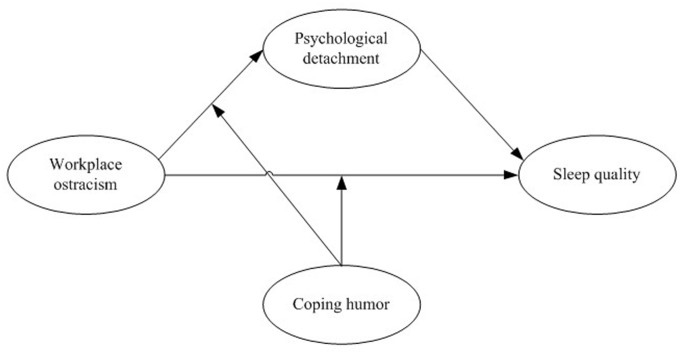
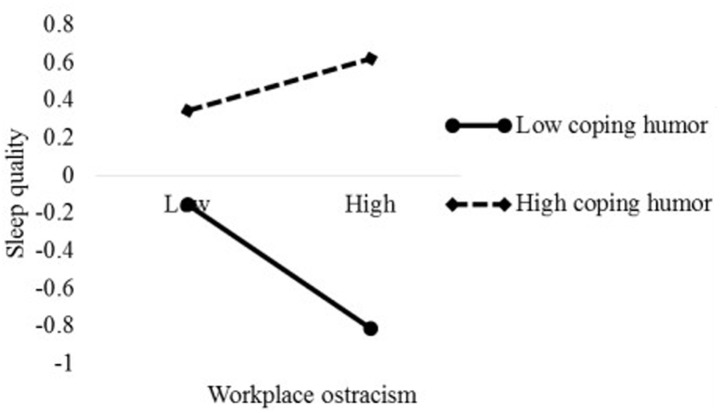
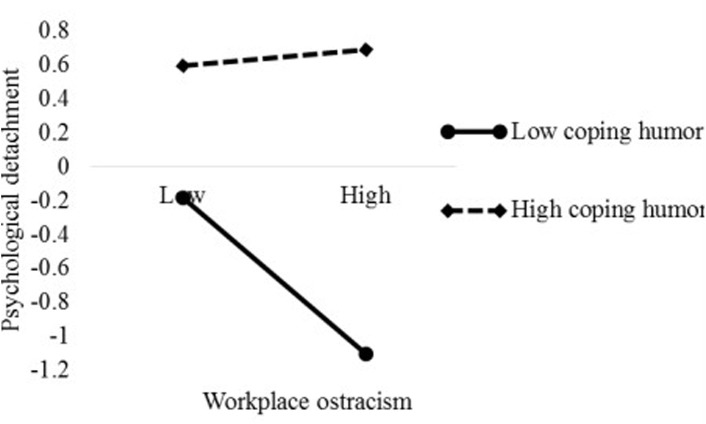
Extant research suggests that workplace ostracism has a detrimental impact on the outcomes of employees. However, very little is known about the impact of workplace ostracism on sleep quality. Therefore, this study aimed to address this gap in the literature. By employing the extended stressor-detachment model, we investigated the mediating role of psychological detachment and the moderating role of coping humor. We used a self-report questionnaire and a time-lagged research design to assess employees' workplace ostracism, coping humor, psychological detachment, and sleep quality. A total of 403 valid questionnaires were obtained from participants in full-time employment in China. As predicted, the results showed that workplace ostracism is negatively associated with psychological detachment, which in turn, impairs sleep quality. We further found that high levels of coping humor buffer the negative effect of workplace ostracism on psychological detachment and sleep quality. In addition, the moderation effect of coping humor on the relationship between workplace ostracism and sleep quality is mediated by psychological detachment. Finally, based upon the results, we discuss the theoretical implications, provide practical proposals for managers and policymakers, and make suggestions for the direction of further research.
现有研究表明,职场排斥会对员工的工作成果产生不利影响。然而,对于职场排斥对睡眠质量的影响却知之甚少。因此,本研究旨在填补这一文献空白。通过运用扩展的压力源-脱离模型,我们考察了心理脱离的中介作用以及应对幽默的调节作用。我们使用了一份自陈式问卷和一种时滞研究设计,来评估员工的职场排斥、应对幽默、心理脱离和睡眠质量。共从中国全职工作的参与者那里获得了403份有效问卷。正如预期的那样,结果表明职场排斥与心理脱离呈负相关,而心理脱离反过来又会损害睡眠质量。我们进一步发现,高水平的应对幽默会缓冲职场排斥对心理脱离和睡眠质量的负面影响。此外,应对幽默在职场排斥与睡眠质量关系中的调节作用是通过心理脱离来介导的。最后,基于研究结果,我们讨论了理论意义, 为管理者和政策制定者提供了实际建议,并对进一步研究的方向提出了建议。