School of Basic Medical Sciences and Clinical Pharmacy, China Pharmaceutical University, Nanjing, China.
Department of Urology, School of Medicine, The First Affiliated Hospital, Zhejiang University, Hangzhou, China.
J Cell Mol Med. 2019 May;23(5):3603-3615. doi: 10.1111/jcmm.14261. Epub 2019 Mar 19.
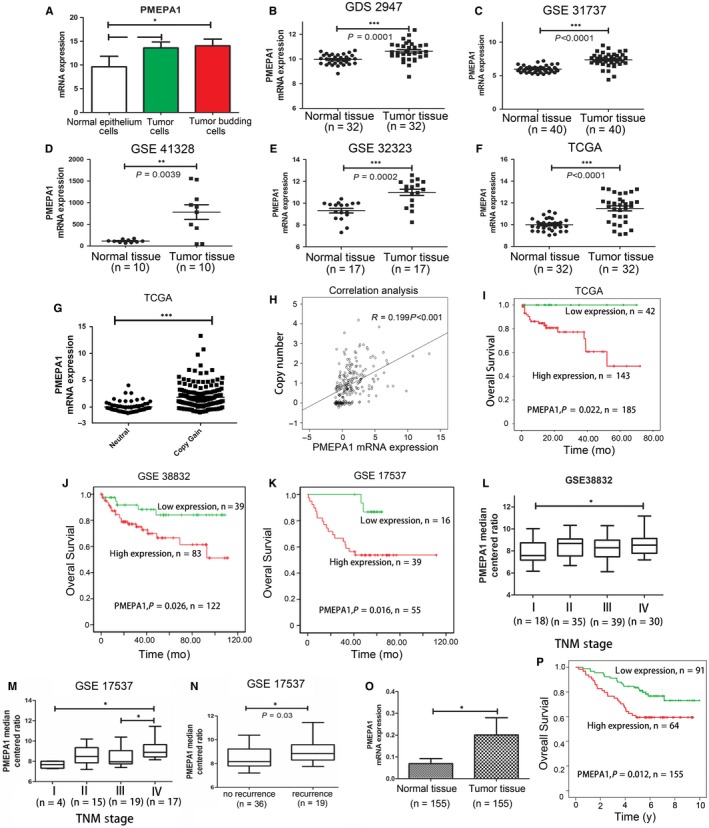
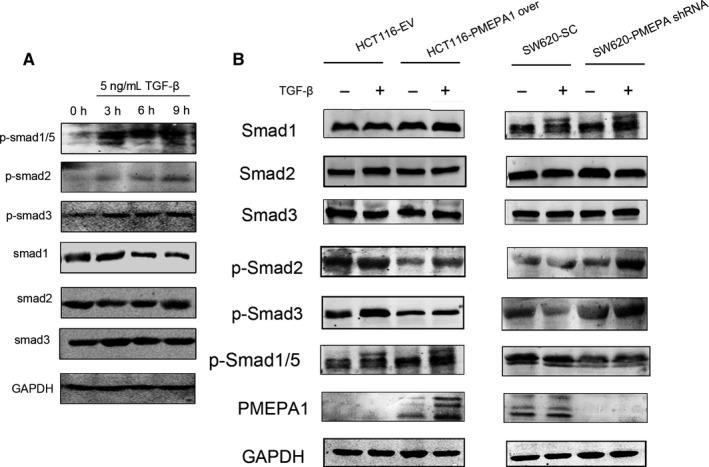
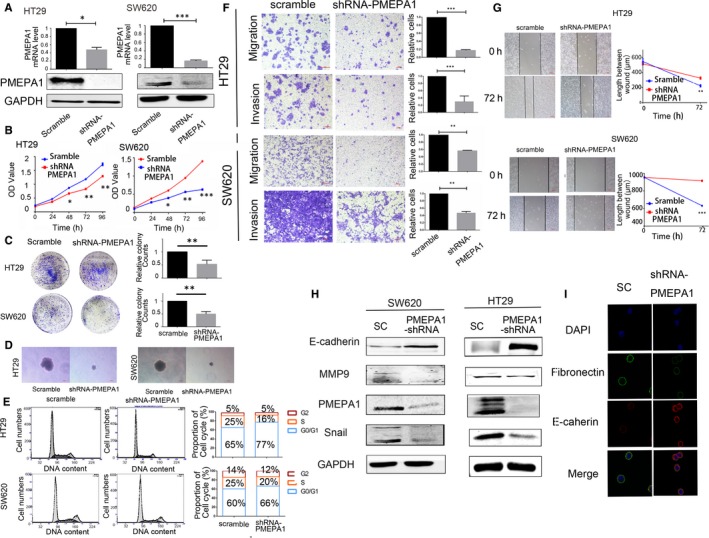
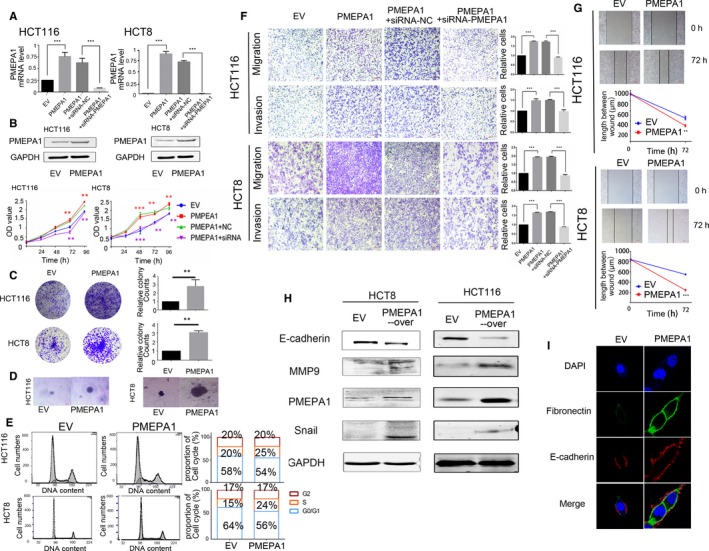
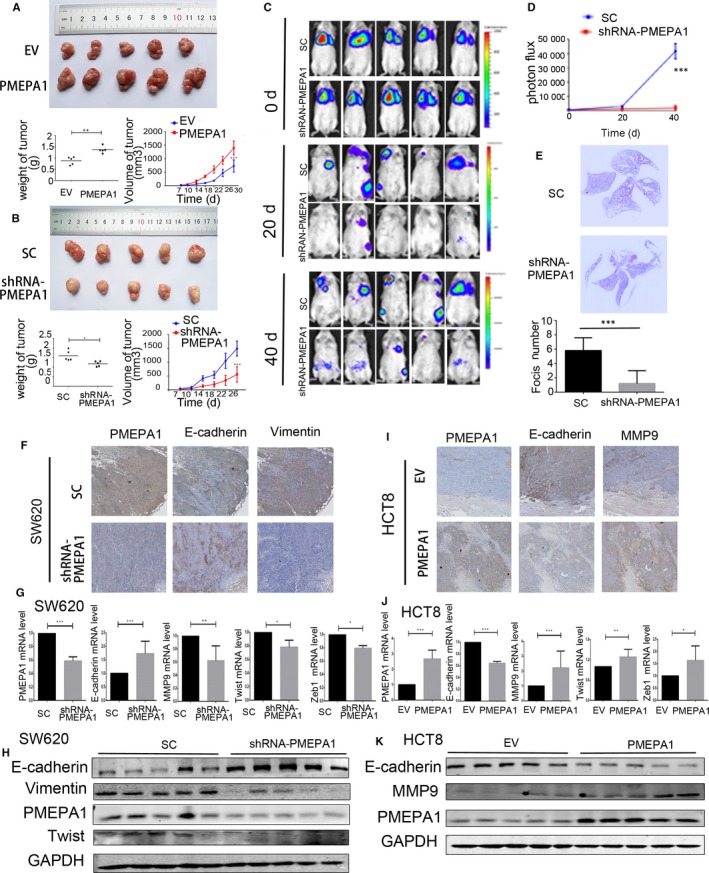
Prostate transmembrane protein androgen induced 1 (PMEPA1) has been reported to promote cancer progression. Metastasis is the main factor leading to cancer progression and poor prognosis, and at the beginning of metastasis, epithelial-to-mesenchymal transition (EMT) is a crucial activation. However, the relationship between PMEPA1 and EMT in colorectal cancer metastasis is still poorly understood. In this study, we first testified that PMEPA1 expresses higher in tumour than normal tissue in Gene Expression Omnibus database, in the Cancer Genome Atlas (TCGA) as well as in the clinical data we collected. Moreover, the higher expression was associated with poor prognosis. We furthermore demonstrated PMEPA1 promotes colorectal cancer metastasis and EMT in vivo and in vitro. We found that PMEPA1 activates the bone morphogenetic proteins (BMP) signalling of TGF-β signalling resulting in promoting EMT and accelerating the proliferation and metastasis of colorectal cancer.
前列腺跨膜蛋白雄激素诱导 1(PMEPA1)已被报道可促进癌症进展。转移是导致癌症进展和预后不良的主要因素,在转移的早期,上皮-间充质转化(EMT)是一个关键的激活过程。然而,PMEPA1 与结直肠癌转移中的 EMT 之间的关系仍知之甚少。在本研究中,我们首先证明 PMEPA1 在基因表达综合数据库(GEO)、癌症基因组图谱(TCGA)以及我们收集的临床数据中,在肿瘤组织中的表达高于正常组织。此外,较高的表达与预后不良相关。我们进一步证明了 PMEPA1 在体内和体外促进结直肠癌的转移和 EMT。我们发现 PMEPA1 激活了骨形态发生蛋白(BMP)信号转导转化生长因子-β(TGF-β)信号转导,从而促进 EMT 并加速结直肠癌细胞的增殖和转移。