Department of Neurobiology, Sagol School of Neurosciences, The George S. Wise Faculty of Life Sciences, Tel Aviv University, Ramat Aviv, 6997801, Tel Aviv, Israel.
Departments of Neurology and Pharmacology, Sackler Faculty of Medicine, Tel Aviv University, Tel Aviv, Israel.
BMC Med. 2019 Mar 20;17(1):64. doi: 10.1186/s12916-019-1299-4.
The growing body of evidence indicating the heterogeneity of Alzheimer's disease (AD), coupled with disappointing clinical studies directed at a fit-for-all therapy, suggest that the development of a single magic cure suitable for all cases may not be possible. This calls for a shift in paradigm where targeted treatment is developed for specific AD subpopulations that share distinct genetic or pathological properties. Apolipoprotein E4 (apoE4), the most prevalent genetic risk factor of AD, is expressed in more than half of AD patients and is thus an important possible AD therapeutic target.
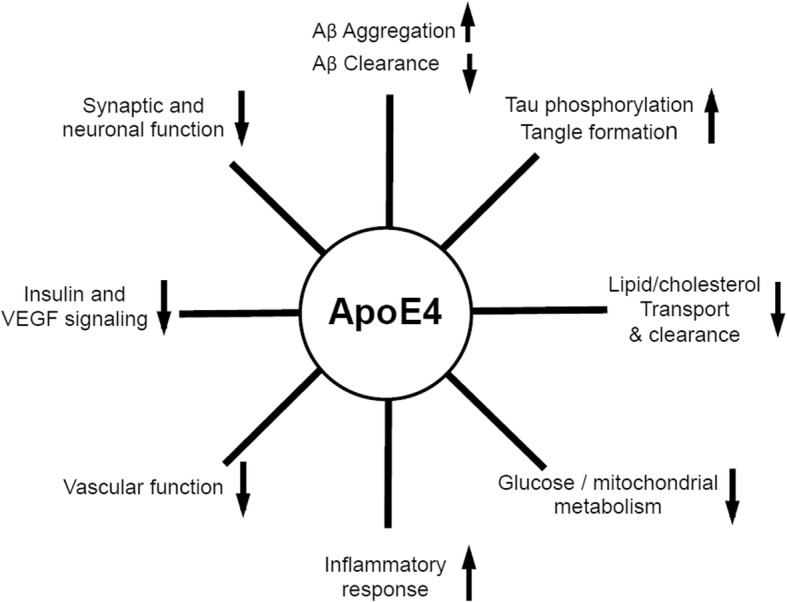
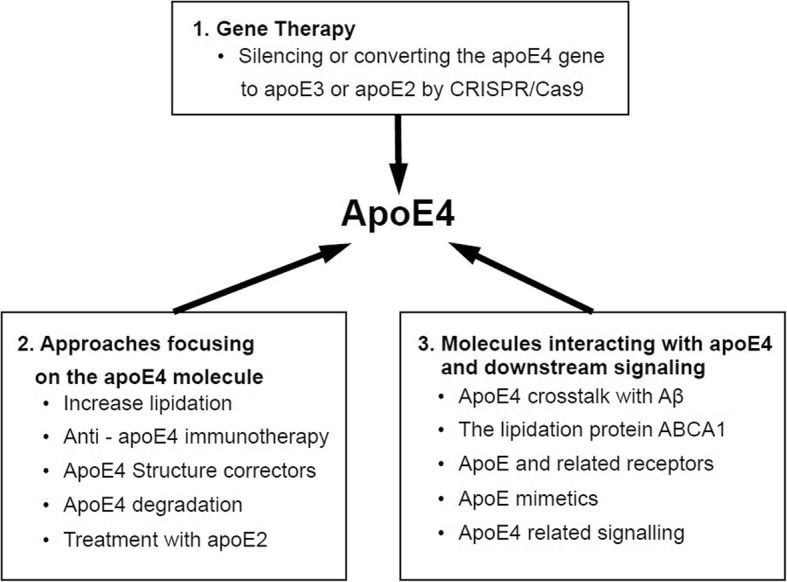
This review focuses initially on the pathological effects of apoE4 in AD, as well as on the corresponding cellular and animal models and the suggested cellular and molecular mechanisms which mediate them. The second part of the review focuses on recent apoE4-targeted (from the APOE gene to the apoE protein and its interactors) therapeutic approaches that have been developed in animal models and are ready to be translated to human. Further, the issue of whether the pathological effects of apoE4 are due to loss of protective function or due to gain of toxic function is discussed herein. It is possible that both mechanisms coexist, with certain constituents of the apoE4 molecule and/or its downstream signaling mediating a toxic effect, while others are associated with a loss of protective function.
ApoE4 is a promising AD therapeutic target that remains understudied. Recent studies are now paving the way for effective apoE4-directed AD treatment approaches.
越来越多的证据表明阿尔茨海默病(AD)存在异质性,加上针对所有病例的一刀切疗法的临床试验令人失望,这表明开发一种适合所有病例的单一神奇疗法可能是不可能的。这就需要转变范式,针对具有不同遗传或病理特征的特定 AD 亚群开发靶向治疗。载脂蛋白 E4(apoE4)是 AD 最常见的遗传风险因素,超过一半的 AD 患者表达 apoE4,因此是 AD 治疗的重要潜在靶点。
本综述最初重点关注 apoE4 在 AD 中的病理作用,以及相应的细胞和动物模型,以及介导这些作用的建议细胞和分子机制。综述的第二部分重点介绍了最近在动物模型中开发的针对 apoE4 的(从 APOE 基因到 apoE 蛋白及其相互作用物)治疗方法,并准备转化为人类。此外,还讨论了 apoE4 的病理作用是由于丧失保护功能还是由于获得毒性功能所致。这两种机制可能同时存在,apoE4 分子的某些成分及其下游信号转导介导毒性作用,而其他成分则与保护功能丧失有关。
apoE4 是一个很有前途的 AD 治疗靶点,但研究不足。最近的研究为有效的 apoE4 靶向 AD 治疗方法铺平了道路。