Robertson Douglas A, Chudleigh Richard A, Gwynn Simon D, Jairam Carol, Kansagra Kaushal, Kanumilli Naresh, Lester-George Adam, McMurray Charlotte, Warren Timothy C
Leighton Hospital, Crewe, UK.
Singleton Hospital, Swansea, UK.
Diabetes Ther. 2019 Jun;10(3):901-916. doi: 10.1007/s13300-019-0598-2. Epub 2019 Mar 19.
The National Health Service (NHS) in the UK appears unclear on how blood glucose monitoring (BGM) should be used to support diabetes patient care and empowerment, and local interpretation of NICE guidance on the availability of devices varies widely. An expert group of clinicians and commissioners considered BGM in terms of access, guidance, resources, data integration, patient education, and patient choice.
The group generated a series of questions on BGM into a 38-statement questionnaire using Delphi methodology. This was circulated to clinicians involved in diabetes management across the UK, receiving 222 responses.
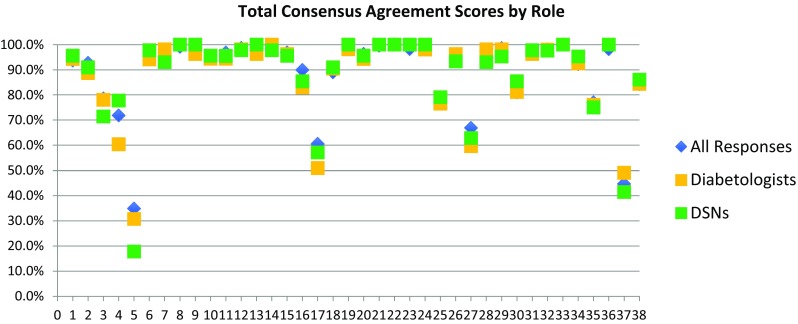
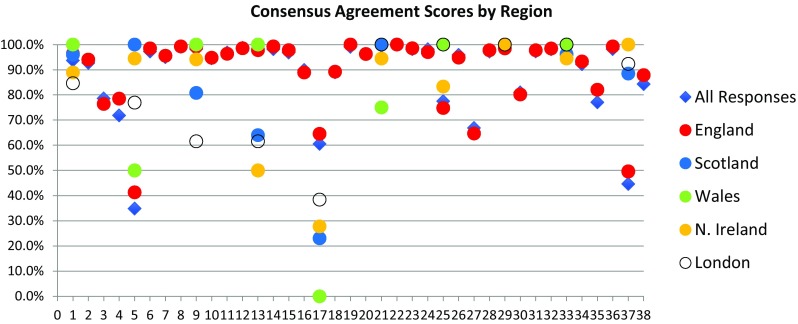
From the questionnaire, 35 of the 38 statement responses showed > 66% consensus, with 26 of these achieving > 90% agreement.
The expert group reviewed the responses and made recommendations based on the clear professional consensus demonstrated. These included the need to use new technology and data integration and that wider factors, including patient choice rather than cost alone, should inform formulary inclusion of BGM equipment.
LifeScan U.K. Ltd.
英国国家医疗服务体系(NHS)似乎并不明确应如何利用血糖监测(BGM)来支持糖尿病患者护理及患者自主管理,且各地对英国国家卫生与临床优化研究所(NICE)关于设备可用性指南的解读差异很大。一个由临床医生和管理人员组成的专家组从获取途径、指南、资源、数据整合、患者教育和患者选择等方面对血糖监测进行了考量。
该小组运用德尔菲法将一系列关于血糖监测的问题整理成一份包含38条陈述的调查问卷。问卷分发给了全英国参与糖尿病管理的临床医生,共收到222份回复。
在调查问卷中,38条陈述回复中有35条的共识率超过66%,其中26条的同意率超过90%。
专家组审查了这些回复,并基于所显示的明确专业共识提出了建议。这些建议包括需要利用新技术和数据整合,且在将血糖监测设备纳入处方时,应考虑更广泛的因素,包括患者选择而非仅成本因素。
英国强生血糖仪公司(LifeScan U.K. Ltd.)