Maastricht Centre for Global Health, Maastricht University, Maastricht, The Netherlands.
Department of Clinical Sciences, Institute of Tropical Medicine, Antwerp, Belgium.
J Int AIDS Soc. 2019 Mar;22(3):e25235. doi: 10.1002/jia2.25235.
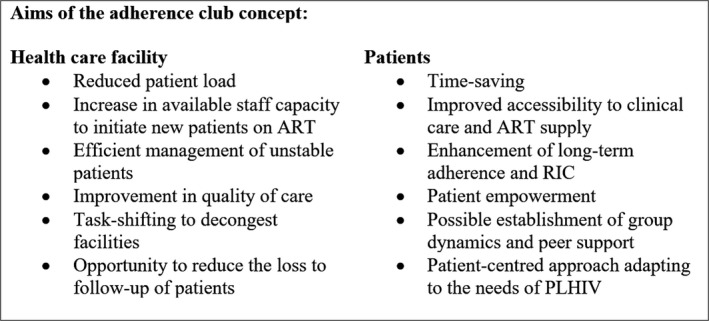
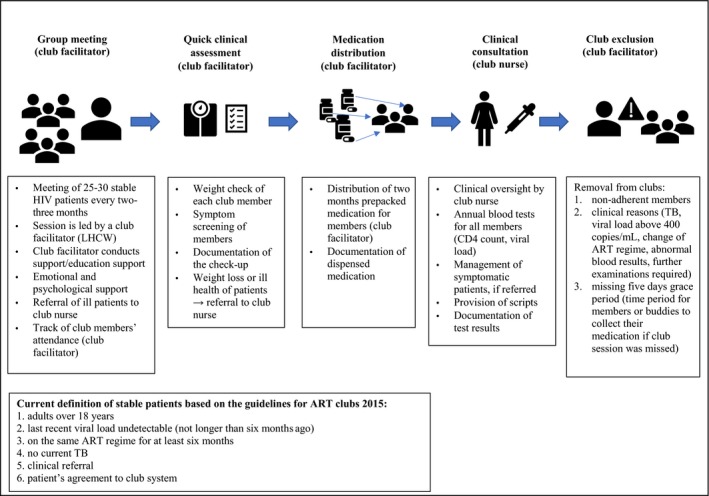
In 2007, the antiretroviral therapy (ART) adherence club (AC) model was introduced to South Africa to combat some of the health system barriers to ART delivery, such as staff constraints and increasing patient load causing clinic congestion. It aimed to absorb the growing number of stable patients on treatment, ensure quality of care and reduce the workload on healthcare workers. A pilot project of ACs showed improved outcomes for club members with increased retention in care, reduced loss to follow-up and a reduction in viral rebound. In 2011, clubs were rolled out across the Cape Metro District with promising clinical outcomes. This review investigates factors that enable or jeopardize sustainability of the adherence club model in the Western Cape of South Africa.
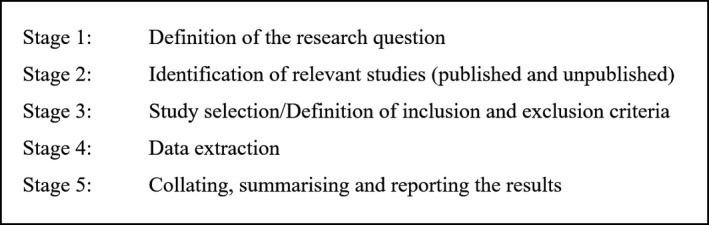
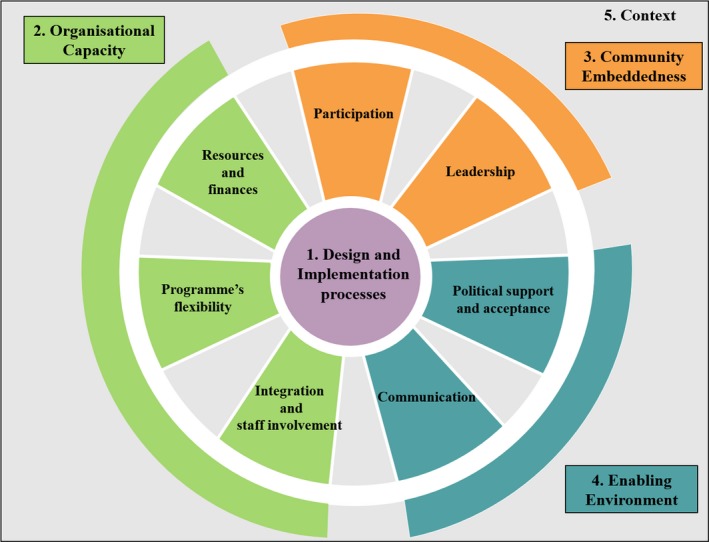
A scoping literature review was carried out. Electronic databases, organizations involved in ACs and reference lists of relevant articles were searched. Findings were analysed using a sustainability framework of five key components: (1) Design and implementation processes, (2) Organizational capacity, (3) Community embeddedness, (4) Enabling environment and (5) Context.
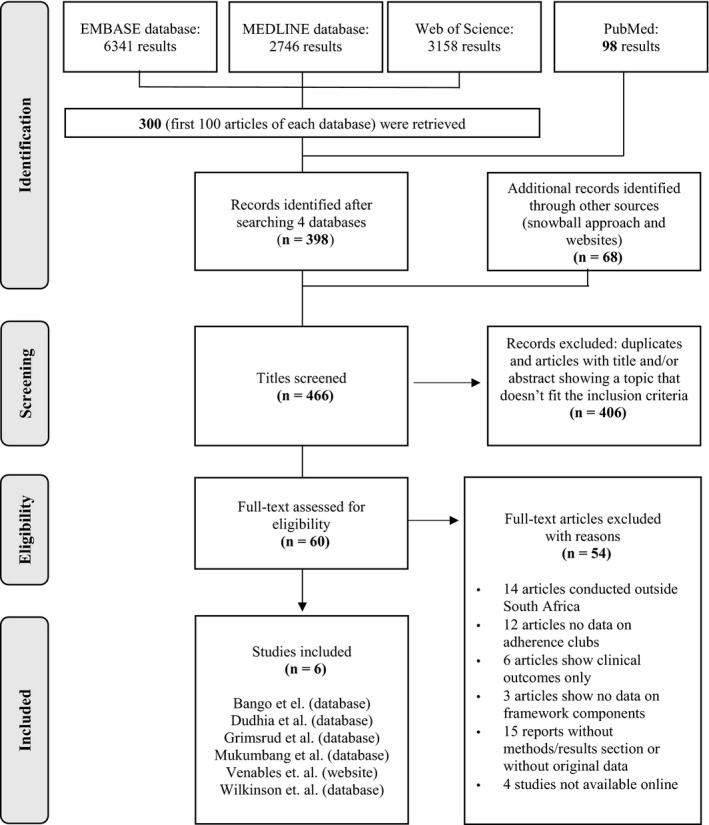
The literature search identified 466 articles, of which six were included in the core review. Enablers of sustainability included the collaborative implementation process with collective learning sessions, the programme's flexibility, the high acceptability, patient participation and political support (to some extent). Jeopardizing factors revolved around financial constraints as non-governmental organizations are the main supporters of ACs by providing staff and technical support.
The results showed convincing factors that enable sustainability of ACs in the long term and identified areas for future research. Community embeddedness of clubs with empowerment and participation of patients, is a strong enabler to the sustainability of the model. Further policies are recommended to regulate the role of lay healthcare workers, ensure the reliability of the drug supply and the funding of club activities.
2007 年,抗逆转录病毒治疗(ART)依从俱乐部(AC)模式被引入南非,以克服一些与 ART 提供相关的卫生系统障碍,例如工作人员限制和不断增加的患者数量导致诊所拥堵。其目的是吸收越来越多接受治疗的稳定患者,确保护理质量,并减轻卫生工作者的工作量。AC 试点项目显示,俱乐部成员的保留率提高、失访减少以及病毒反弹减少,从而改善了结果。2011 年,俱乐部在开普敦大都市区全面铺开,取得了有前景的临床成果。本综述调查了使南非西开普省的依从俱乐部模式能够持续存在或危及可持续性的因素。
进行了范围广泛的文献综述。检索了电子数据库、参与 AC 的组织以及相关文章的参考文献列表。使用可持续性框架的五个关键组成部分(1)设计和实施过程、(2)组织能力、(3)社区嵌入、(4)有利环境和(5)背景来分析研究结果。
文献检索确定了 466 篇文章,其中 6 篇被纳入核心综述。可持续性的促进因素包括具有集体学习会议的协作实施过程、方案的灵活性、高可接受性、患者参与和政治支持(在一定程度上)。危及可持续性的因素主要是由于非政府组织通过提供人员和技术支持是 AC 的主要支持者,面临着财政限制。
结果表明,AC 长期可持续性的促进因素具有令人信服的作用,并确定了未来研究的领域。俱乐部的社区嵌入性以及赋予患者权力和参与,是该模式可持续性的有力促进因素。建议进一步制定政策,规范非专业医疗人员的作用,确保药物供应的可靠性以及俱乐部活动的资金。