Wu Jia-Qi, Mao Lin-Bo, Wu Jian
Rehabilitation Department, Jingjiang People's Hospital, Jingjiang, Taizhou, Jiangsu Province, China.
Institute Office, Jingjiang People's Hospital, No. 28, Zhongzhou road, Jingjiang, Taizhou, 214500, Jiangsu Province, China.
J Orthop Surg Res. 2019 Mar 20;14(1):83. doi: 10.1186/s13018-019-1125-x.
To investigate whether the clinical effects of balance training were improved in hip fracture patients.
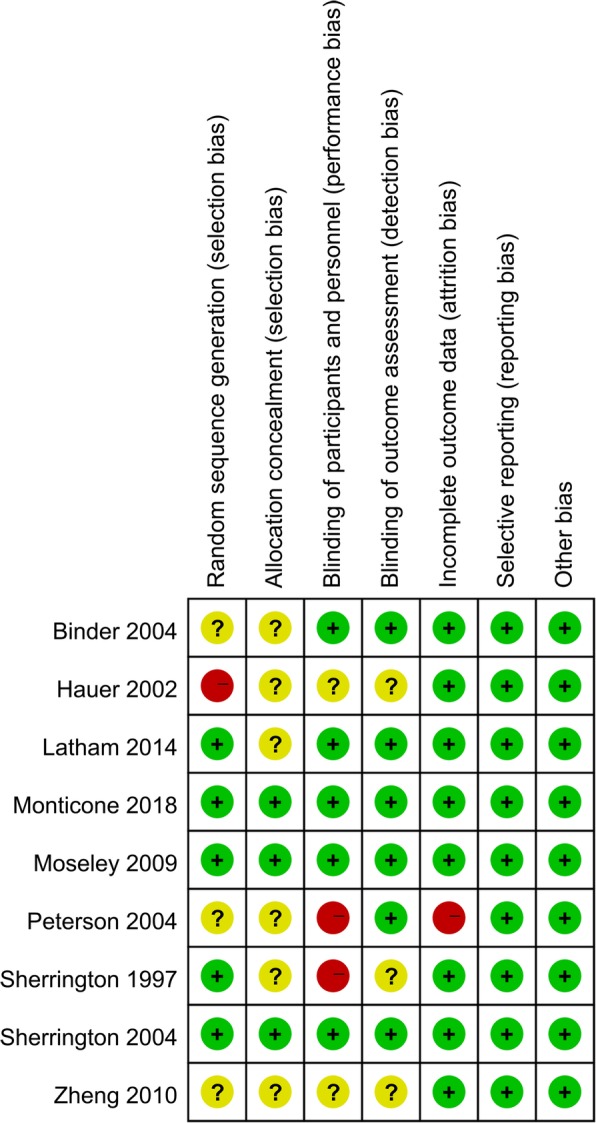
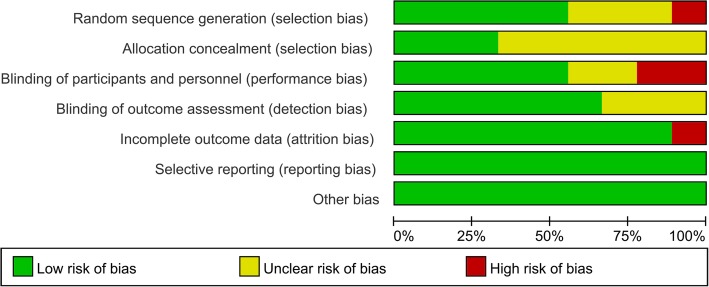
Electronic databases which included PubMed, Embase, Web of Science, and the Cochrane Library up to December 2018 were searched. High-quality randomized controlled trials (RCTs) and prospective clinical controlled studies were selected based on inclusion criteria. Stata 12.0 was used for the meta-analysis. Standard mean difference (SMD) with 95% confidence interval (CI) was used to assess the effects.
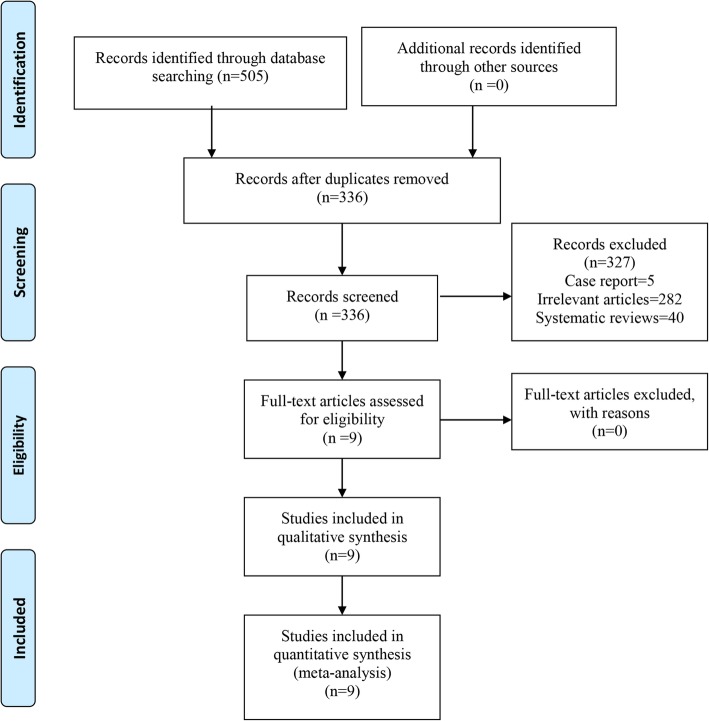
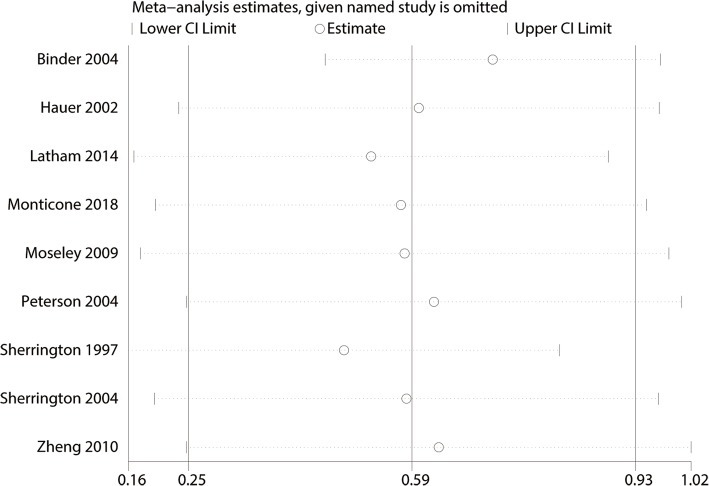
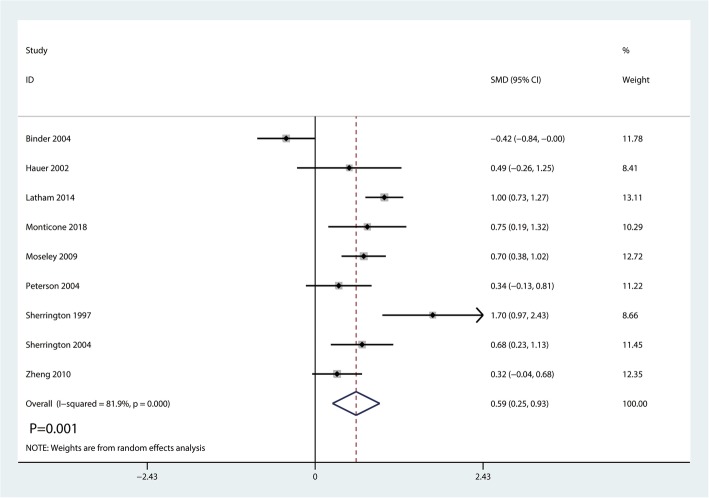
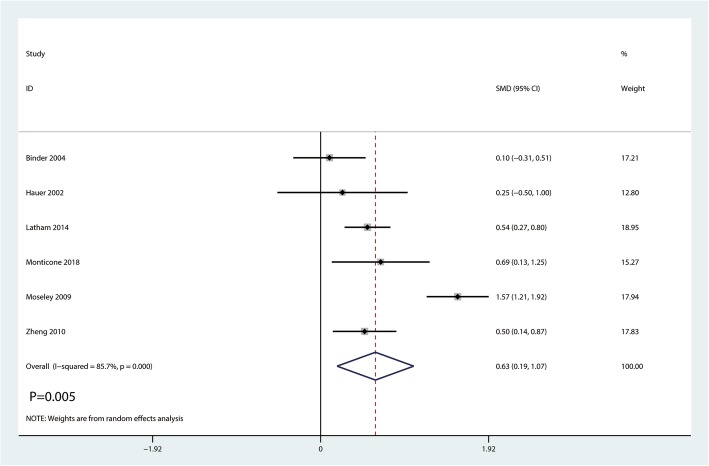
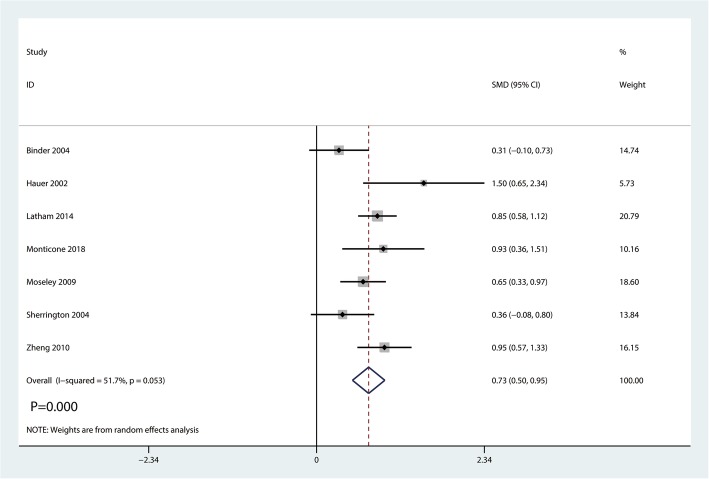
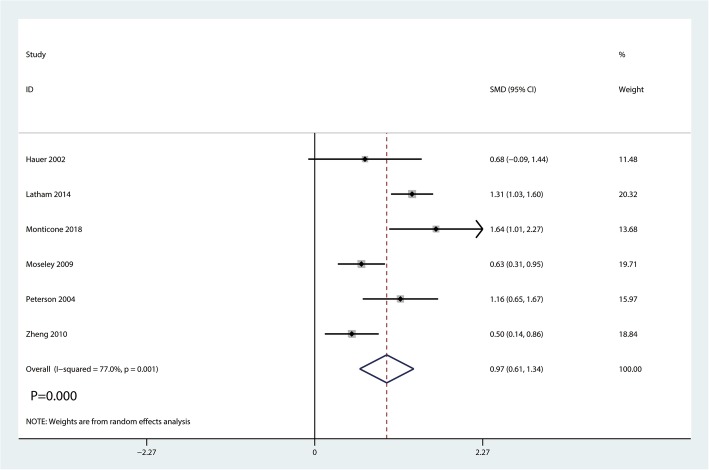
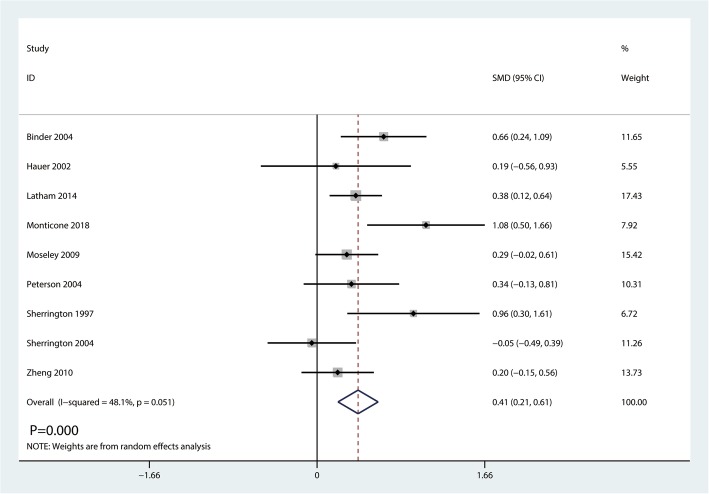
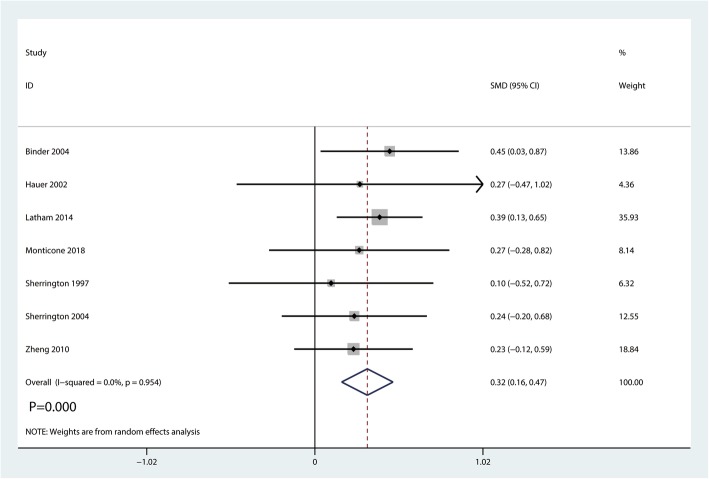
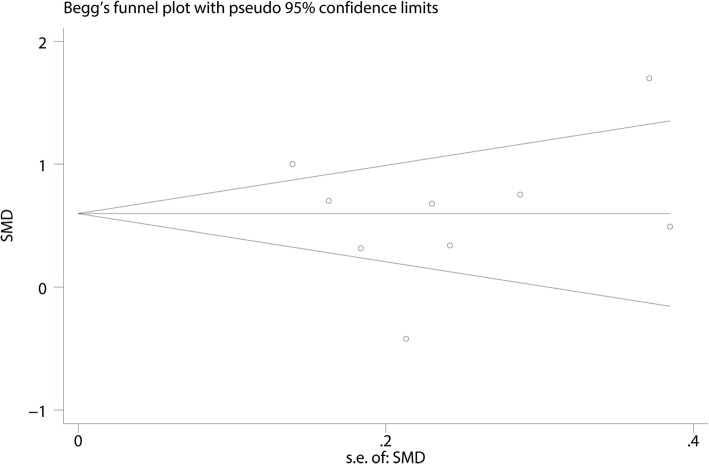
Finally, 9 studies with 872 patients (balance training = 445, control = 427) were included in our meta-analysis (published between 1997 and 2018). Compared with the control group, balance training group showed a significant increase in overall function (SMD = 0.59, 95% CI [0.25, 0.93], P = 0.001), gait speed (SMD = 0.63, 95% CI [0.19, 1.07], P = 0.005), lower limb strength (SMD = 0.73, 95% CI [0.50, 0.95], P = 0.000), activities of daily living (ADLs) (SMD = 0.97, 95% CI [0.61, 1.34], P = 0.000), performance task scores (SMD = 0.41, 95% CI [0.21, 0.61], P = 0.000), and health-related quality of life (HRQoL) scores (SMD = 0.32, 95% CI [0.16, 0.47], P = 0.000).
Our meta-analysis revealed that the balance training group has improved overall physical functioning, gait, lower limb strength, performance task, and activity of daily living than the control group. More high-quality and large-scale RCTs are needed to identify the optimal regimen of balance training after hip fracture.
探讨髋部骨折患者平衡训练的临床效果是否得到改善。
检索截至2018年12月的电子数据库,包括PubMed、Embase、Web of Science和Cochrane图书馆。根据纳入标准选择高质量的随机对照试验(RCT)和前瞻性临床对照研究。使用Stata 12.0进行荟萃分析。采用95%置信区间(CI)的标准平均差(SMD)评估效果。
最终,9项研究共872例患者(平衡训练组=445例,对照组=427例)纳入我们的荟萃分析(发表于1997年至2018年之间)。与对照组相比,平衡训练组在整体功能(SMD=0.59,95%CI[0.25,0.93],P=0.001)、步速(SMD=0.63,95%CI[0.19,1.07],P=0.005)、下肢力量(SMD=0.73,95%CI[0.50,0.95],P=0.000)、日常生活活动(ADL)(SMD=0.97,95%CI[0.61,1.34],P=0.000)、执行任务得分(SMD=0.41,95%CI[0.21,0.61],P=0.000)和健康相关生活质量(HRQoL)得分(SMD=0.32,95%CI[0.16,0.47],P=0.000)方面均有显著提高。
我们的荟萃分析表明,与对照组相比,平衡训练组在整体身体功能、步态、下肢力量、执行任务和日常生活活动方面均有改善。需要更多高质量、大规模的随机对照试验来确定髋部骨折后平衡训练的最佳方案。