Bioinformatics Institute (BII), Agency for Science, Technology and Research (A*STAR), 30 Biopolis Street, #07-01 Matrix, Singapore, 138671, Singapore.
Singapore Immunology Network (SIgN), Agency for Science, Technology and Research (A*STAR), 8a Biomedical Grove, Singapore, 138648, Singapore.
Sci Rep. 2019 Mar 20;9(1):4913. doi: 10.1038/s41598-019-41211-3.
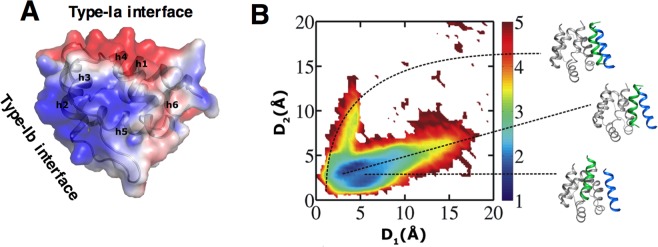
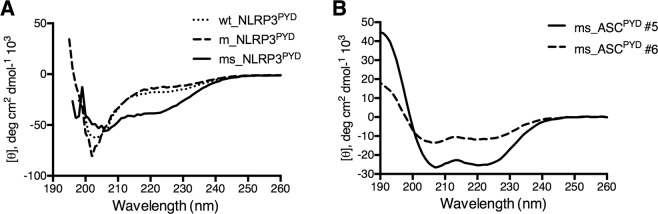
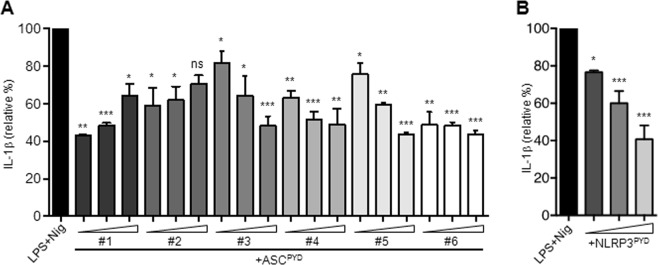
Interleukin-1β (IL-1β) is a major cytokine that initiates and enhances inflammatory responses. Excessive IL-1β production is a characteristic of most chronic inflammatory diseases, including atherosclerosis, type 2 diabetes, and obesity, which affect a large proportion of the global population. The production of bioactive IL-1β is mediated by a caspase-1-activating complex known as an 'inflammasome'. The NLRP3 inflammasome has been associated with several human inflammatory and autoimmune diseases and represents a potential therapeutic target for disrupting IL-1β production. We used molecular modeling guided by molecular dynamics simulations to design α-helical stapled peptides targeting the pyrin domain of the adaptor protein ASC to interrupt the development of its filament, which is crucial for NLRP3 inflammasome formation. The peptides were effectively internalized by human monocytic cells and efficiently suppressed the release of the inflammasome-regulated cytokines IL-1β and IL-18, following exogenous activation of the NLRP3 inflammasome. The peptides reduced ASC speck formation and caspase-1 processing thereby suppressing pro-IL-1β processing and release of active IL-1β. This is the first demonstration of the successful use of stapled peptides designed to target the adaptor protein ASC, and can be extended to other inflammatory pathways to disrupt excessive IL-1β production.
白细胞介素-1β(IL-1β)是一种主要的细胞因子,可启动和增强炎症反应。大多数慢性炎症性疾病,包括动脉粥样硬化、2 型糖尿病和肥胖症,都会导致过量的 IL-1β 产生,而这些疾病影响着全球很大一部分人口。生物活性 IL-1β 的产生是由一种被称为“炎症小体”的 caspase-1 激活复合物介导的。NLRP3 炎症小体与几种人类炎症和自身免疫性疾病有关,是破坏 IL-1β 产生的潜在治疗靶点。我们使用分子动力学模拟指导的分子建模来设计针对衔接蛋白 ASC 的吡喃酮结构域的α-螺旋订书肽,以阻断其丝状体的形成,这对于 NLRP3 炎症小体的形成至关重要。这些肽可被人单核细胞有效内化,并在外源激活 NLRP3 炎症小体后,有效抑制炎症小体调节的细胞因子 IL-1β 和 IL-18 的释放。这些肽减少了 ASC 斑点的形成和 caspase-1 的加工,从而抑制了前体 IL-1β 的加工和活性 IL-1β 的释放。这是首次成功使用针对衔接蛋白 ASC 的订书肽进行设计的证明,并可扩展到其他炎症途径以阻断过度的 IL-1β 产生。