Hau Keith Pak-Hei, Currie Brenda Lee, Ng Samson Pak-Yan, Le Nhu, Poh Catherine Fang-Yeu
Faculty of Dentistry, University of British Columbia, Vancouver, BC, Canada.
Integrative Oncology and Cancer Control Research, British Columbia Cancer Agency Research Centre, Vancouver, BC, Canada.
J Dent Sci. 2017 Mar;12(1):49-55. doi: 10.1016/j.jds.2016.06.008. Epub 2016 Nov 11.
BACKGROUND/PURPOSE: Individuals with low income bear a number of health challenges to healthcare services. Vancouver's Downtown Eastside (DTES) is known to be a low-income community in a metropolitan city. Because it is difficult to reach, the oral health (OH) status of these residents is unknown. The objectives of this study are (1) to design a tool and strategy to collect OH information in a low-income community, (2) to characterize the OH status and related factors among low-income adults, and (3) to identify the explanatory factors for their OH status.
Mobile screening clinics were established in the gathering centers of the DTES, and those of 19 years of age or older were recruited. Data were collected through survey interviews and clinical examinations. Potential explanatory factors were investigated by regression analysis.
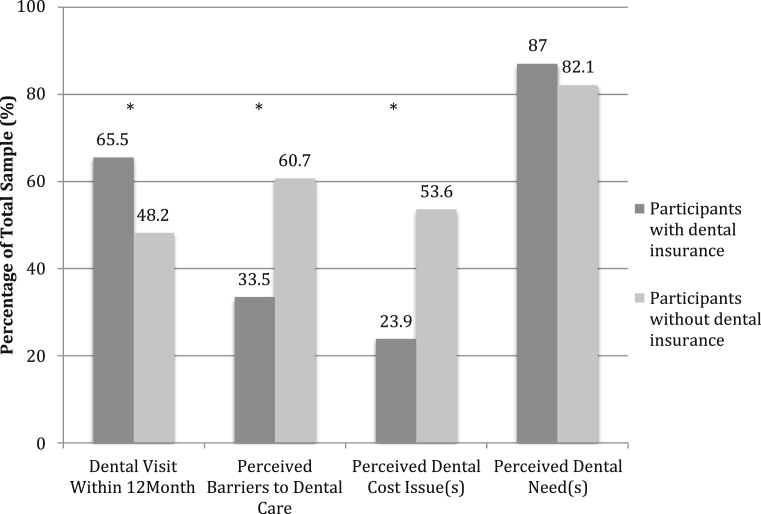
The 356 screened participants were mostly males, middle-aged, less educated, and living with low income (≤CAD$20,000/y). About 80% had dental coverage, mostly from public programs (94%). Many (86%) perceived a dental need. Among dentate participants ( = 306), on average, 3.8 decayed, 8.6 missing, 4.9 filled teeth, and a care index of 41.5% were observed. Social factors (barriers to care and length of DTES residence), dental hygiene (brushing/flossing), and personal (hepatitis C virus infection/methadone usage) factors contributed to their care index level.
This is the first time that comprehensive information regarding OH status has been collected from a low-income, inner-city community in Canada. Further investigations in the challenges and needs in accessing dental care may develop solutions for better OH in similar communities.
背景/目的:低收入人群在获得医疗服务方面面临诸多健康挑战。温哥华的市中心东区(DTES)是大都市中的一个低收入社区。由于难以接触到这些居民,他们的口腔健康(OH)状况尚不清楚。本研究的目的是:(1)设计一种工具和策略,以收集低收入社区的口腔健康信息;(2)描述低收入成年人的口腔健康状况及相关因素;(3)确定其口腔健康状况的解释因素。
在DTES的聚集中心设立了流动筛查诊所,并招募了19岁及以上的人群。通过调查访谈和临床检查收集数据。通过回归分析研究潜在的解释因素。
356名接受筛查的参与者大多为男性、中年、受教育程度较低且收入较低(≤20,000加元/年)。约80%的人有牙科保险,大部分来自公共项目(94%)。许多人(86%)认为有看牙的需求。在有牙的参与者(n = 306)中,平均观察到3.8颗龋齿、8.6颗缺失牙、4.9颗补牙,护理指数为41.5%。社会因素(就医障碍和在DTES居住的时长)以及口腔卫生(刷牙/使用牙线)和个人因素(丙型肝炎病毒感染/使用美沙酮)对其护理指数水平有影响。
这是首次从加拿大一个低收入的市中心社区收集到有关口腔健康状况方面的全面信息。对获取牙科护理方面的挑战和需求进行进一步调查,可能会为类似社区改善口腔健康状况找到解决办法。