Malhotra Poonam, Read Graham H, Weidhaas Joanne B
Department of Radiation Oncology, David Geffen School of Medicine, University of California, Los Angeles, CA 90001, USA.
Noncoding RNA. 2019 Mar 20;5(1):27. doi: 10.3390/ncrna5010027.
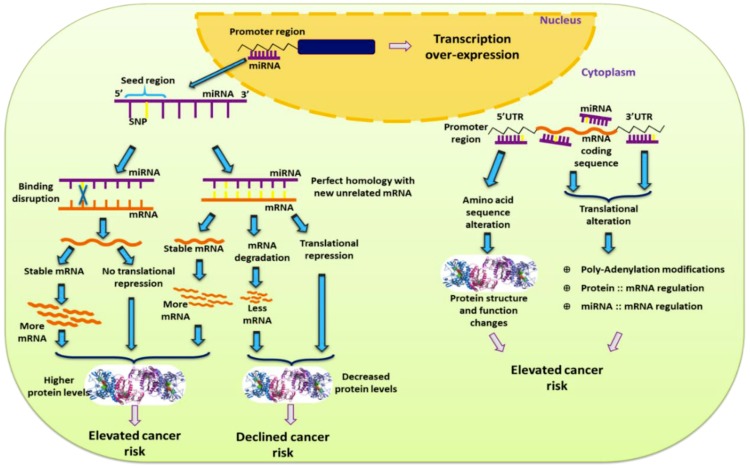
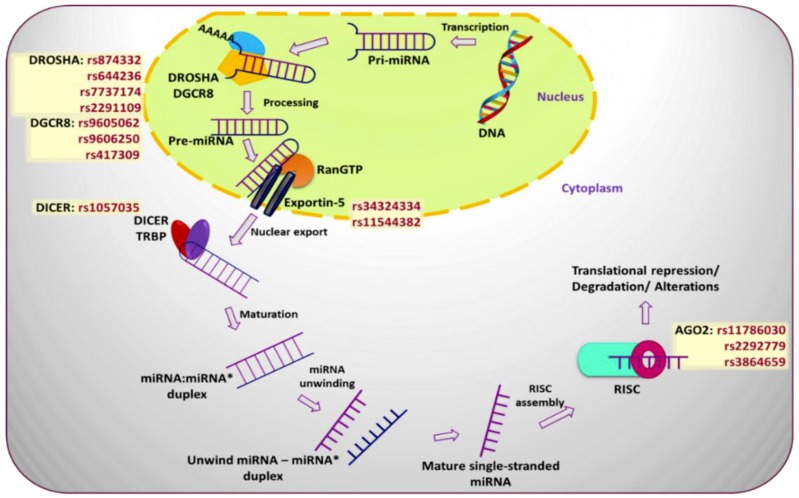
Recent studies in cancer diagnostics have identified microRNAs (miRNAs) as promising cancer biomarkers. Single nucleotide polymorphisms (SNPs) in miRNA binding sites, seed regions, and coding sequences can help predict breast cancer risk, aggressiveness, response to stimuli, and prognosis. This review also documents significant known miR-SNPs in miRNA biogenesis genes and their effects on gene regulation in breast cancer, taking into account the genetic background and ethnicity of the sampled populations. When applicable, miR-SNPs are evaluated in the context of other patient factors, including mutations, hormonal status, and demographics. Given the power of miR-SNPs to predict patient cancer risk, prognosis, and outcomes, further study of miR-SNPs is warranted to improve efforts towards personalized medicine.
近期癌症诊断研究已将微小RNA(miRNA)鉴定为有前景的癌症生物标志物。miRNA结合位点、种子区域及编码序列中的单核苷酸多态性(SNP)有助于预测乳腺癌风险、侵袭性、对刺激的反应及预后。本综述还记录了miRNA生物发生基因中已知的重要miR-SNP及其对乳腺癌基因调控的影响,同时考虑了抽样人群的遗传背景和种族。在适用情况下,会结合其他患者因素(包括突变、激素状态和人口统计学因素)对miR-SNP进行评估。鉴于miR-SNP在预测患者癌症风险、预后及结局方面的作用,有必要进一步研究miR-SNP,以推动个性化医疗的发展。