Department of Orthopedic Surgery, Tokyo Medical University, 6-7-1 Nishishinjuku, Shinjuku-ku, Tokyo, Japan.
Sci Rep. 2019 Mar 21;9(1):4992. doi: 10.1038/s41598-019-41079-3.
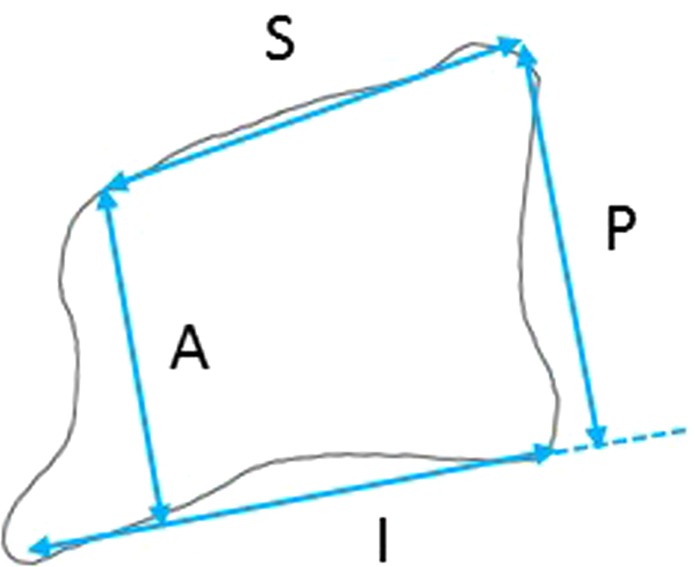
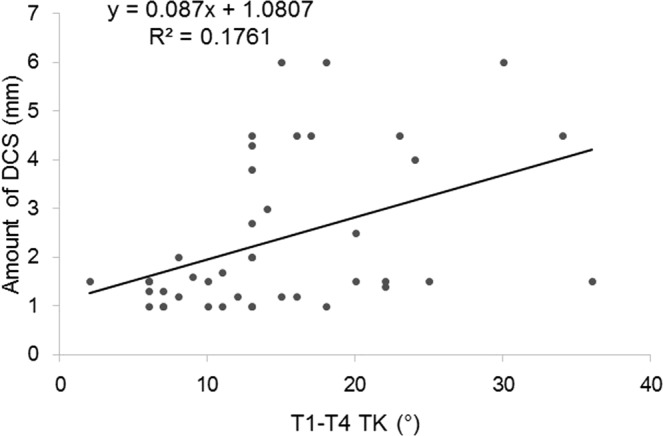
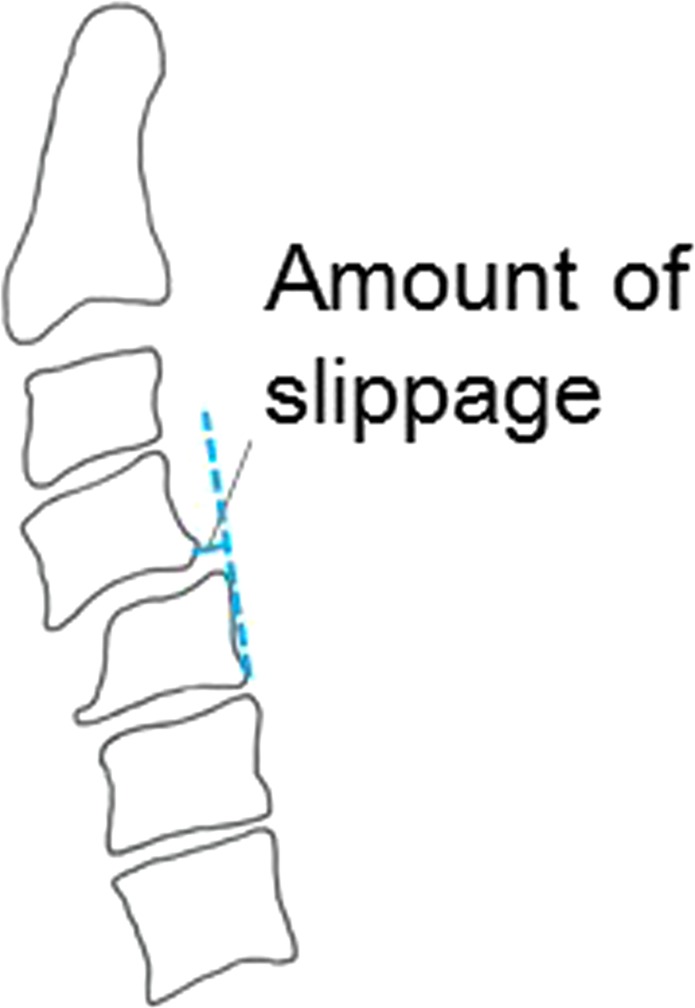
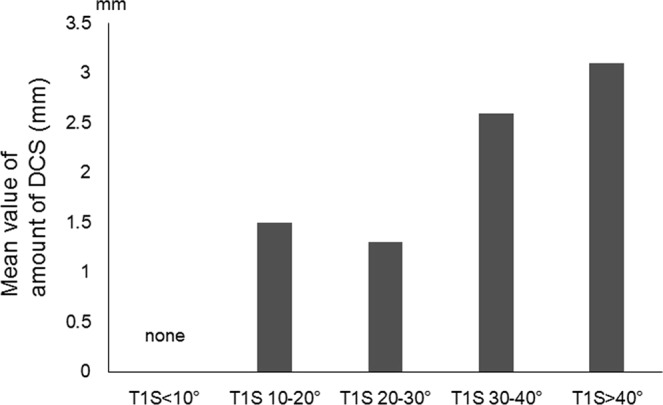
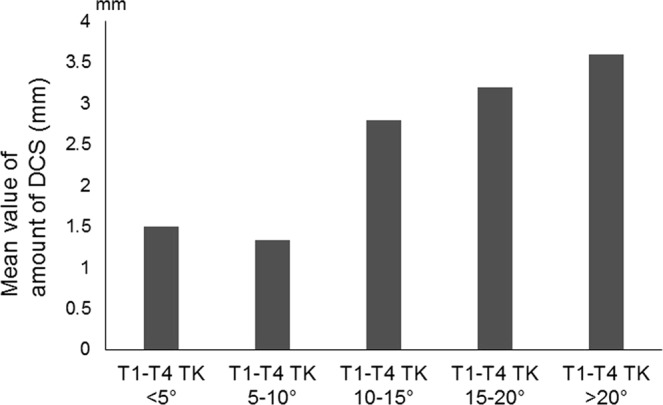
Degenerative cervical spondylolisthesis (DCS) is a cervical deformity arising from regressive changes where trapezoidal deformity characterized by hypertrophic osteophytes of spinal elements is often observed. There is a paucity of literature about the spinal contour of DCS and trapezoidal vertebrae. We conducted this research to clarify the relationship between spinal sagittal alignment and trapezoidal deformity in DCS. Total seventy-nine patients with cervical spondylosis were enrolled. Twenty-four patients who exhibited cervical spondylolisthesis were classified into DCS group. Other patients were classified into a control group. Measurements of radiographic parameters and trapezoidal deformity were made. DCS was found mostly in C3-C4 and C4-C5 (16 and 10 cases, respectively). T1S and T1-T4 TK was larger in the DCS group than in the control (T1S: 29.9 ± 2.3° vs. 23.7 ± 1.5°, T1-T4 TK: 14.9 ± 2.1° vs. 9.0 ± 1.4°). C2-C7A was smaller in DCS (3.5 ± 3.6° vs. 11.9 ± 2.3°). Trapezoidal deformity was apparent in the vertebra below the slipped segment. Among sagittal parameters, T1S and T1-T4 TK were positively correlated with DCS (r = 0.523 and r = 0.438, respectively). For these correlations with DCS, both logistic and linear regression models predicted threshold values of approximately 30° for T1S and 15° for T1-T4 TK responsible for DCS. DCS was mostly found in the middle cervical region. Among sagittal parameters, enlarged T1S and T1-T4 TK, which were strongly correlated with amount of slippage, was considered affected to DCS. Cervical kyphosis and trapezoidal deformity also exhibited strong correlations with DCS, and were considered responsible for clinical instability.
退行性颈椎失稳症(DCS)是一种颈椎畸形,源于退行性改变,常表现为颈椎各节段的梯形畸形,伴有骨赘形成。目前,关于 DCS 患者的脊柱矢状面形态与梯形椎体之间的关系,文献报道较少。本研究旨在明确 DCS 患者的脊柱矢状面形态与梯形椎体之间的关系。共纳入 79 例颈椎疾病患者。24 例颈椎滑脱患者被分为 DCS 组,其余患者被分为对照组。对两组患者的影像学参数和梯形变形情况进行测量。DCS 主要发生在 C3-C4 和 C4-C5(分别为 16 例和 10 例)。DCS 组患者的 T1S 和 T1-T4 TK 明显大于对照组(T1S:29.9±2.3° vs. 23.7±1.5°,T1-T4 TK:14.9±2.1° vs. 9.0±1.4°),C2-C7A 明显小于对照组(3.5±3.6° vs. 11.9±2.3°)。在滑脱节段以下的椎体中,可见明显的梯形变形。在矢状位参数中,T1S 和 T1-T4 TK 与 DCS 呈正相关(r=0.523 和 r=0.438)。对于与 DCS 相关的这些参数,logistic 和线性回归模型均预测 T1S 的阈值约为 30°,T1-T4 TK 的阈值约为 15°,与 DCS 相关。DCS 主要发生在颈椎中段。在矢状位参数中,与滑脱程度密切相关的 T1S 和 T1-T4 TK 增大,被认为与 DCS 有关。颈椎后凸和梯形变形也与 DCS 有很强的相关性,被认为与临床不稳定性有关。