Kotlęga Dariusz, Gołąb-Janowska Monika, Meller Agnieszka, Bajer-Czajkowska Anna, Zembroń-Łacny Agnieszka, Nowacki Przemysław, Banach Maciej
Department of Neurology, Pomeranian Medical University, Szczecin, Poland.
Department of Applied and Clinical Physiology, University of Zielona Gora, Zielona Gora, Poland.
Arch Med Sci. 2019 Mar;15(2):385-392. doi: 10.5114/aoms.2019.82925. Epub 2019 Mar 4.
Statins are widely used in stroke patients. The AHA/ASA guidelines recommend aggressive statin therapy in atherosclerotic stroke patients. Their beneficial effects are due to both their hypolipemic and pleiotropic properties. The aim of this study was to establish potential benefits from statin use in ischemic stroke patients with the diagnosis of atrial fibrillation (AF).
Ischemic stroke patients with AF were enrolled in the study. Group I, the statin group ( = 181), consisted of patients who had been treated with statins before stroke. Group II, the non-statin group ( = 153), consisted of patients who had not received such treatment in the last year. In-hospital mortality and neurological deficit on admission and at discharge were analyzed using the National Institutes of Health Stroke Scale (NIHSS) score.
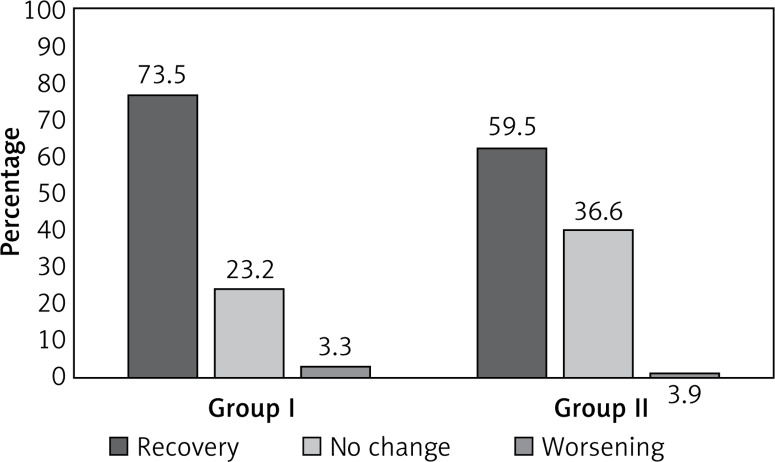
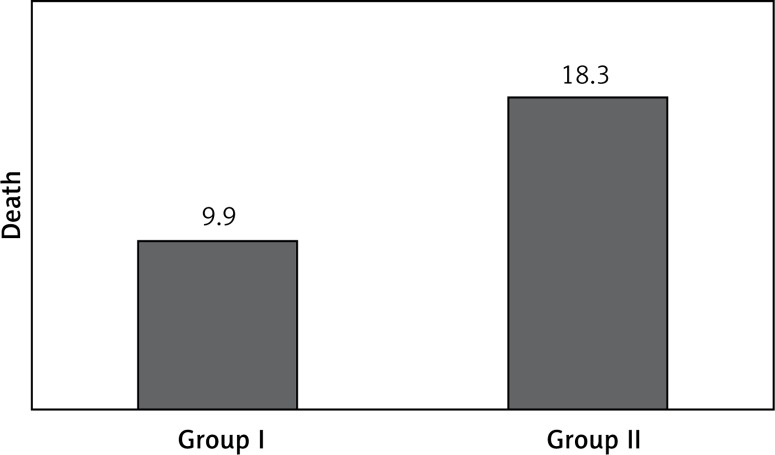
Patients from the non-statin group had greater initial and discharge NIHSS scores (10 vs. 11.9, probability value < 0.05; 7.6 vs. 9.5, < 0.05 respectively). The improvement in NIHSS score was greater in the statin group (73.5% vs. 59.5%, < 0.01). In-hospital mortality was more frequent in the non-statin group (9.9% vs. 18.3%, < 0.05).
Despite the predominant use of statins in atherothrombotic stroke patients, we demonstrated the beneficial effects of statins in cardioembolic stroke patients. Detailed cardiovascular screening for statin therapy should be carried out in all AF patients with regard to primary and secondary stroke prevention.
他汀类药物在中风患者中广泛使用。美国心脏协会/美国中风协会指南建议对动脉粥样硬化性中风患者进行积极的他汀类药物治疗。其有益效果归因于其降血脂和多效性特性。本研究的目的是确定他汀类药物在诊断为心房颤动(AF)的缺血性中风患者中的潜在益处。
纳入患有AF的缺血性中风患者。第一组为他汀类药物组(n = 181),由中风前接受过他汀类药物治疗的患者组成。第二组为非他汀类药物组(n = 153),由过去一年未接受此类治疗的患者组成。使用美国国立卫生研究院卒中量表(NIHSS)评分分析入院时和出院时的院内死亡率和神经功能缺损。
非他汀类药物组患者的初始和出院时NIHSS评分更高(分别为10对11.9,概率值<0.05;7.6对9.5,<0.05)。他汀类药物组NIHSS评分的改善更大(73.5%对59.5%,<0.01)。非他汀类药物组的院内死亡率更高(9.9%对18.3%,<0.05)。
尽管他汀类药物在动脉粥样硬化性血栓形成性中风患者中使用占主导地位,但我们证明了他汀类药物在心源性栓塞性中风患者中的有益效果。对于所有AF患者,应进行详细的心血管筛查以进行他汀类药物治疗,以预防原发性和继发性中风。