Lee Sang Hong, Lim Chae Won, Choi Kwi Youn, Jo Suenghwan
Department of Orthopaedic Surgery, College of Medicine, Chosun University, Gwangju, Korea.
Hip Pelvis. 2019 Mar;31(1):4-10. doi: 10.5371/hp.2019.31.1.4. Epub 2019 Mar 5.
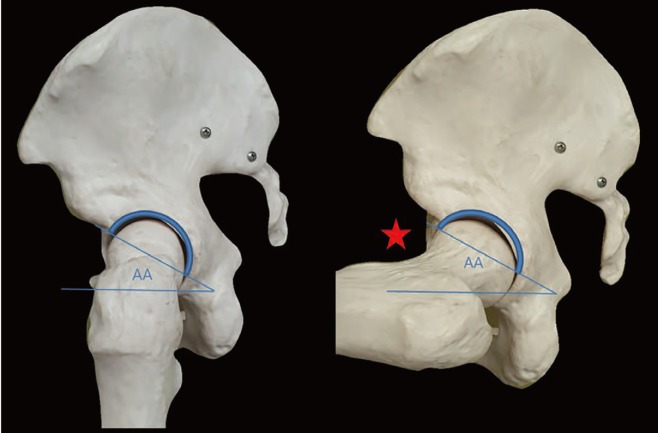
When spine-pelvic motion is normally coordinated, the pelvis may tilt posteriorly and acetabular anteversion may increase as the patient's position changes from standing to sitting; this scenario allows for improved clearance of the femoral head and neck during hip flexion. However, changes in the mobility of the spine and pelvis may result in impingement after total hip arthroplasty (THA), with the most obvious complication being dislocation. Understanding the spinal-pelvic relationship in the sagittal plane is essential for planning THA in patients with spinal fusion or a known spine disease. Careful attention should be payed to the cup position when performing THA on patients with an increased risk of dynamic impingement.
当脊柱-骨盆运动正常协调时,随着患者体位从站立变为坐姿,骨盆可能会向后倾斜,髋臼前倾角可能会增加;这种情况有助于在髋关节屈曲时改善股骨头和颈部的间隙。然而,脊柱和骨盆活动度的改变可能会导致全髋关节置换术(THA)后发生撞击,最明显的并发症是脱位。了解矢状面的脊柱-骨盆关系对于为脊柱融合或已知脊柱疾病患者规划THA至关重要。对有动态撞击风险增加的患者进行THA时,应特别注意髋臼杯的位置。