Department for Integrated Sensor Systems, Danube University Krems, A-2700 Wiener Neustadt, Austria.
Institute of Sensor and Actuator Systems, Vienna University of Technology, A-1040 Vienna, Austria.
Sensors (Basel). 2019 Mar 21;19(6):1397. doi: 10.3390/s19061397.
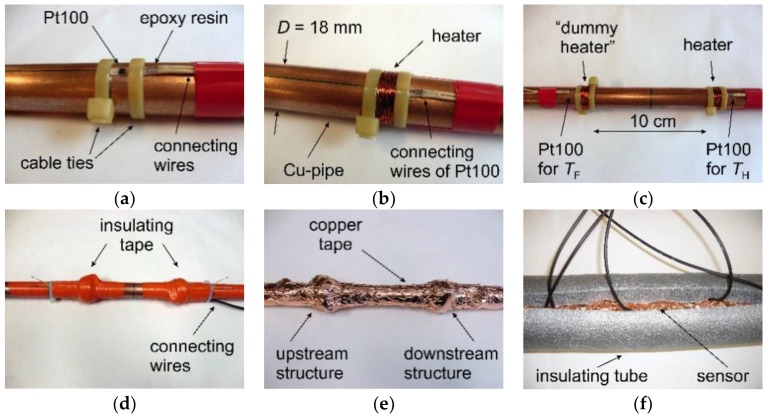
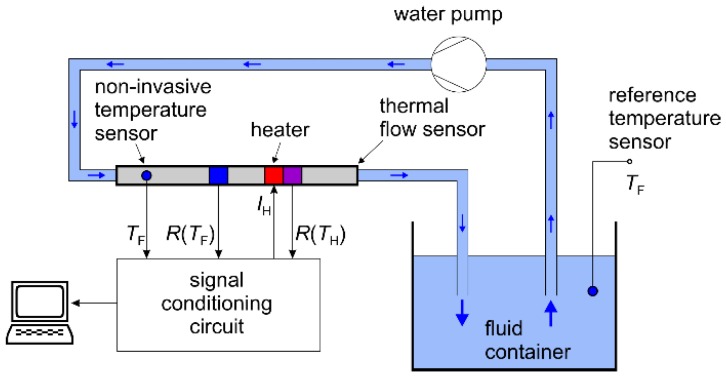
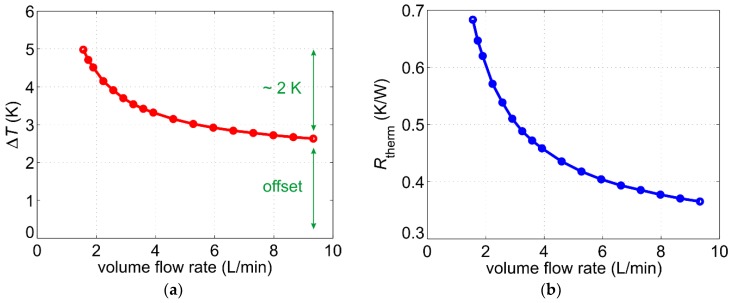
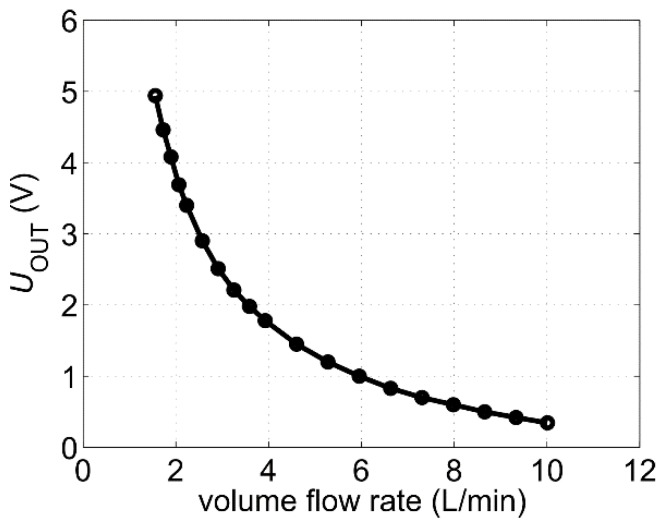
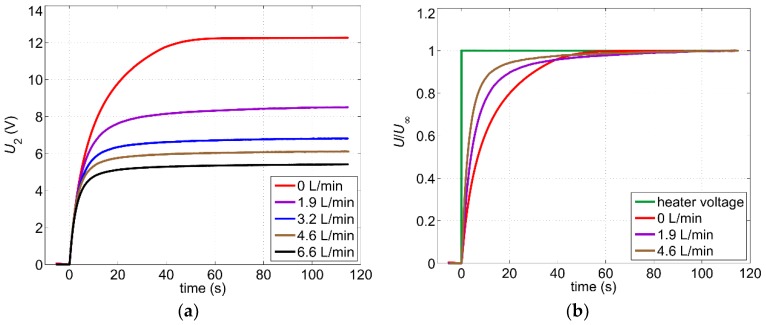
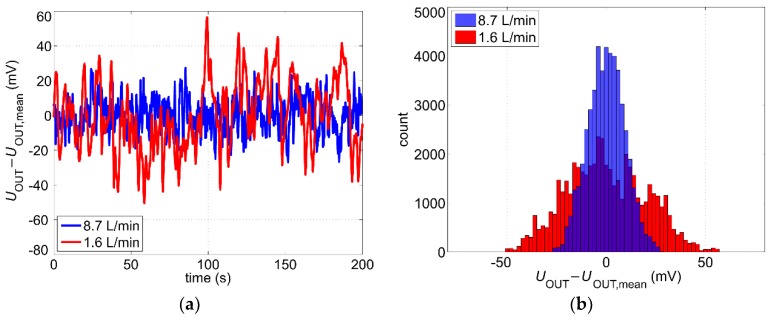
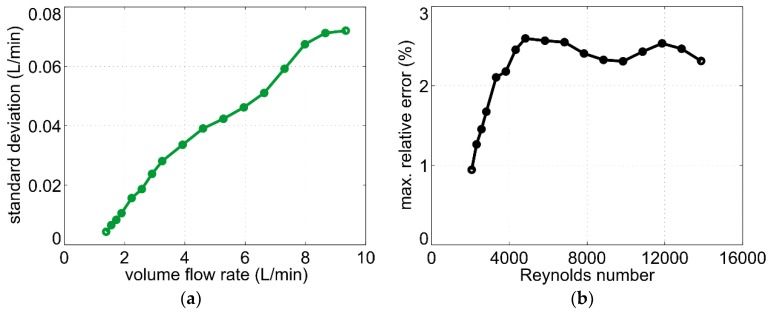
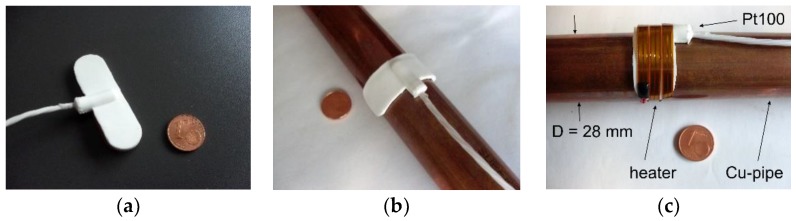
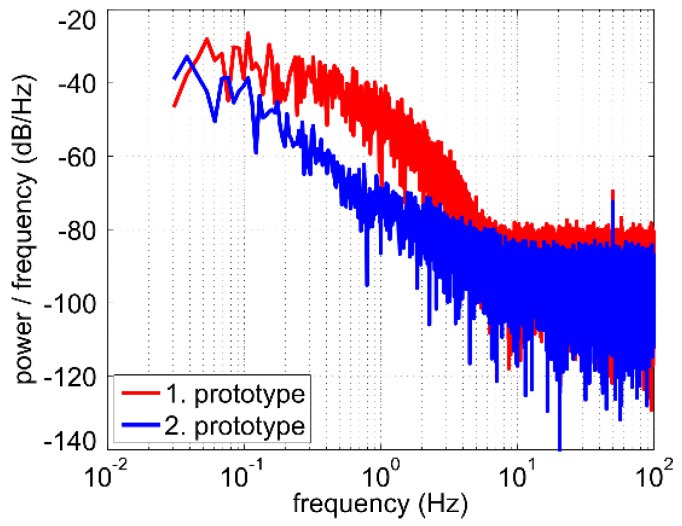
We investigated non-invasive flow rate measurements in heating, ventilation, and air conditioning (HVAC) systems utilizing thermal transduction instead of commonly used ultrasonic techniques. The proposed thermal flow transduction comprises two temperature sensors and a heater, all mounted non-invasively on the outer surface of metal-pipes and, therefore, not disturbing the fluid flow inside. One temperature sensor measures the heater temperature, whereas the other one, mounted upstream of the heater, follows the fluid temperature for reference. The temperature difference (i.e., the heater excess temperature) depends on the fluid flow velocity and can be used to derive the mean volume flow inside the pipe. Experimental characterizations were conducted using two sensor prototypes. Beside output characteristics, other main issues such as dynamic behavior and noise density were investigated in detail. Special attention was paid to error compensation allowing measurements within a large range of fluid temperatures. Measurement results confirm the feasibility of this approach, however with some constraints regarding response time.
我们研究了利用热传导而不是常用的超声技术在供暖、通风和空调(HVAC)系统中进行非侵入式流量测量。所提出的热流量传感器包括两个温度传感器和一个加热器,它们全部非侵入式地安装在金属管道的外表面上,因此不会干扰管道内的流体流动。一个温度传感器测量加热器温度,而另一个安装在加热器上游的温度传感器则跟踪流体温度作为参考。温差(即加热器过热度)取决于流体流速,可以用来推导管道内的平均体积流量。使用两个传感器原型进行了实验特性研究。除了输出特性外,还详细研究了其他主要问题,如动态行为和噪声密度。特别关注误差补偿,允许在较大的流体温度范围内进行测量。测量结果证实了这种方法的可行性,但在响应时间方面存在一些限制。