Department of Microbiology, Tumor and Cell Biology (MTC), Karolinska Institutet, Stockholm, SE-171 77, Sweden.
Research Programs Unit, Genome-Scale Biology, Medicum, University of Helsinki and Helsinki University Hospital, Helsinki, FI-00014, Finland.
Cell Death Differ. 2019 Dec;26(12):2577-2593. doi: 10.1038/s41418-019-0321-x. Epub 2019 Mar 22.
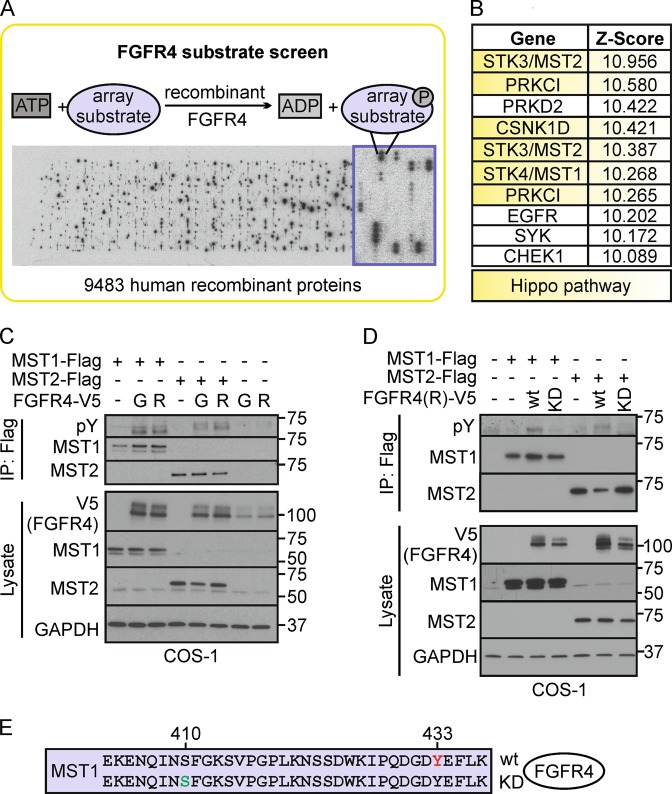
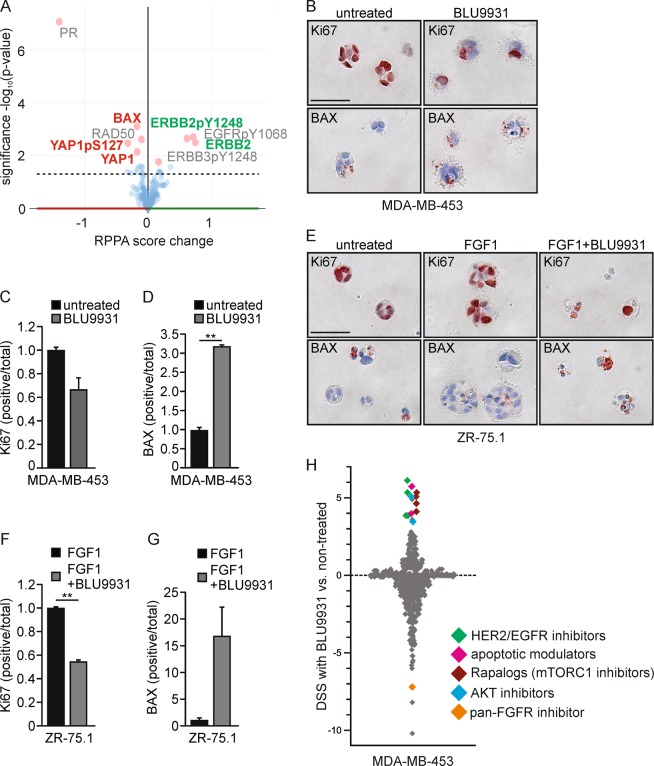
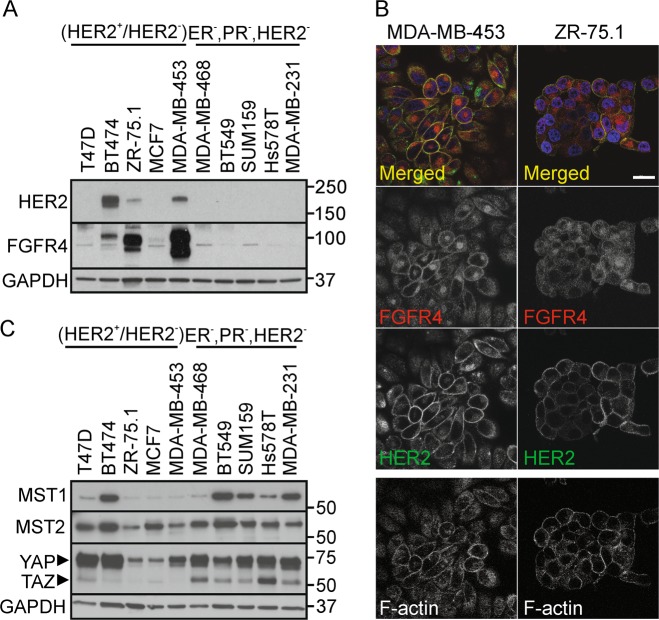
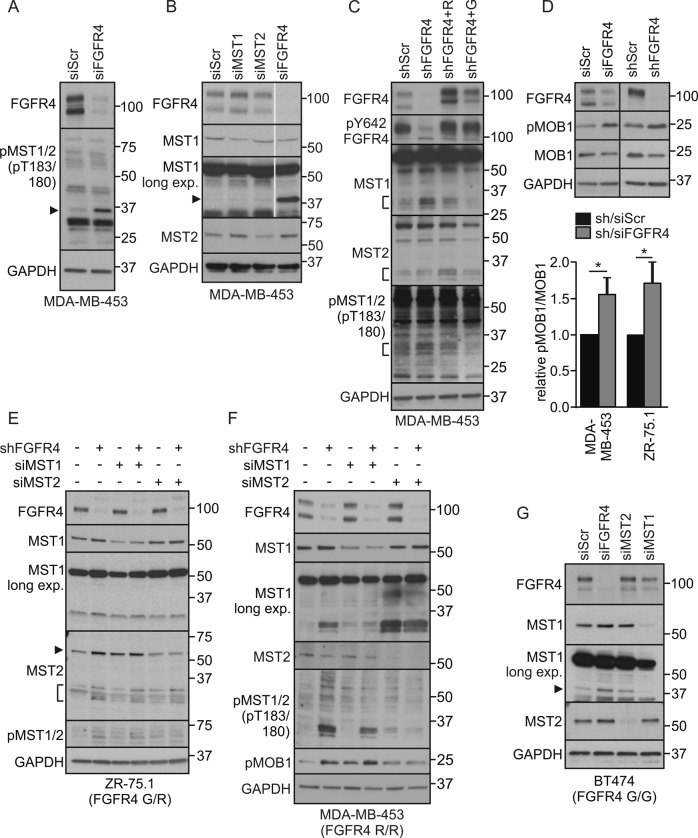
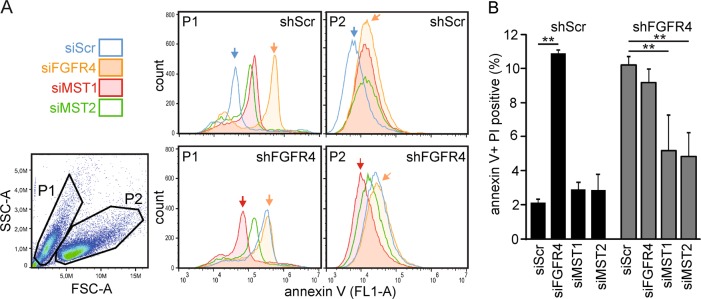
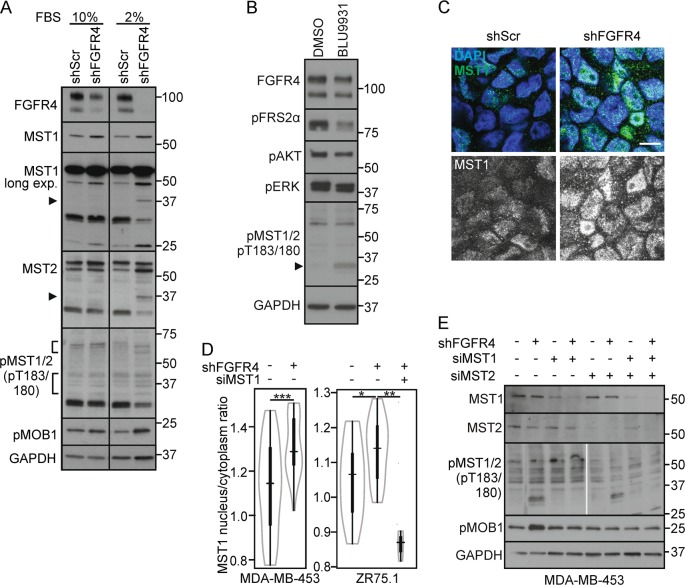
Cancer cells balance with the equilibrium of cell death and growth to expand and metastasize. The activity of mammalian sterile20-like kinases (MST1/2) has been linked to apoptosis and tumor suppression via YAP/Hippo pathway-independent and -dependent mechanisms. Using a kinase substrate screen, we identified here MST1 and MST2 among the top substrates for fibroblast growth factor receptor 4 (FGFR4). In COS-1 cells, MST1 was phosphorylated at Y433 residue in an FGFR4 kinase activity-dependent manner, as assessed by mass spectrometry. Blockade of this phosphorylation by Y433F mutation induced MST1 activation, as indicated by increased threonine phosphorylation of MST1/2, and the downstream substrate MOB1, in FGFR4-overexpressing T47D and MDA-MB-231 breast cancer cells. Importantly, the specific knockdown or short-term inhibition of FGFR4 in endogenous models of human HER2 breast cancer cells likewise led to increased MST1/2 activation, in conjunction with enhanced MST1 nuclear localization and generation of N-terminal cleaved and autophosphorylated MST1. Unexpectedly, MST2 was also essential for this MST1/N activation and coincident apoptosis induction, although these two kinases, as well as YAP, were differentially regulated in the breast cancer models analyzed. Moreover, pharmacological FGFR4 inhibition specifically sensitized the HER2 MDA-MB-453 breast cancer cells, not only to HER2/EGFR and AKT/mTOR inhibitors, but also to clinically relevant apoptosis modulators. In TCGA cohort, FGFR4 overexpression correlated with abysmal HER2 breast carcinoma patient outcome. Therefore, our results uncover a clinically relevant, targetable mechanism of FGFR4 oncogenic activity via suppression of the stress-associated MST1/2-induced apoptosis machinery in tumor cells with prominent HER/ERBB and FGFR4 signaling-driven proliferation.
癌细胞通过细胞死亡和生长的平衡来扩张和转移。哺乳动物无 sterile20 样激酶(MST1/2)的活性已通过 YAP/Hippo 途径独立和依赖机制与细胞凋亡和肿瘤抑制有关。通过激酶底物筛选,我们在这里鉴定出 MST1 和 MST2 是成纤维细胞生长因子受体 4(FGFR4)的顶级底物之一。在 COS-1 细胞中,MST1 在 FGFR4 激酶活性依赖性方式下在 Y433 残基处被磷酸化,如通过质谱法评估的那样。通过 Y433F 突变阻断这种磷酸化诱导 MST1 激活,如在 FGFR4 过表达的 T47D 和 MDA-MB-231 乳腺癌细胞中 MST1/2 和下游底物 MOB1 的 Thr 磷酸化增加所表明的那样。重要的是,在人 HER2 乳腺癌细胞的内源性模型中,特异性敲低或短期抑制 FGFR4 同样导致 MST1/2 激活增加,同时增强 MST1 核定位和产生 N 端切割和自磷酸化 MST1。出乎意料的是,MST2 对于这种 MST1/N 激活和伴随的细胞凋亡诱导也是必需的,尽管在分析的乳腺癌模型中这两种激酶以及 YAP 被不同地调节。此外,药理 FGFR4 抑制特异性地使 HER2 MDA-MB-453 乳腺癌细胞敏感,不仅对 HER2/EGFR 和 AKT/mTOR 抑制剂敏感,而且对临床相关的凋亡调节剂敏感。在 TCGA 队列中,FGFR4 过表达与 HER2 乳腺癌患者的不良预后相关。因此,我们的结果揭示了一种具有临床意义的、可靶向的 FGFR4 致癌活性机制,通过抑制与应激相关的 MST1/2 诱导的细胞凋亡机制,在具有突出的 HER/ERBB 和 FGFR4 信号驱动增殖的肿瘤细胞中。