Institute of Clinical Chemistry and Pathobiochemistry, School of Medicine, Technical University of Munich, Munich, Germany.
German Cancer Consortium (DKTK), Heidelberg, Germany.
Front Immunol. 2019 Mar 11;10:419. doi: 10.3389/fimmu.2019.00419. eCollection 2019.
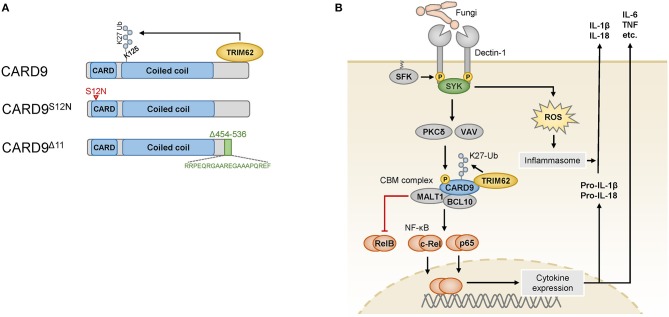
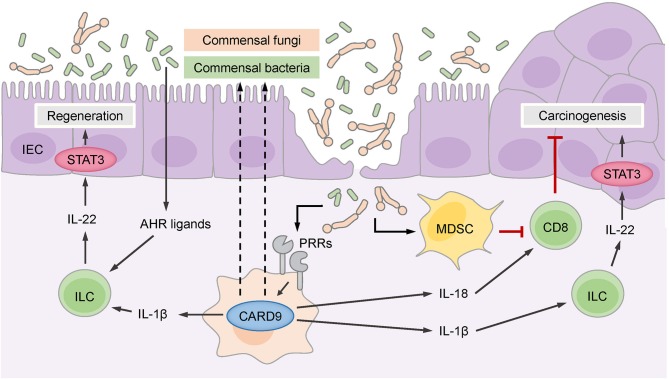
Intestinal homeostasis requires a balanced interaction between the host innate immune system and the gut microbiota. A dysregulation of this interdependency can result in inflammatory bowel diseases (IBDs), and this dysregulation is a key pathogenic factor during the development of colorectal cancer. CARD9 is a central signaling molecule in the innate immune system, which is essential for host defense against infection. Moreover, polymorphisms in are key risk factors for IBD development, indicating that CARD9 signaling is critical for intestinal immune homeostasis. This review summarizes recent insights into the regulation of CARD9 signaling, its pathophysiological role during IBD development via effects on the microbiota and epithelial regeneration and the pro- and antitumor immune functions of CARD9 during intestinal carcinogenesis.
肠道内稳态需要宿主固有免疫系统和肠道微生物群之间的平衡相互作用。这种相互依存关系的失调可能导致炎症性肠病(IBD),而这种失调是结直肠癌发展过程中的关键致病因素。CARD9 是固有免疫系统中的核心信号分子,对于宿主抗感染防御至关重要。此外, 的多态性是 IBD 发展的关键危险因素,表明 CARD9 信号对于肠道免疫内稳态至关重要。这篇综述总结了最近关于 CARD9 信号调节的研究进展,以及其通过对微生物群和上皮再生的影响在 IBD 发展过程中的病理生理作用,以及 CARD9 在肠道癌变过程中的促癌和抗癌免疫功能。