Fitzgerald Ruth P, Legge Michael, Rewi Poia, Robinson Ella J
Social Anthropology Programme, School of Social Sciences, University of Otago, Dunedin, New Zealand.
Department of Biochemistry, University of Otago, Dunedin, New Zealand.
Reprod Biomed Soc Online. 2019 Feb 14;8:10-22. doi: 10.1016/j.rbms.2019.01.001. eCollection 2019 Jun.
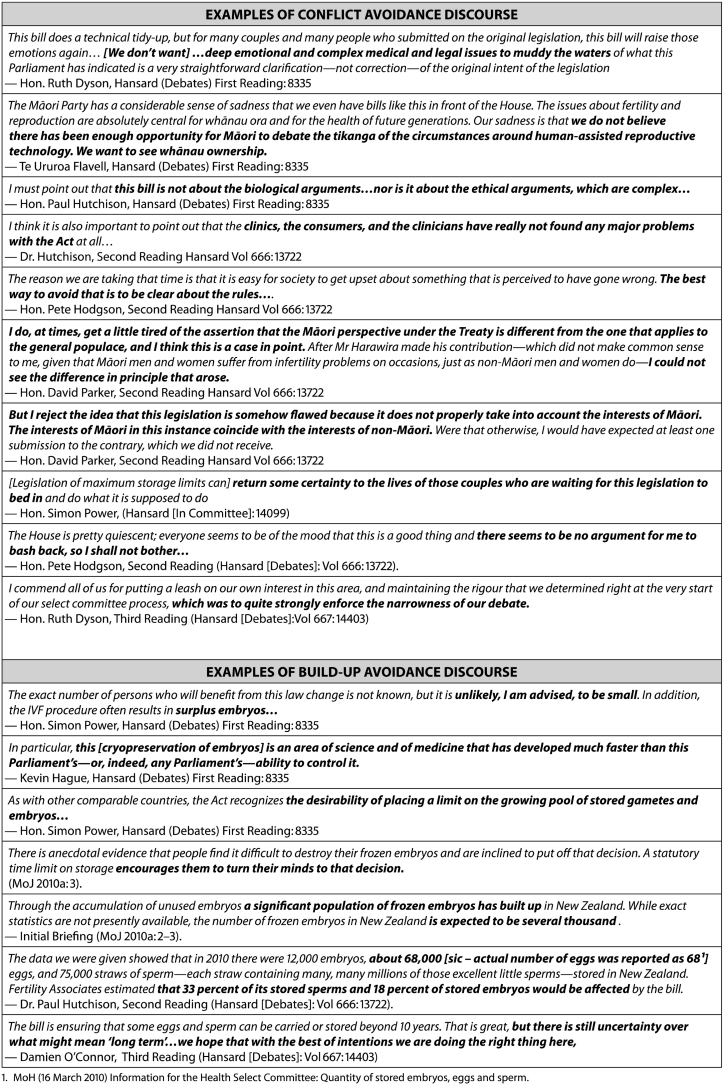
This article undertakes a close reading of the parliamentary debates associated with the topic of embryo cryopreservation in Aotearoa New Zealand. From our critical readings, we argue that there is a lack of transparency over the ethical reasons for enforcing a maximum storage limit. We demonstrate that arguments for the retention of this limit are associated (in New Zealand) with arguments based upon 'build-up avoidance' and 'conflict avoidance' as social goods based on Pākehā [New Zealander of European descent] cultural world views rather than identifiable universal ethical principles. We illustrate that the avoidance of embryo accumulation and related conflict was only achieved by the denial of indigenous spiritual and cultural concerns, while also shifting the ethical burdens of disposition on to clinic staff and those members of the public who protested against enforced cryopreserved embryo disposal. The Pākehā cultural concept of 'tidy housekeeping' emerges as a presumed ethical and social good in the New Zealand situation. This is despite abundant literature documenting the suffering created through forced decision-making upon disposition.
本文对新西兰与胚胎冷冻保存主题相关的议会辩论进行了仔细研读。通过批判性阅读,我们认为在执行最大存储期限的伦理原因方面缺乏透明度。我们证明,保留这一期限的论据(在新西兰)与基于“避免累积”和“避免冲突”的论据相关联,这些论据是基于欧洲裔新西兰人的文化世界观将其作为社会福祉,而非基于可识别的普遍伦理原则。我们表明,避免胚胎累积及相关冲突只是通过否认本土的精神和文化关切来实现的,同时还将处置的伦理负担转嫁给了诊所工作人员以及那些抗议强制处置冷冻胚胎的公众成员。在新西兰的情形中,“整洁家政”这一欧洲裔新西兰人的文化概念被视为一种假定的伦理和社会福祉。尽管有大量文献记载了因处置方面的强制决策而造成的痛苦。