Tonsfeldt Karen J, Schoeller Erica L, Brusman Liza E, Cui Laura J, Lee Jinkwon, Mellon Pamela L
Department of Obstetrics, Gynecology, and Reproductive Sciences, Center for Reproductive Science and Medicine, University of California San Diego, La Jolla, California.
J Endocr Soc. 2019 Feb 13;3(4):716-733. doi: 10.1210/js.2018-00228. eCollection 2019 Apr 1.
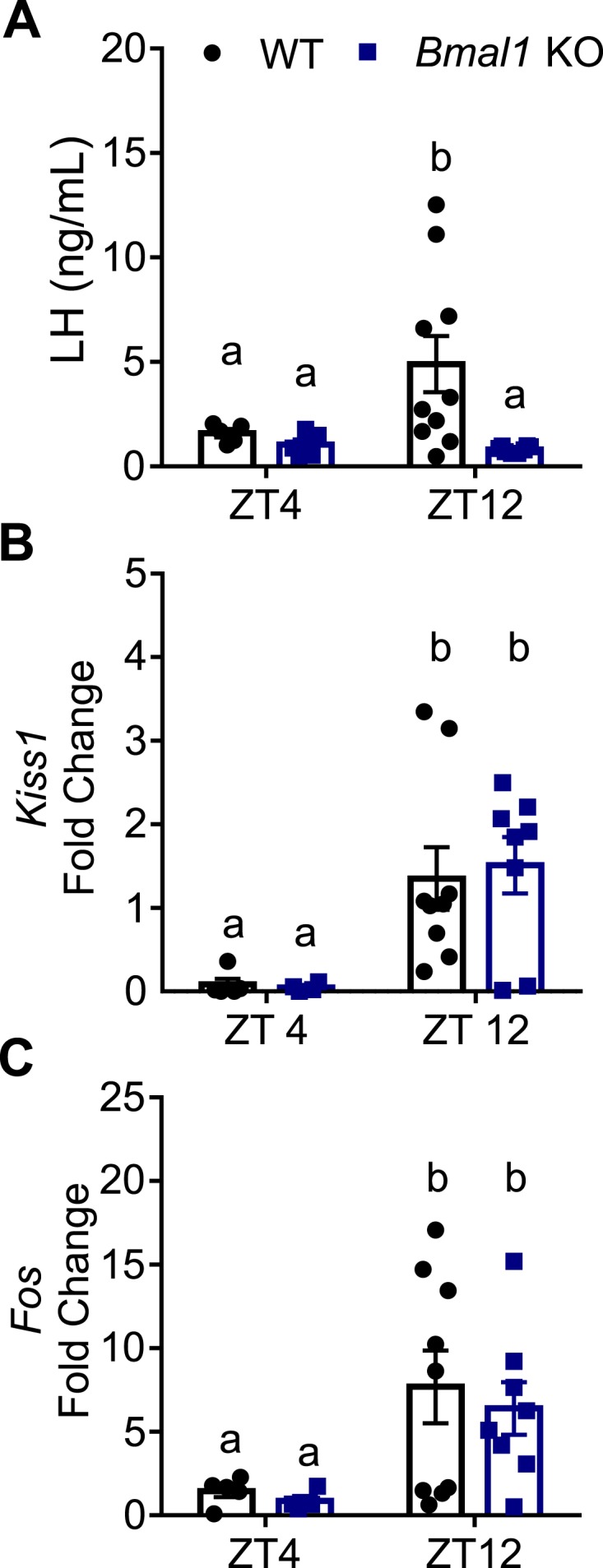
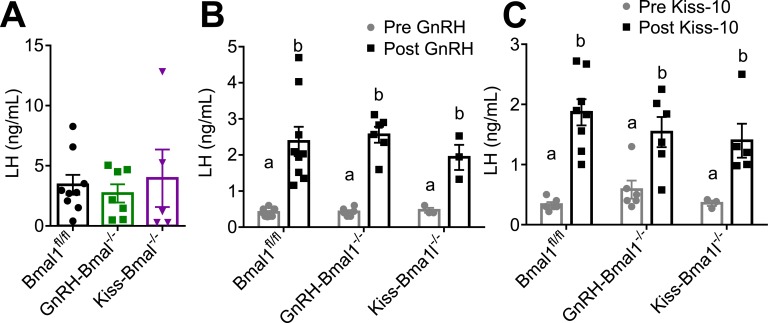
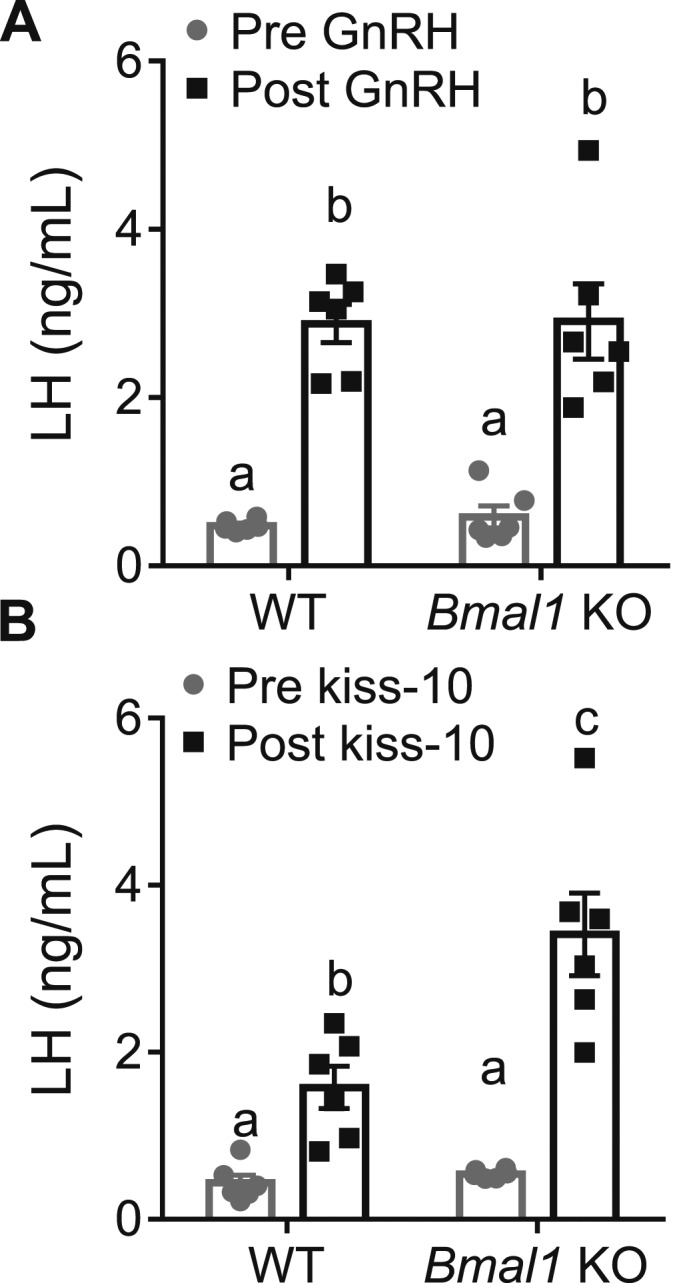
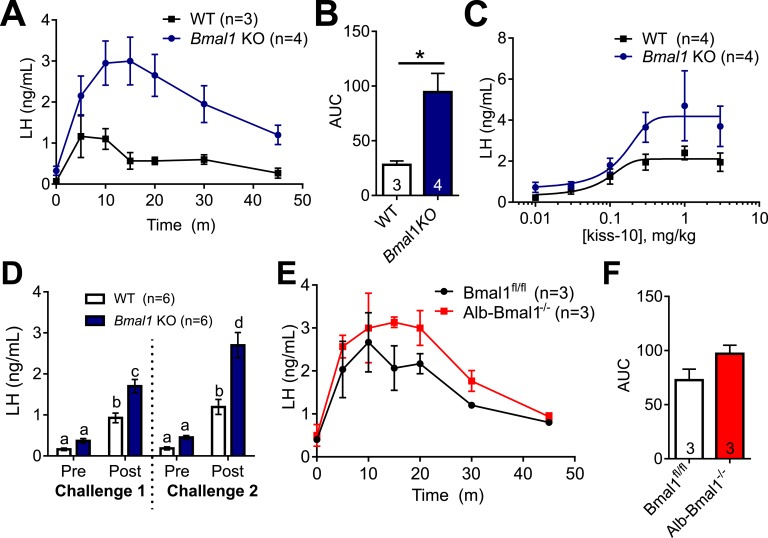
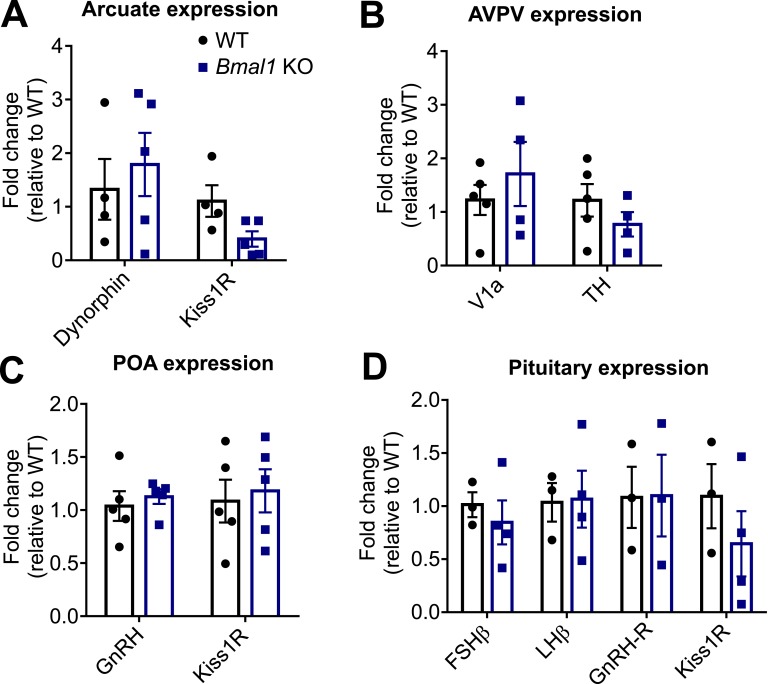
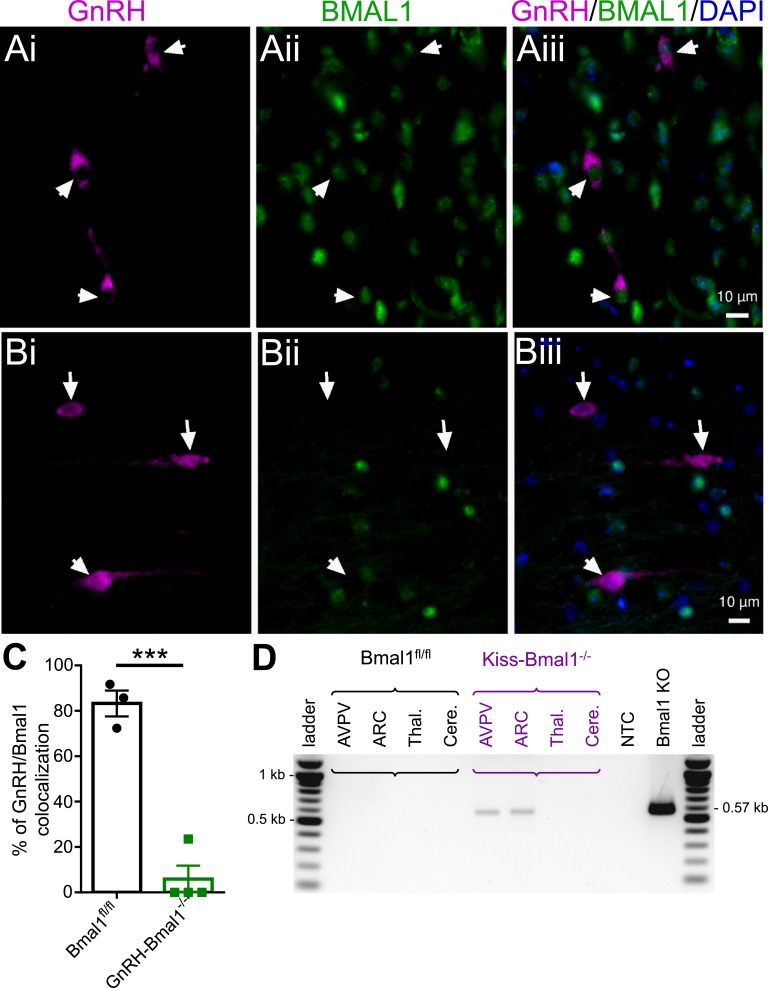
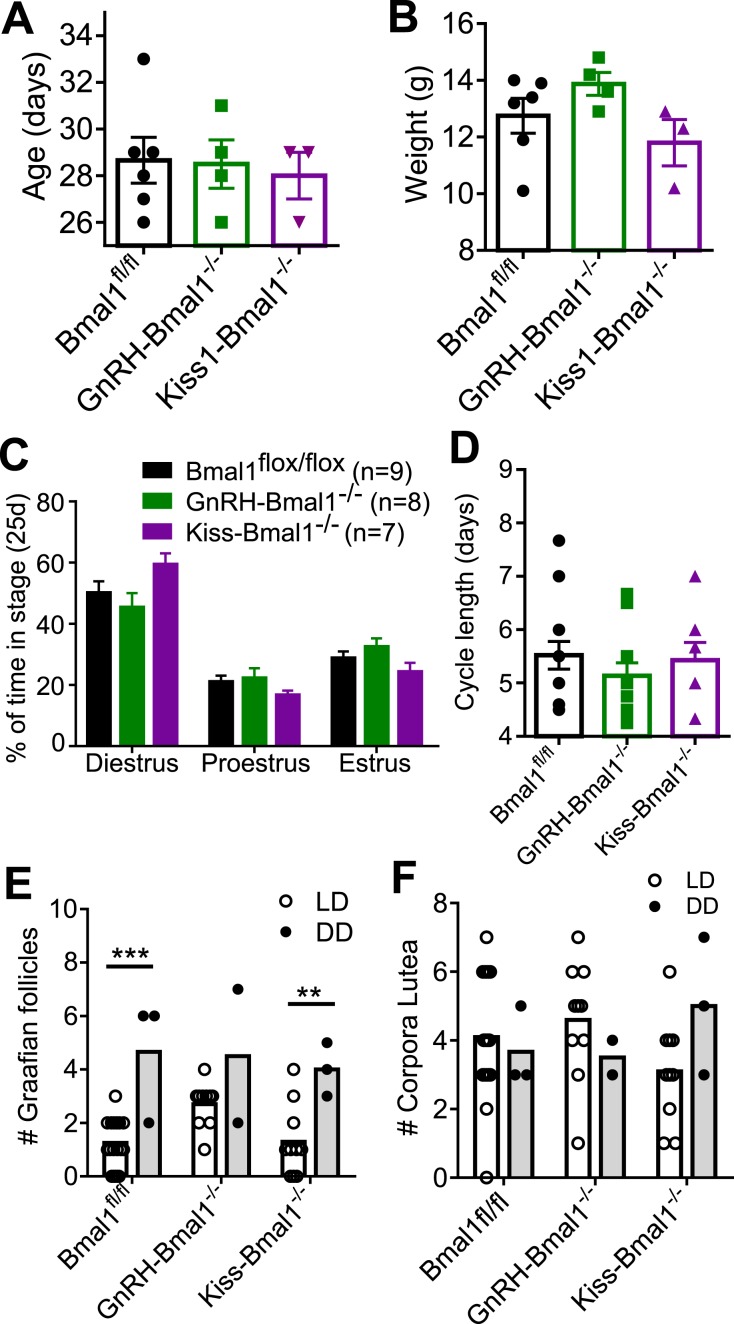
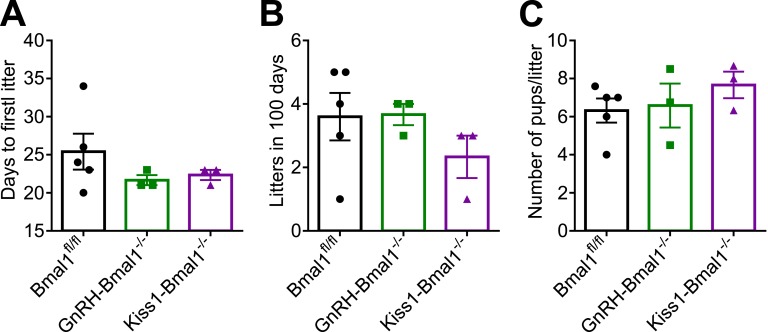
In rodents, the preovulatory LH surge is temporally gated, but the timing cue is unknown. Estrogen primes neurons in the anteroventral periventricular nucleus (AVPV) to secrete kisspeptin, which potently activates GnRH neurons to release GnRH, eliciting a surge of LH to induce ovulation. Deletion of the circadian clock gene results in infertility. Previous studies have found that knockout (KO) females do not display an LH surge at any time of day. We sought to determine whether neuroendocrine disruption contributes to the absence of the LH surge. Because expression in the AVPV is critical for regulating ovulation, we hypothesized that this population is disrupted in KO females. However, we found an appropriate rise in AVPV and mRNA at the time of lights out in ovariectomized estrogen-treated animals, despite the absence of a measureable increase in LH. Furthermore, KO females have significantly increased LH response to kiss-10 administration, although the LH response to GnRH was unchanged. We then created Kiss1- and GnRH-specific Bmal1 KO mice to examine whether expression is necessary within either kisspeptin or GnRH neurons. We detected no significant differences in any measured reproductive parameter. Our results indicate that disruption of the hypothalamic regulation of fertility in the KO females is not dependent on endogenous clocks within either the GnRH or kisspeptin neurons.
在啮齿动物中,排卵前促黄体生成素(LH)高峰受时间限制,但时间线索尚不清楚。雌激素使腹侧脑室前核(AVPV)中的神经元做好准备以分泌 kisspeptin,后者可有效激活促性腺激素释放激素(GnRH)神经元以释放GnRH,引发LH高峰从而诱导排卵。昼夜节律时钟基因的缺失会导致不育。先前的研究发现,敲除(KO)雌性动物在一天中的任何时候都不会出现LH高峰。我们试图确定神经内分泌紊乱是否导致了LH高峰的缺失。由于AVPV中的表达对于调节排卵至关重要,我们推测在KO雌性动物中这一群体受到了破坏。然而,我们发现在切除卵巢并用雌激素处理的动物中,尽管LH没有可测量的增加,但在熄灯时AVPV和mRNA仍有适当的升高。此外,KO雌性动物对kiss-10给药的LH反应显著增加,尽管对GnRH的LH反应没有变化。然后我们创建了Kiss1和GnRH特异性Bmal1 KO小鼠,以检查在kisspeptin或GnRH神经元中表达是否必要。我们在任何测量的生殖参数中均未检测到显著差异。我们的结果表明,KO雌性动物下丘脑生育调节的破坏并不依赖于GnRH或kisspeptin神经元内的内源性时钟。