Department of Psychiatry and Biobehavioral Sciences, David Geffen School of Medicine, University of California Los Angeles, Los Angeles, CA, 90095, USA.
Intellectual and Developmental Disabilities Research Center, David Geffen School of Medicine, University of California Los Angeles, Los Angeles, CA, 90095, USA.
Neurochem Res. 2020 Mar;45(3):591-605. doi: 10.1007/s11064-019-02778-5. Epub 2019 Mar 25.
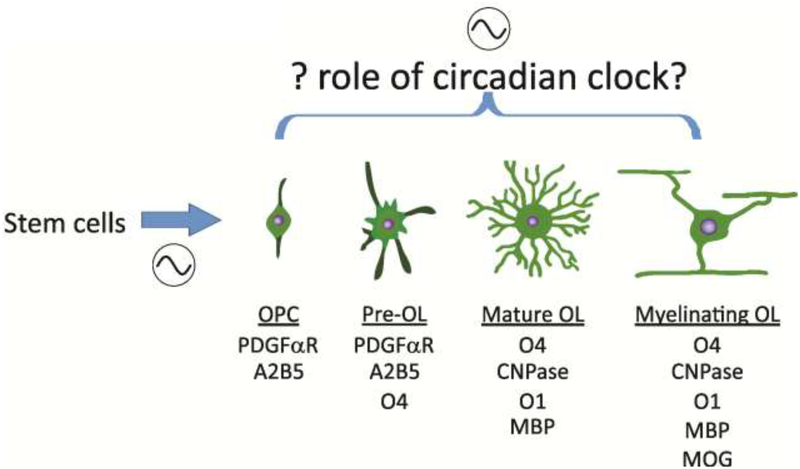
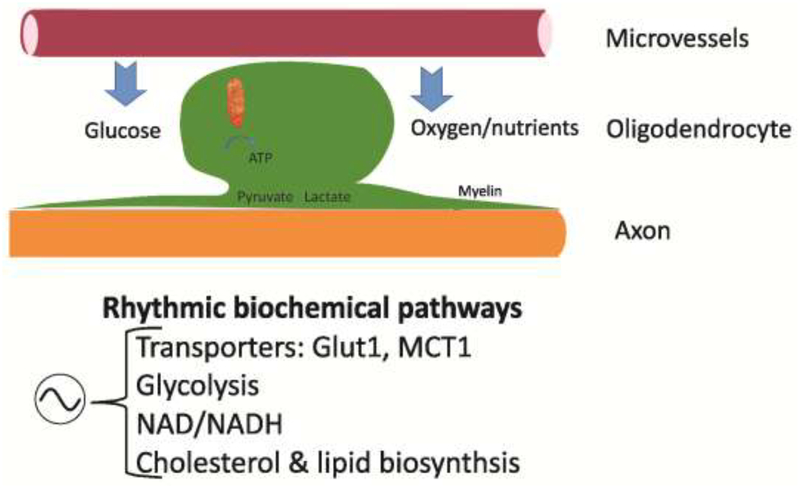
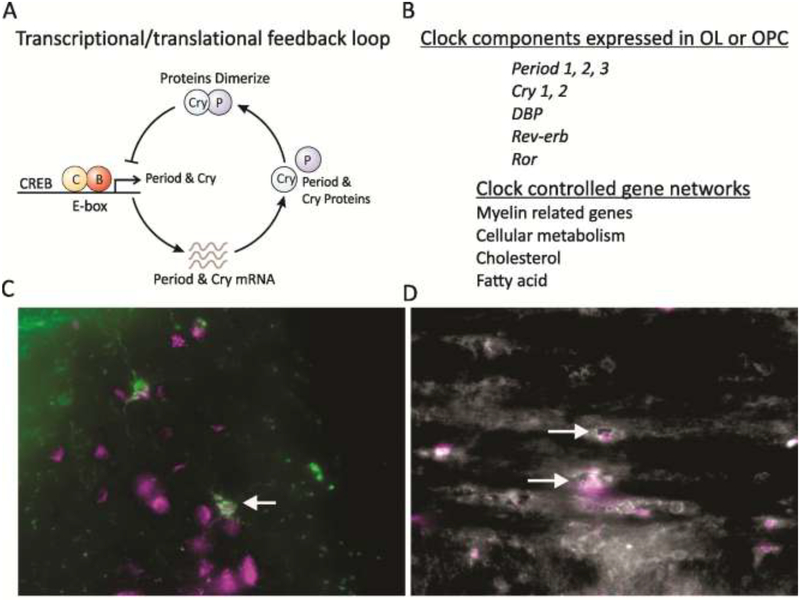
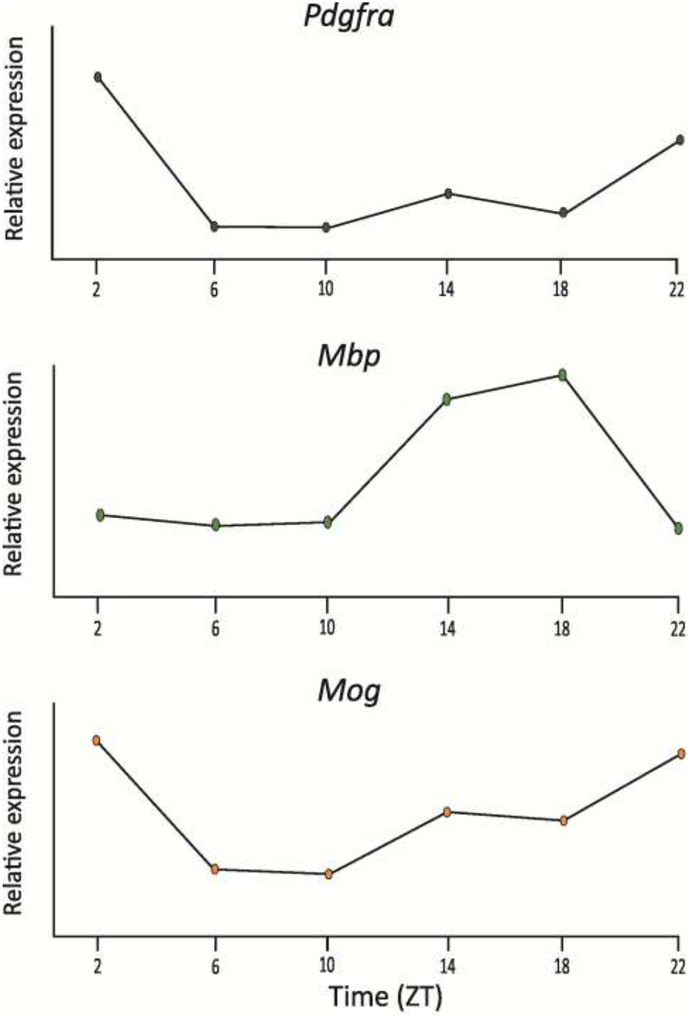
Oligodendrocytes (OL) are the only myelinating cells of the central nervous system thus interferences, either environmental or genetic, with their maturation or function have devastating consequences. Albeit so far neglected, one of the less appreciated, nevertheless possible, regulators of OL maturation and function is the circadian cycle. Yet, disruptions in these rhythms are unfortunately becoming a common "disorder" in the today's world. The temporal patterning of behaviour and physiology is controlled by a circadian timing system based in the anterior hypothalamus. At the molecular level, circadian rhythms are generated by a transcriptional/translational feedback system that regulates transcription and has a major impact on cellular function(s). Fundamental cellular properties/functions in most cell types vary with the daily circadian cycle: OL are unlikely an exception! To be clear, the presence of circadian oscillators or the cell-specific function(s) of the circadian clock in OL has yet to be defined. Furthermore, we wish to entertain the idea of links between the "thin" evidence on OL intrinsic circadian rhythms and their interjection(s) at different stages of lineage progression as well as in supporting/regulating OL crucial function: myelination. Individuals with intellectual and developmental syndromes as well as neurodegenerative diseases present with a disrupted sleep/wake cycle; hence, we raise the possibility that these disturbances in timing can contribute to the loss of white matter observed in these disorders. Preclinical and clinical work in this area is needed for a better understanding of how circadian rhythms influence OL maturation and function(s), to aid the development of new therapeutic strategies and standards of care for these patients.
少突胶质细胞(OL)是中枢神经系统中唯一的髓鞘形成细胞,因此,其成熟或功能的任何干扰,无论是环境的还是遗传的,都可能带来灾难性的后果。尽管到目前为止还被忽视,但昼夜节律可能是调节 OL 成熟和功能的一个不太被重视但却很重要的因素。然而,这些节律的紊乱在当今世界不幸成为一种常见的“紊乱”。行为和生理的时间模式由位于下丘脑前部的昼夜节律计时系统控制。在分子水平上,昼夜节律是由转录/翻译反馈系统产生的,该系统调节转录,并对细胞功能有重大影响。大多数细胞类型的基本细胞特性/功能随每日昼夜节律而变化:OL 也可能不会例外!需要明确的是,昼夜节律振荡器的存在或昼夜节律钟在 OL 中的特定细胞功能尚未确定。此外,我们希望探讨 OL 内在昼夜节律的“微弱”证据与其在谱系进展的不同阶段的介入以及在支持/调节 OL 髓鞘形成的关键功能之间的联系。患有智力和发育综合征以及神经退行性疾病的个体表现出睡眠/觉醒周期紊乱;因此,我们提出这样一种可能性,即这些时间上的紊乱可能导致这些疾病中观察到的白质丢失。需要在这一领域开展临床前和临床工作,以更好地了解昼夜节律如何影响 OL 的成熟和功能,从而为这些患者开发新的治疗策略和护理标准提供帮助。