Liu Zhimei, Zhang Li, Shen Danmin, Ding Changhong, Yang Xinying, Zhang Weihua, Li Jiuwei, Deng Jie, Gong Shuai, Liu Jun, Qian Suyun, Fang Fang
Department of Neurology, Beijing Children's Hospital, Capital Medical University, National Center for Children's Health, Beijing, China.
Center for Bioinformatics and Computational Biology, Institute of Biomedical Sciences, School of Life Sciences, East China Normal University, Shanghai, China.
Front Pharmacol. 2019 Mar 12;10:259. doi: 10.3389/fphar.2019.00259. eCollection 2019.
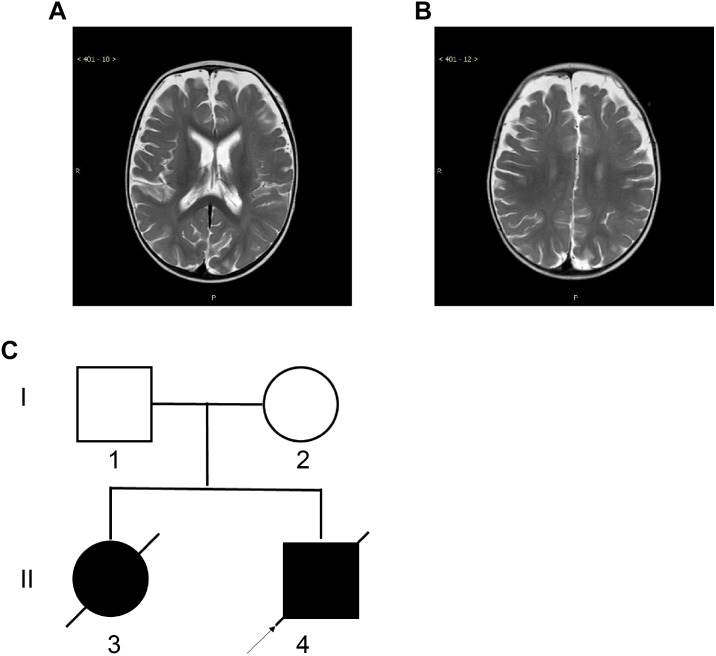
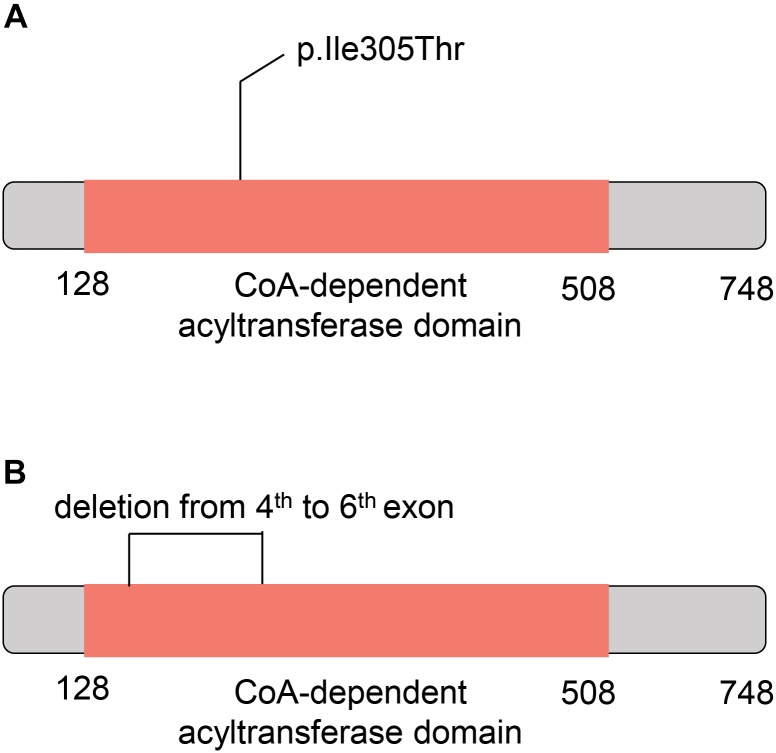
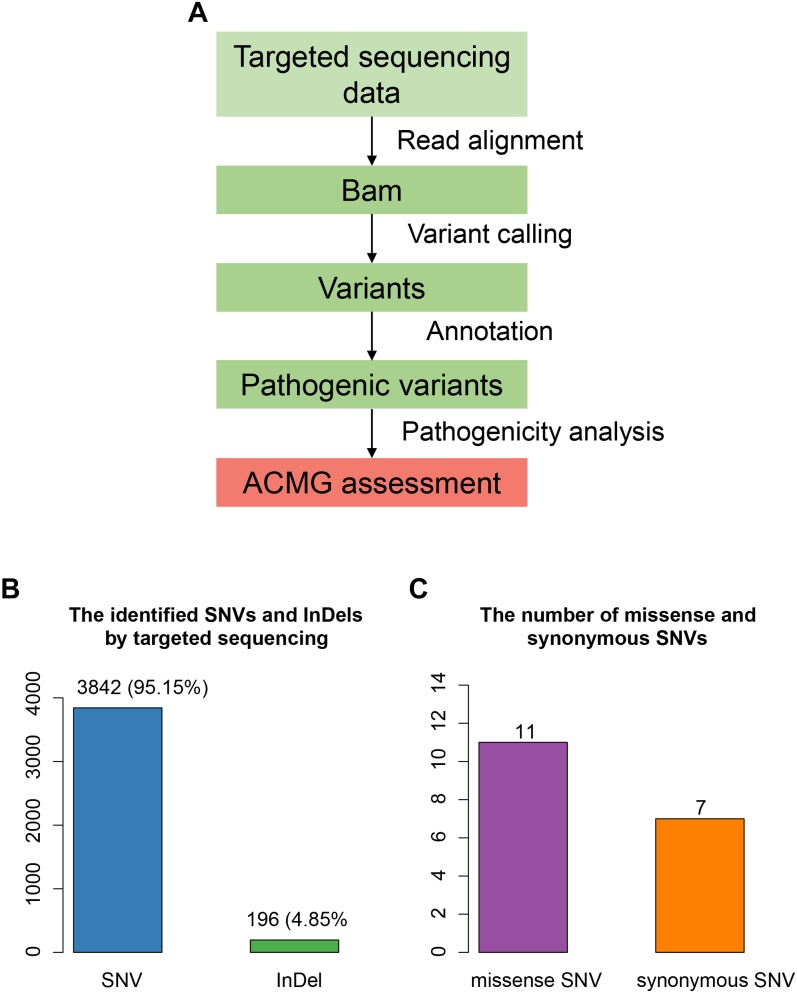
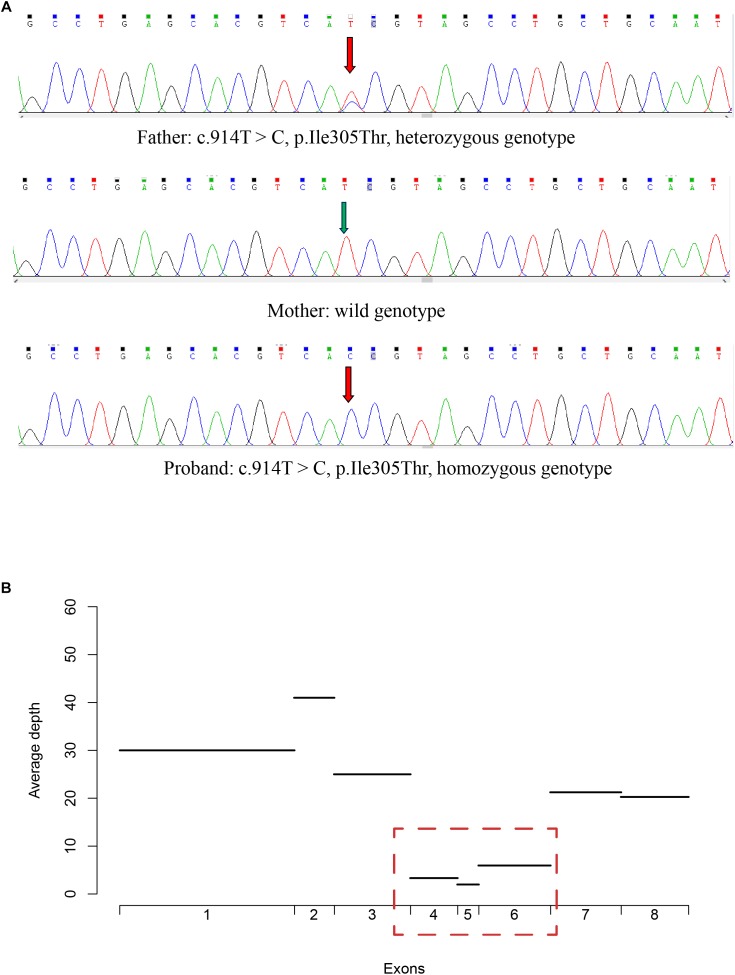
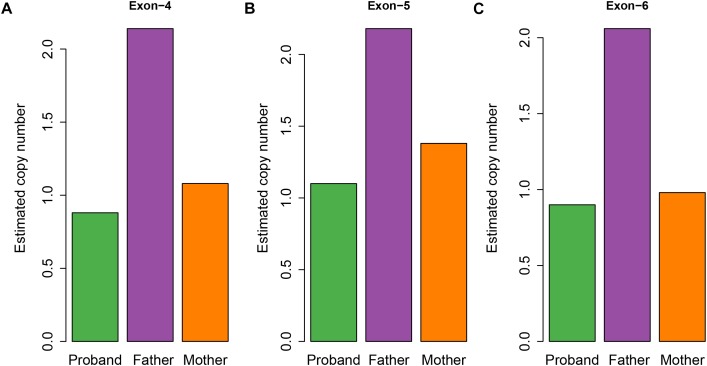
Congenital myasthenic syndromes (CMSs) are a group of inherited disorders caused by genetic defects in neuromuscular junctions. Mutations in , encoding choline acetyltransferase, cause congenital myasthenic syndrome with episodic apnea (CMS-EA), a rare autosomal recessive disease characterized by respiratory insufficiency with cyanosis and apnea after infections, fever, vomiting, or excitement. To date, no studies have reported deletions comprised of multiple exons. Here, using next generation sequencing, we identified compound heterozygous mutations, namely a large maternally inherited deletion, including exons 4, 5, and 6, and a paternally inherited missense variant (c.914T>C [p.Ile305Thr]) in in a Chinese patient with a severe phenotype of CMS-EA. Furthermore, the large deletion was also validated by real-time fluorescence quantitative polymerase chain reaction. The patient was a 10-month-old boy, who presented with a weak cry and feeding difficulties soon after birth, ptosis at 4 months old, episodic apnea after fever at 9 months old, and respiratory insufficiency with cyanosis and apnea that required intubation after a respiratory tract infection at 10 months old. Unfortunately, he died in the Pediatric Intensive Care Unit soon after hospitalization. The patient's elder sister had similar clinical manifestations, and she died prior to the age of 2 months old without a diagnosis. Genotype-phenotype correlation analysis revealed that loss-of-function mutations in exons 4-6 of might cause more severe CMS-EA. To our knowledge, this is the first study to show compound heterozygous mutations consisting of a large deletion and missense mutation in a patient with CMS-EA.
先天性肌无力综合征(CMSs)是一组由神经肌肉接头处基因缺陷引起的遗传性疾病。编码胆碱乙酰转移酶的基因发生突变,可导致伴有发作性呼吸暂停的先天性肌无力综合征(CMS-EA),这是一种罕见的常染色体隐性疾病,其特征为感染、发热、呕吐或兴奋后出现呼吸功能不全伴发绀和呼吸暂停。迄今为止,尚无研究报道过由多个外显子组成的缺失情况。在此,我们利用下一代测序技术,在一名患有严重CMS-EA表型的中国患者中,鉴定出复合杂合突变,即一个母系遗传的大片段缺失,包括外显子4、5和6,以及一个父系遗传的错义变异(c.914T>C [p.Ile305Thr])。此外,通过实时荧光定量聚合酶链反应也验证了该大片段缺失。该患者为一名10个月大的男孩,出生后不久即出现哭声微弱和喂养困难,4个月大时出现上睑下垂,9个月大时发热后出现发作性呼吸暂停,10个月大时因呼吸道感染后出现呼吸功能不全伴发绀和呼吸暂停,需要插管治疗。不幸的是,他住院后不久在儿科重症监护病房死亡。患者的姐姐有类似的临床表现,在2个月大之前未确诊就去世了。基因型-表型相关性分析显示,基因外显子4-6的功能丧失突变可能导致更严重的CMS-EA。据我们所知,这是第一项显示CMS-EA患者中存在由大片段缺失和错义突变组成的复合杂合突变的研究。