The Danish Multiple Sclerosis Center, Department of Neurology, Rigshospitalet, University of Copenhagen, Blegdamsvej 9, 2100 Copenhagen, Denmark.
Cells. 2019 Mar 26;8(3):285. doi: 10.3390/cells8030285.
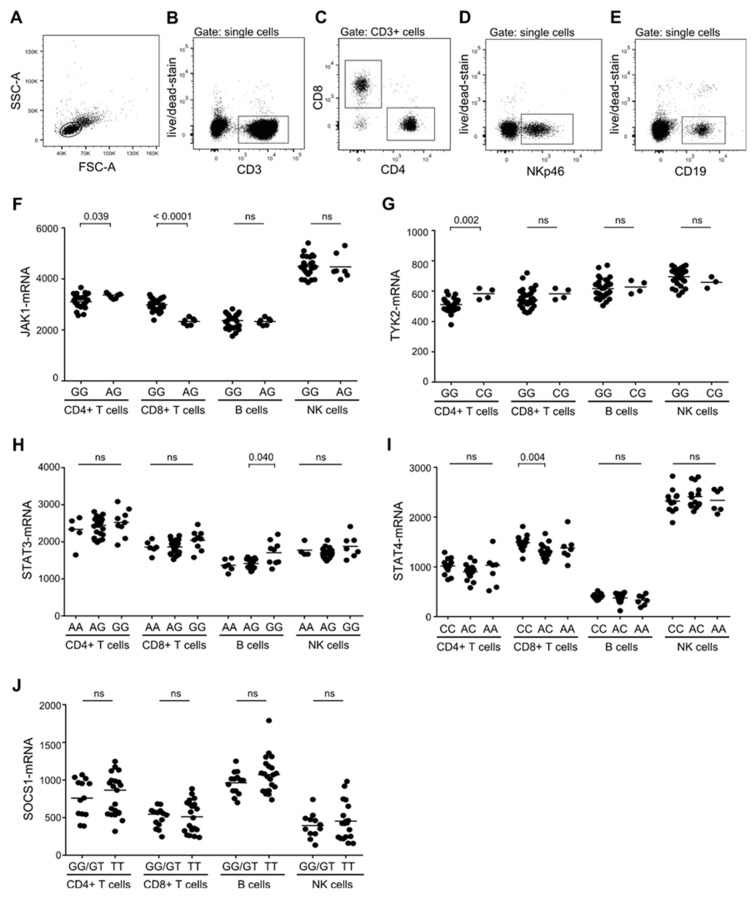
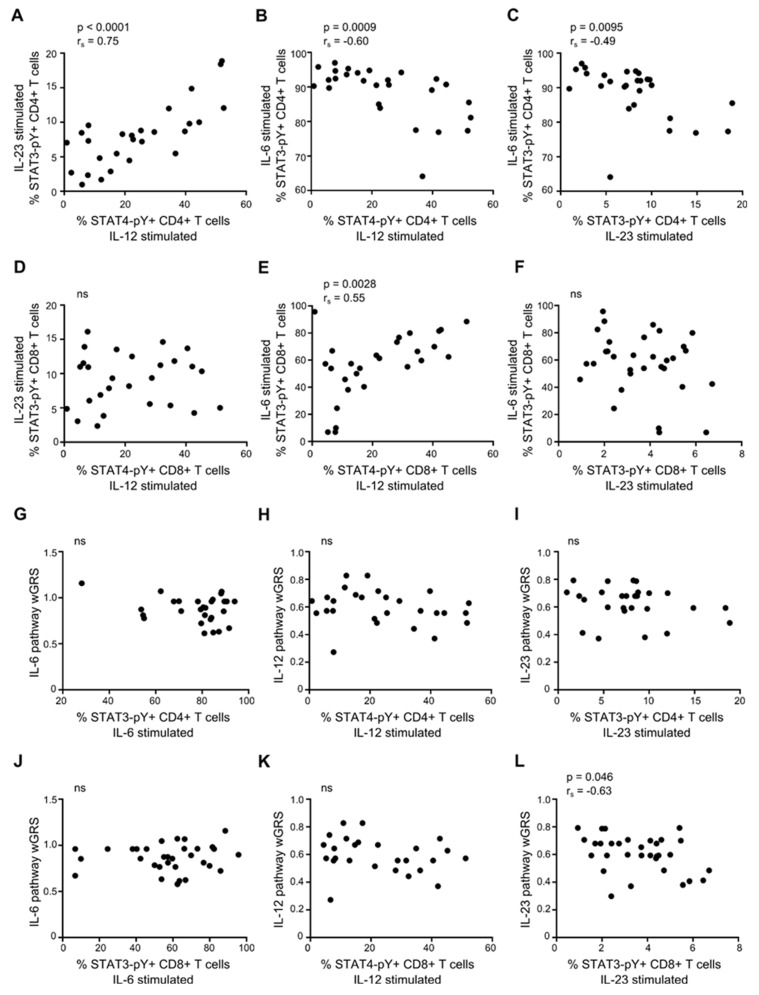
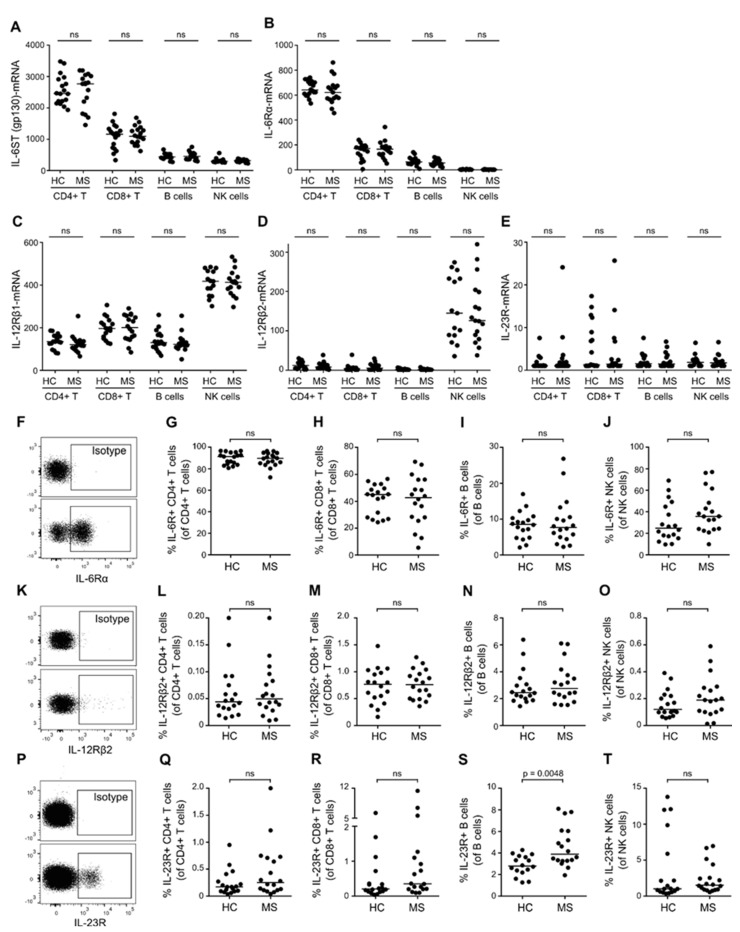
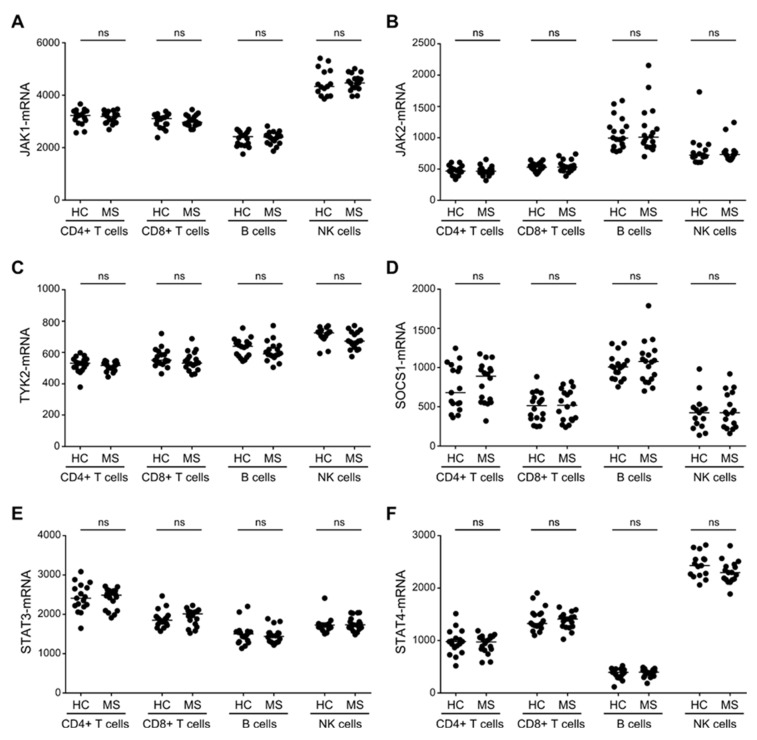
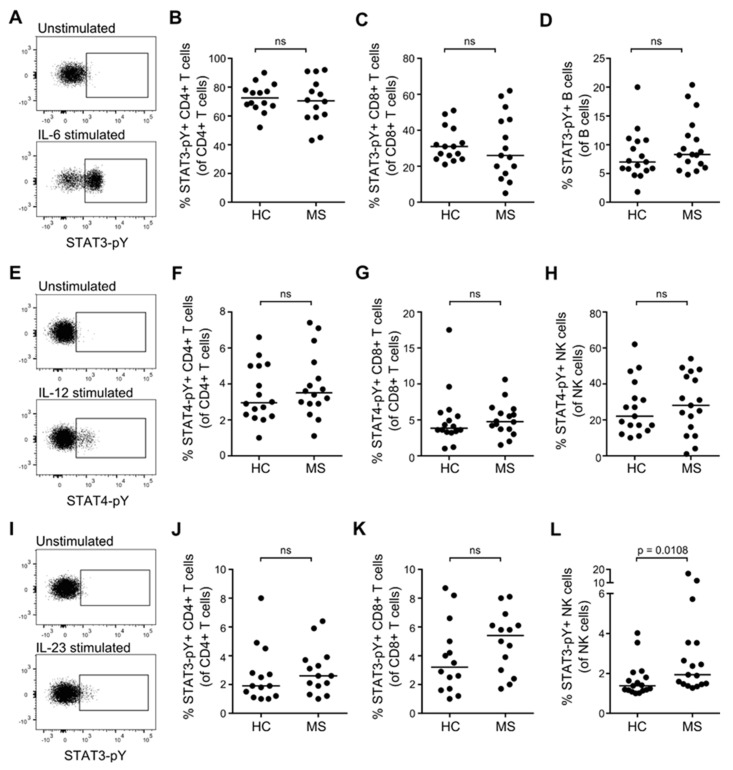
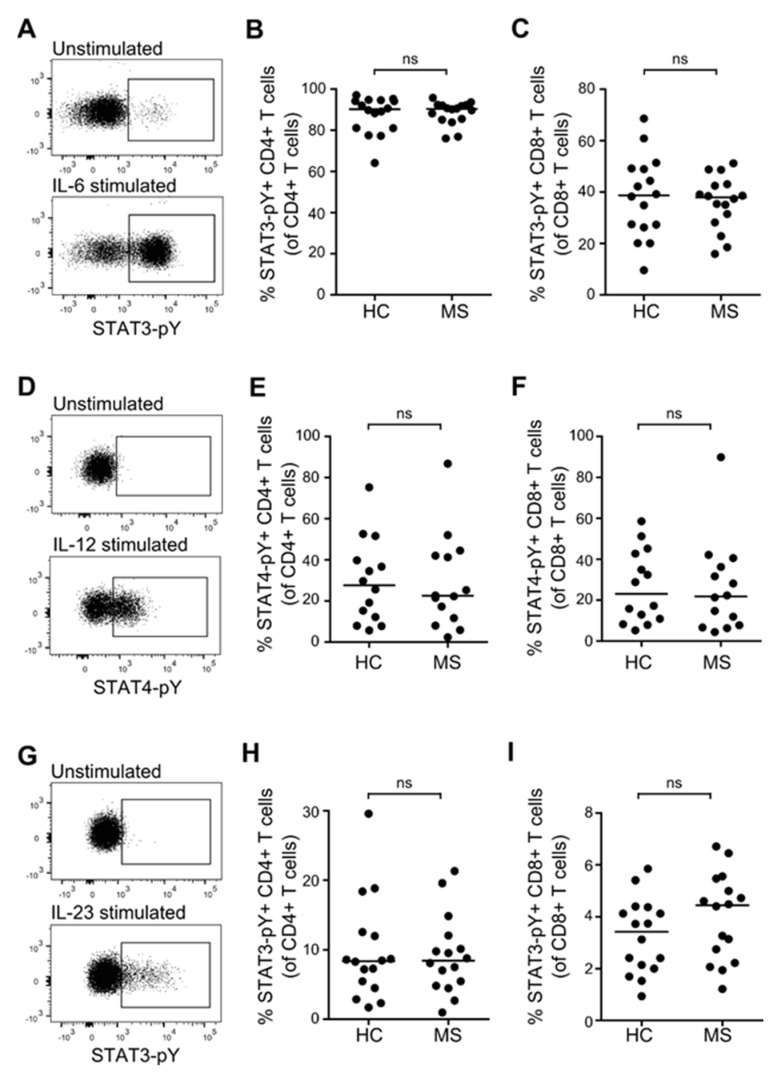
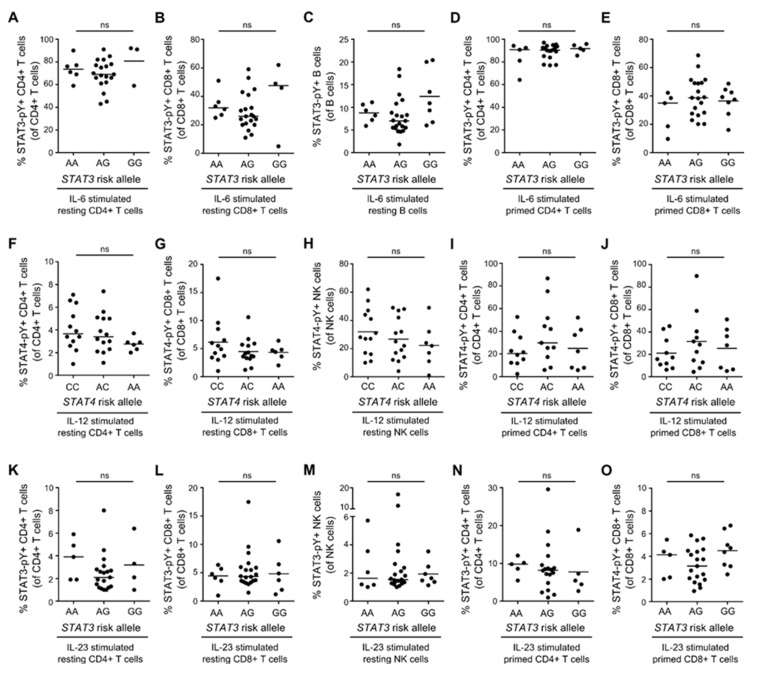
Multiple sclerosis (MS) is an immune-mediated demyelinating disease characterized by central nervous system (CNS) lymphocyte infiltration, abundant production of pro-inflammatory cytokines, and inappropriate activation of Th1 and Th17 cells, B cells, and innate immune cells. The etiology of MS is complex, and genetic factors contribute to disease susceptibility. Genome-wide association studies (GWAS) have revealed numerous MS-risk alleles in the IL-6/STAT3, IL-12/STAT4, and IL-23/STAT3-pathways implicated in the differentiation of Th1 and Th17 cells. In this study, we investigated the signaling properties of these pathways in T, B, and NK cells from patients with relapsing-remitting MS (RRMS) and healthy controls, and assessed the genetic contribution to the activity of the pathways. This revealed a great variability in the level of STAT-pathway molecules and STAT activation between the cell types investigated. We also found a strong donor variation in IL-6, IL-12, and IL-23 responsiveness of primed CD4+ T cells. This variation could not be explained by a single MS-risk variant in a pathway component, or by an accumulation of multiple STAT-pathway MS-risk SNPs. The data of this study suggests that other factors in cohesion with the genetic background contribute to the responsiveness of the IL-6/STAT3, IL-12/STAT4, and IL-23/STAT3-pathways.
多发性硬化症 (MS) 是一种免疫介导的脱髓鞘疾病,其特征是中枢神经系统 (CNS) 淋巴细胞浸润、促炎细胞因子大量产生以及 Th1 和 Th17 细胞、B 细胞和固有免疫细胞的异常激活。MS 的病因复杂,遗传因素导致疾病易感性。全基因组关联研究 (GWAS) 揭示了 IL-6/STAT3、IL-12/STAT4 和 IL-23/STAT3 通路中许多与 Th1 和 Th17 细胞分化相关的 MS 风险等位基因。在这项研究中,我们研究了来自复发缓解型 MS (RRMS) 患者和健康对照者的 T、B 和 NK 细胞中这些通路的信号特性,并评估了遗传因素对通路活性的贡献。结果表明,在所研究的细胞类型中,STAT 通路分子和 STAT 激活水平存在很大的变异性。我们还发现,经激活的 CD4+T 细胞对 IL-6、IL-12 和 IL-23 的反应存在强烈的供体变异性。这种变异性不能用一个通路成分中的单个 MS 风险变异或多个 STAT 通路 MS 风险 SNP 的积累来解释。这项研究的数据表明,与遗传背景相关的其他因素可能会影响 IL-6/STAT3、IL-12/STAT4 和 IL-23/STAT3 通路的反应性。