Calidi Biotherapeutics, San Diego, CA, 92121, USA.
Institute of Biochemistry, Biocentre, University of Wuerzburg, Am Hubland, 97070, Würzburg, Germany.
J Transl Med. 2019 Mar 27;17(1):100. doi: 10.1186/s12967-019-1829-z.
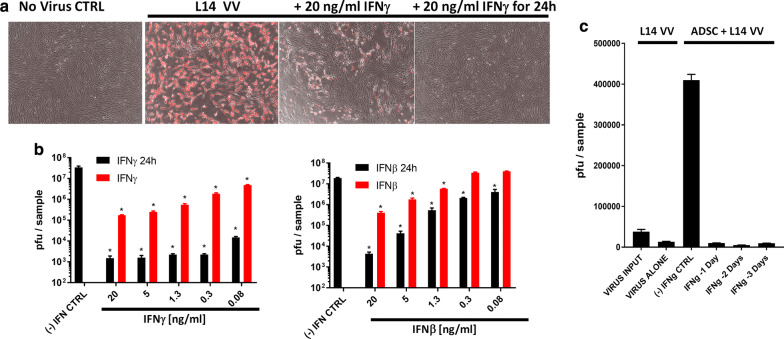
Previous studies have identified IFNγ as an important early barrier to oncolytic viruses including vaccinia. The existing innate and adaptive immune barriers restricting oncolytic virotherapy, however, can be overcome using autologous or allogeneic mesenchymal stem cells as carrier cells with unique immunosuppressive properties.
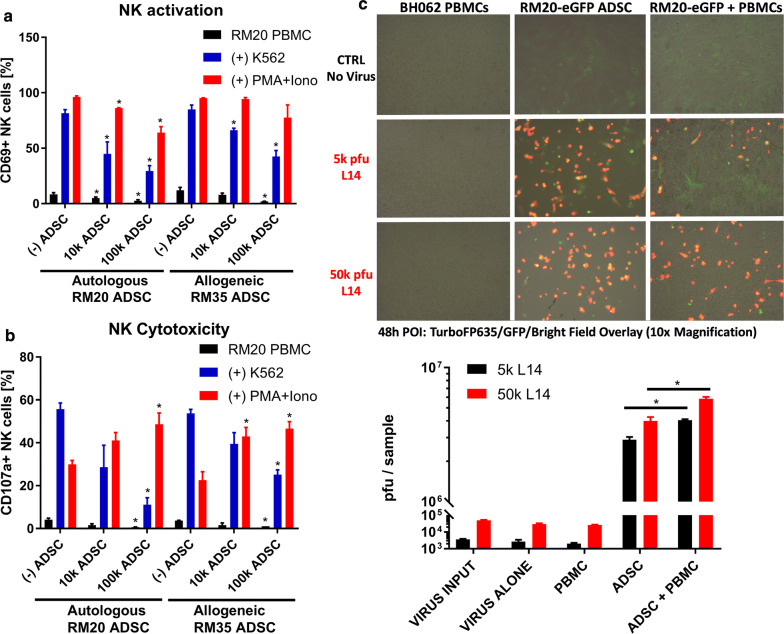
To test the ability of mesenchymal stem cells to overcome innate and adaptive immune barriers and to successfully deliver oncolytic vaccinia virus to tumor cells, we performed flow cytometry and virus plaque assay analysis of ex vivo co-cultures of stem cells infected with vaccinia virus in the presence of peripheral blood mononuclear cells from healthy donors. Comparative analysis was performed to establish statistically significant correlations and to evaluate the effect of stem cells on the activity of key immune cell populations.
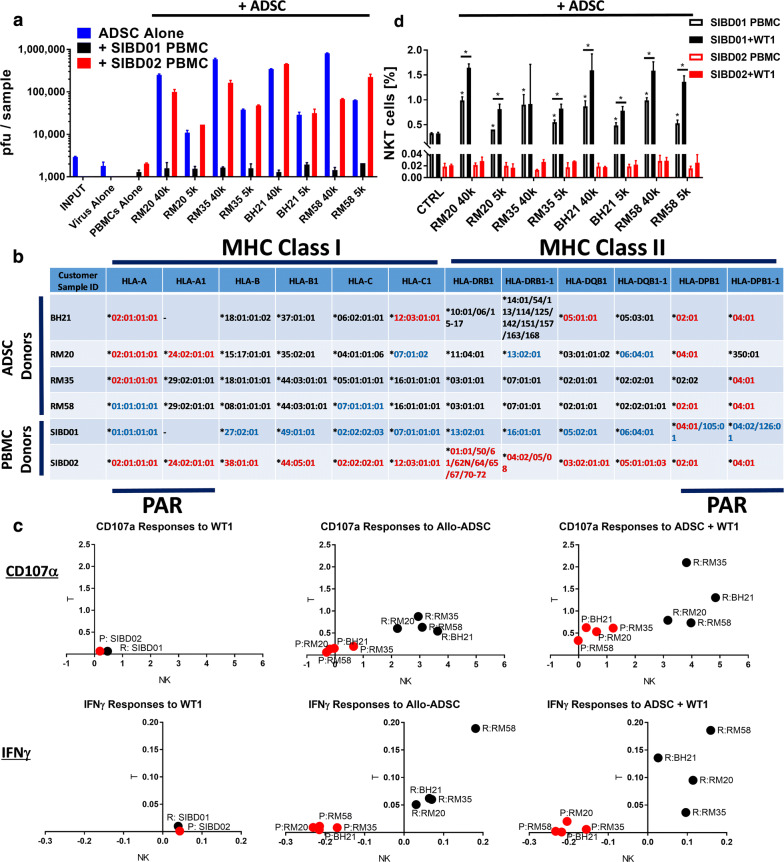
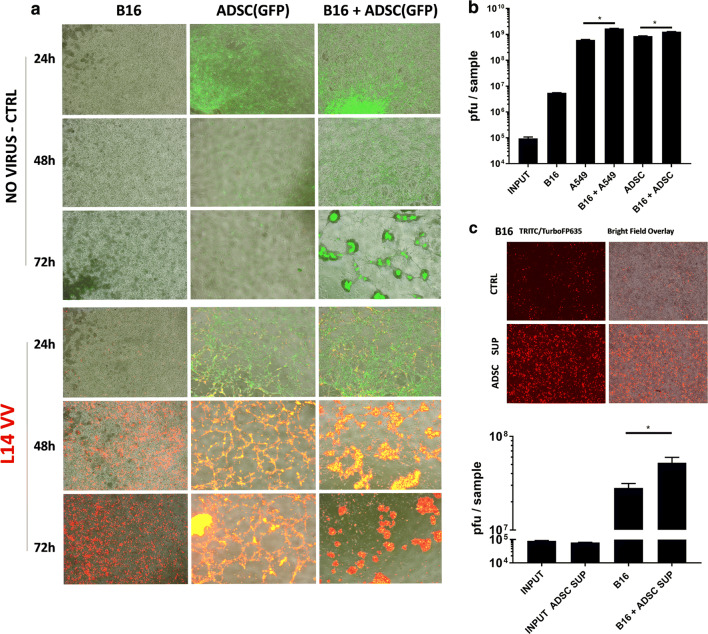
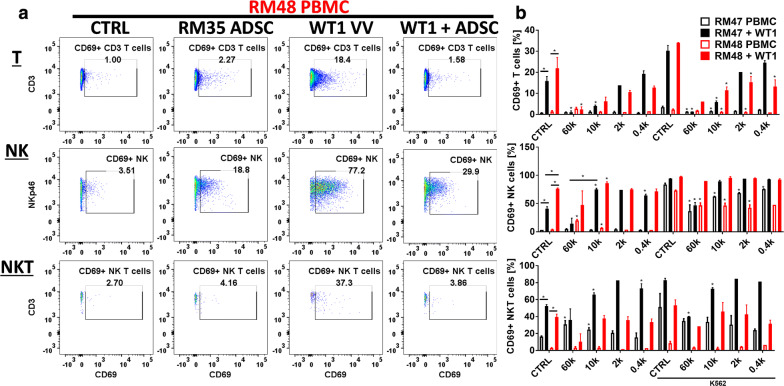
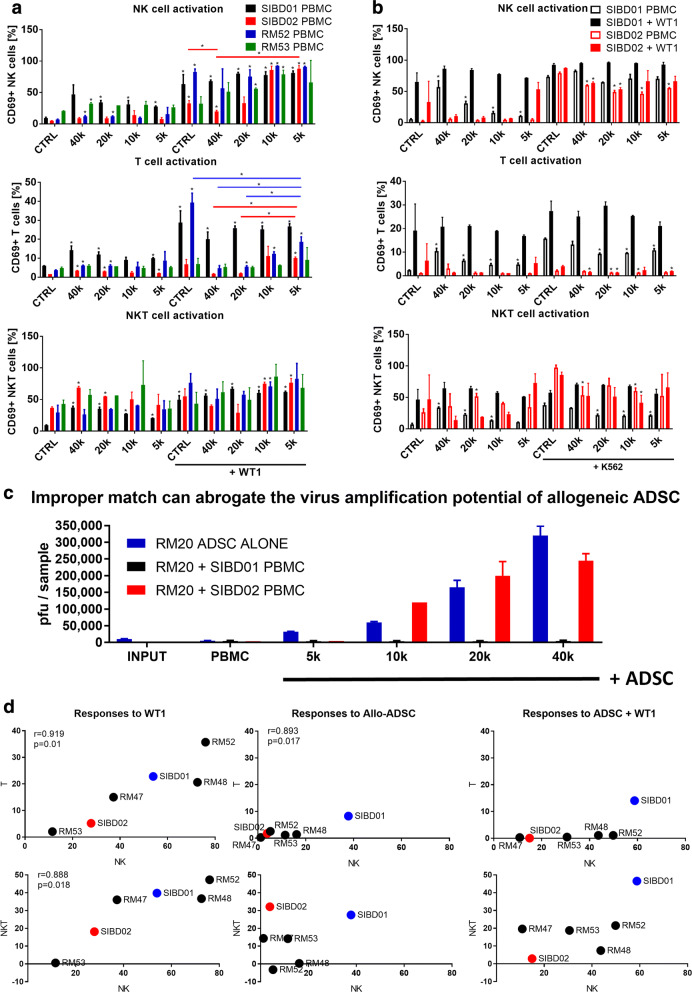
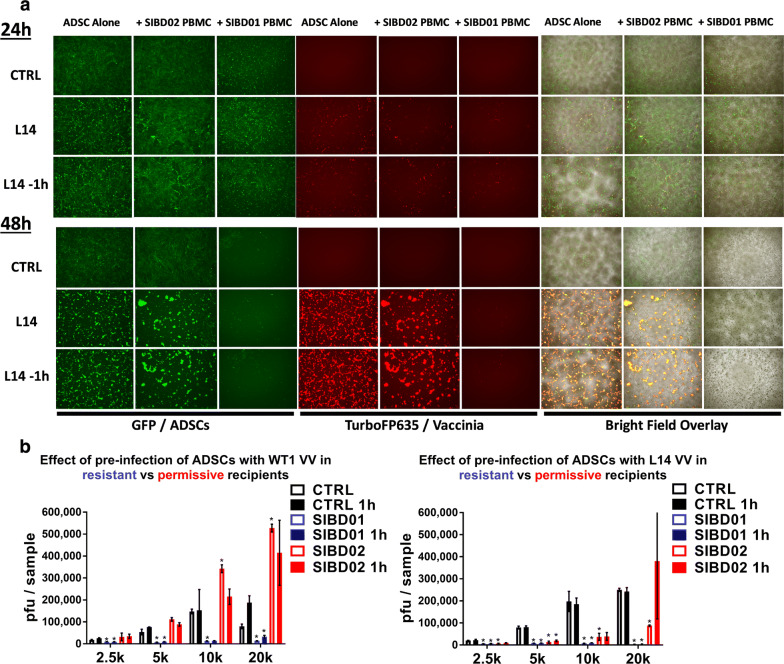
Here, we demonstrate that adipose-derived stem cells (ADSCs) have the potential to eradicate resistant tumor cells through a combination of potent virus amplification and sensitization of the tumor cells to virus infection. Moreover, the ADSCs demonstrate ability to function as a virus-amplifying Trojan horse in the presence of both autologous and allogeneic human PBMCs, which can be linked to the intrinsic immunosuppressive properties of stem cells and their unique potential to overcome innate and adaptive immune barriers. The clinical application of ready-to-use ex vivo expanded allogeneic stem cell lines, however, appears significantly restricted by patient-specific allogeneic differences associated with the induction of potent anti-stem cell cytotoxic and IFNγ responses. These allogeneic responses originate from both innate (NK)- and adaptive (T)- immune cells and might compromise therapeutic efficacy through direct elimination of the stem cells or the induction of an anti-viral state, which can block the potential of the Trojan horse to amplify and deliver vaccinia virus to the tumor.
Overall, our findings and data indicate the feasibility to establish simple and informative assays that capture critically important patient-specific differences in the immune responses to the virus and stem cells, which allows for proper patient-stem cell matching and enables the effective use of off-the-shelf allogeneic cell-based delivery platforms, thus providing a more practical and commercially viable alternative to the autologous stem cell approach.
先前的研究已经确定 IFNγ 是包括牛痘在内的溶瘤病毒的重要早期屏障。然而,现有的先天和适应性免疫屏障可以通过使用具有独特免疫抑制特性的自体或同种异体间充质干细胞作为载体细胞来克服,以进行溶瘤病毒治疗。
为了测试间充质干细胞克服先天和适应性免疫屏障并成功将溶瘤牛痘病毒递送至肿瘤细胞的能力,我们对在健康供体的外周血单核细胞存在的情况下感染牛痘病毒的间充质干细胞进行了共培养,并进行了流式细胞术和病毒斑分析。进行了比较分析以建立具有统计学意义的相关性,并评估了间充质干细胞对关键免疫细胞群活性的影响。
在这里,我们证明脂肪来源的间充质干细胞(ADSCs)具有通过强大的病毒扩增和肿瘤细胞对病毒感染的敏感性来消除耐药肿瘤细胞的潜力。此外,ADSCs 具有在自体和同种异体人类 PBMC 存在的情况下作为病毒扩增木马的功能,这可以与间充质干细胞的固有免疫抑制特性及其独特的克服先天和适应性免疫屏障的潜力相关联。然而,现成的、经体外扩增的同种异体干细胞系的临床应用似乎受到与诱导强烈抗干细胞细胞毒性和 IFNγ 反应相关的患者特异性同种异体差异的显著限制。这些同种异体反应源自先天(NK)和适应性(T)免疫细胞,并且可能通过直接消除干细胞或诱导抗病毒状态来损害治疗效果,从而阻断木马扩增和将牛痘病毒递送至肿瘤的潜力。
总的来说,我们的发现和数据表明,建立简单而有信息量的测定法是可行的,这些测定法可以捕获针对病毒和间充质干细胞的免疫反应中至关重要的患者特异性差异,从而实现患者-间充质干细胞匹配,并使现成的同种异体基于细胞的递药平台得以有效利用,从而为自体干细胞方法提供了更实用和更具商业可行性的替代方案。