Genomics and Epigenetics Division, Garvan Institute of Medical Research, Sydney, 2010, NSW, Australia.
St. Vincent's Clinical School, UNSW Australia, Sydney, 2031, NSW, Australia.
Nat Commun. 2019 Mar 27;10(1):1388. doi: 10.1038/s41467-019-09374-9.
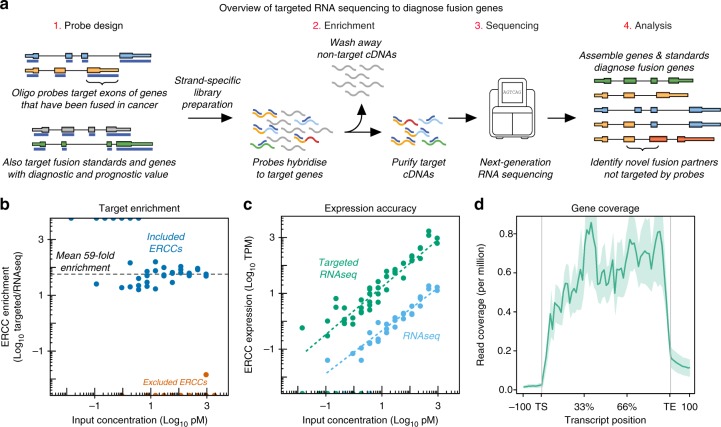
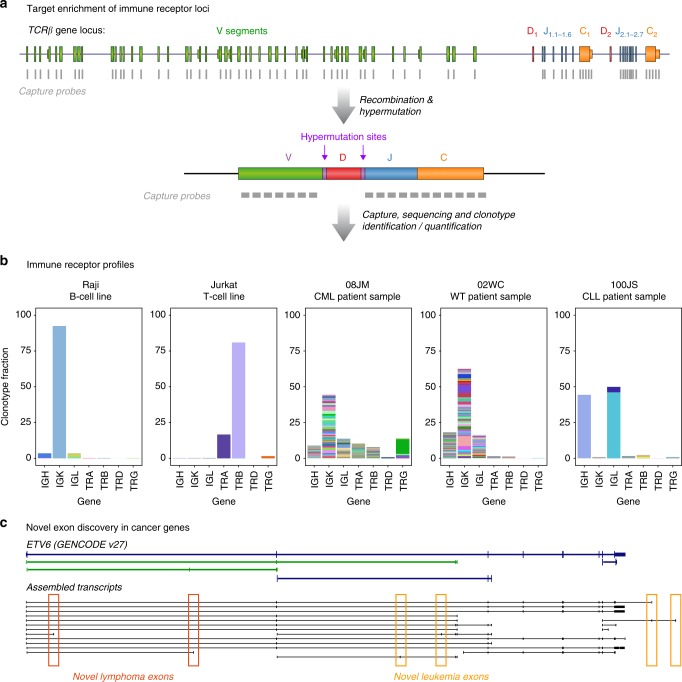
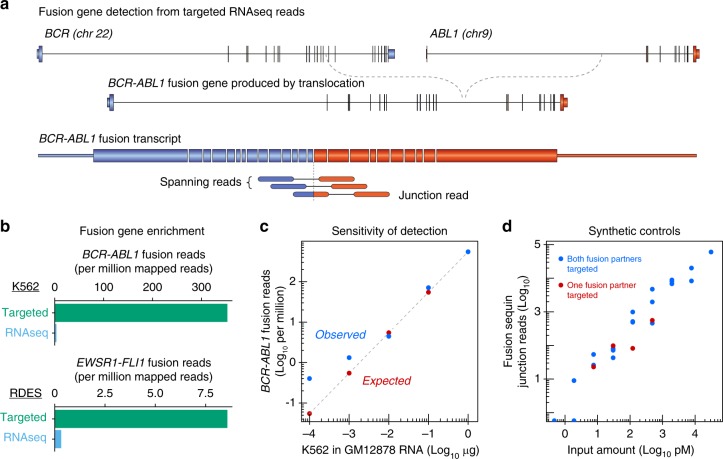
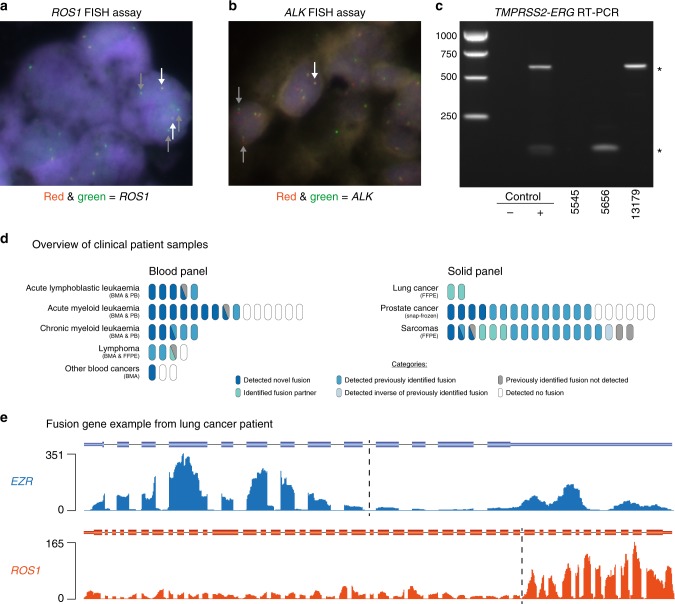
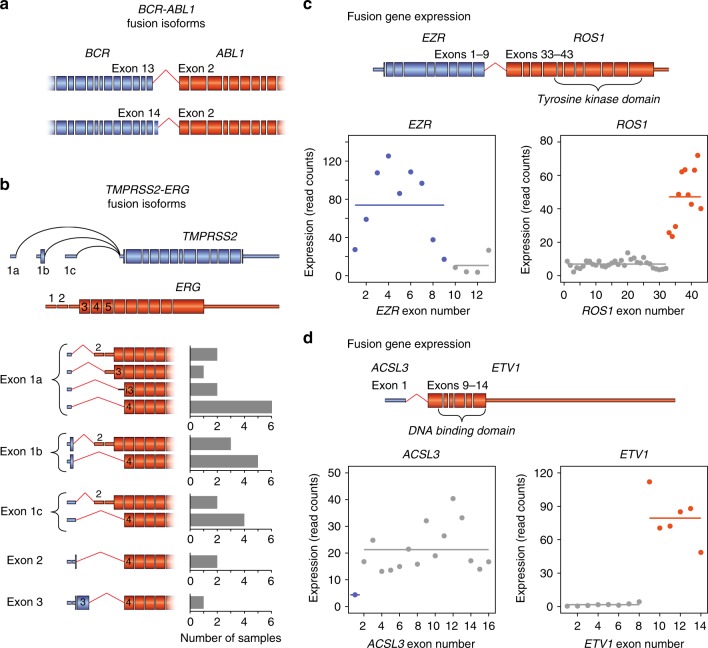
Fusion genes are a major cause of cancer. Their rapid and accurate diagnosis can inform clinical action, but current molecular diagnostic assays are restricted in resolution and throughput. Here, we show that targeted RNA sequencing (RNAseq) can overcome these limitations. First, we establish that fusion gene detection with targeted RNAseq is both sensitive and quantitative by optimising laboratory and bioinformatic variables using spike-in standards and cell lines. Next, we analyse a clinical patient cohort and improve the overall fusion gene diagnostic rate from 63% with conventional approaches to 76% with targeted RNAseq while demonstrating high concordance for patient samples with previous diagnoses. Finally, we show that targeted RNAseq offers additional advantages by simultaneously measuring gene expression levels and profiling the immune-receptor repertoire. We anticipate that targeted RNAseq will improve clinical fusion gene detection, and its increasing use will provide a deeper understanding of fusion gene biology.
融合基因是癌症的主要病因。快速、准确地诊断融合基因可为临床决策提供信息,但目前的分子诊断检测方法在分辨率和通量方面存在限制。本文中,我们展示了靶向 RNA 测序(RNAseq)可克服这些限制。首先,我们通过使用掺入标准品和细胞系优化实验室和生物信息学变量,证实了靶向 RNAseq 检测融合基因具有灵敏性和定量性。接下来,我们分析了临床患者队列,与传统方法相比,靶向 RNAseq 将整体融合基因诊断率从 63%提高到 76%,并且对具有先前诊断的患者样本具有高度一致性。最后,我们表明靶向 RNAseq 还具有通过同时测量基因表达水平和分析免疫受体库来提供附加优势。我们预计靶向 RNAseq 将改善临床融合基因检测,其日益广泛的应用将为融合基因生物学提供更深入的了解。