Laboratory for Cellular and Molecular Thyroid Research, Division of Endocrinology, Diabetes and Metabolism, Department of Medicine, Sidney Kimmel Comprehensive Cancer Center, The Johns Hopkins University School of Medicine, Baltimore, MD, 21287, USA.
Oncogene. 2019 Jun;38(26):5211-5226. doi: 10.1038/s41388-019-0787-5. Epub 2019 Mar 27.
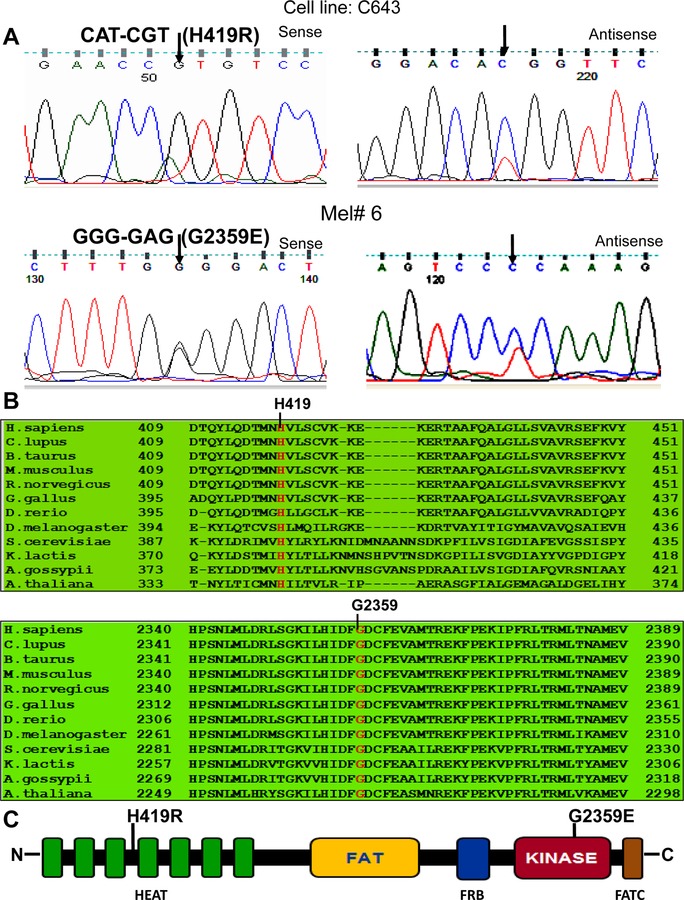
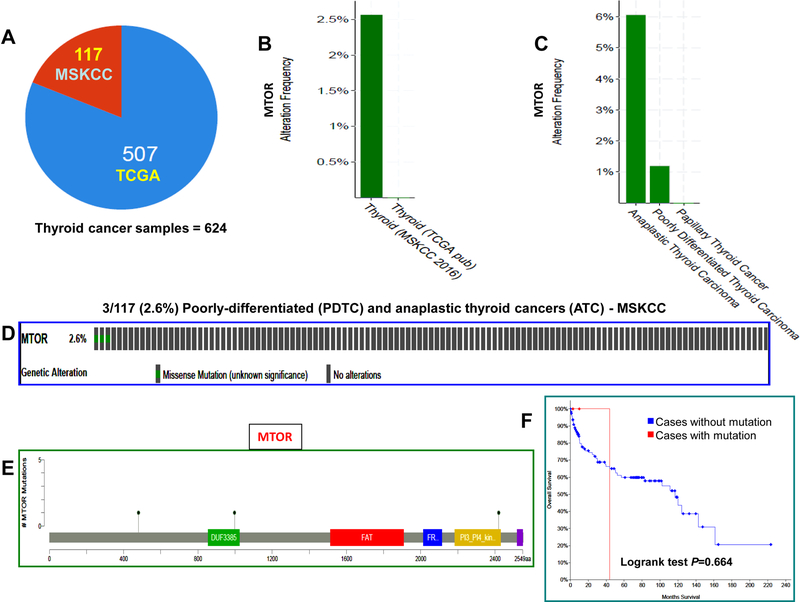
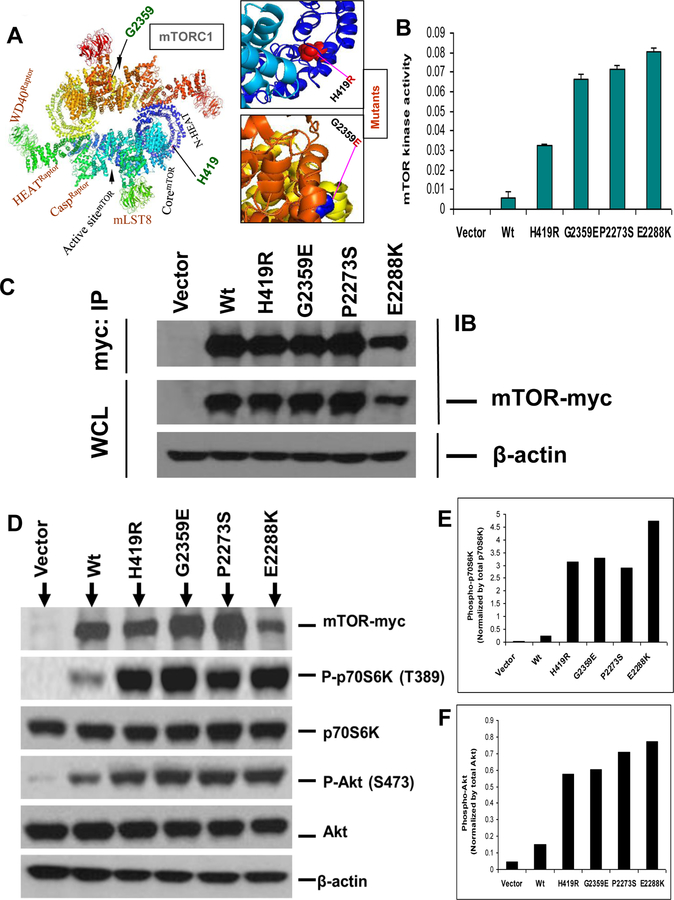
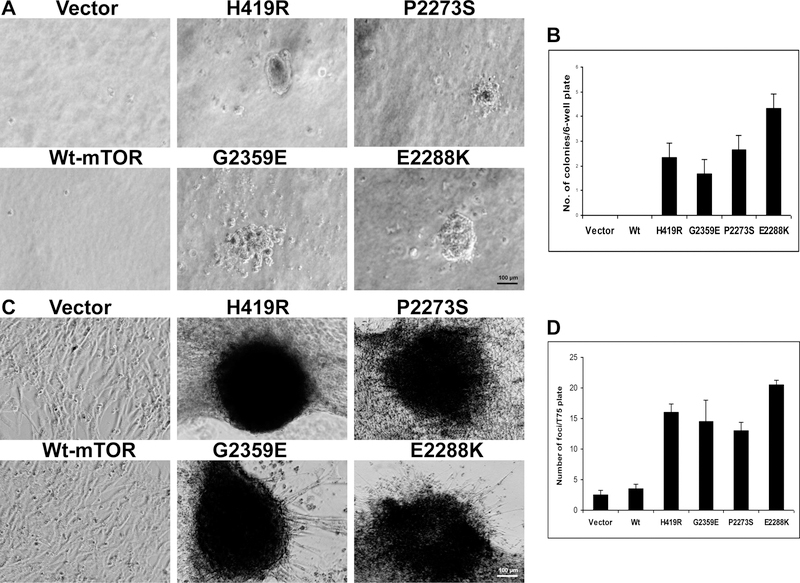
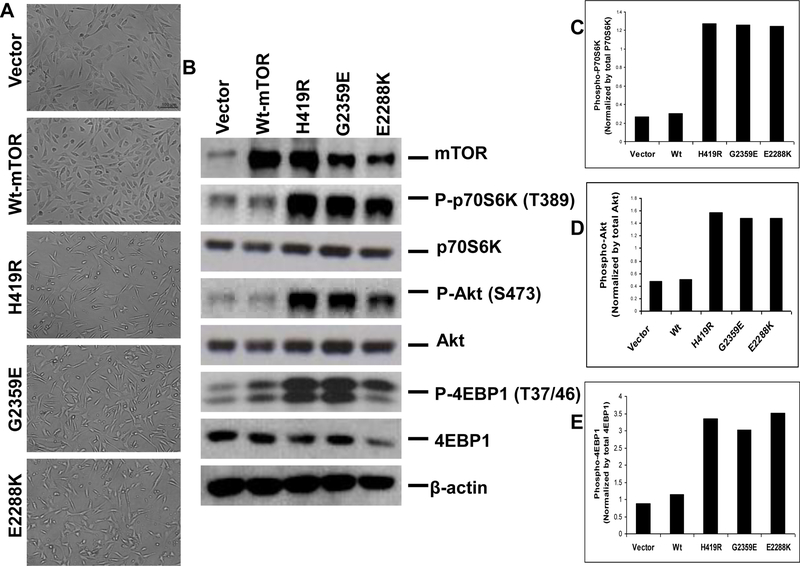
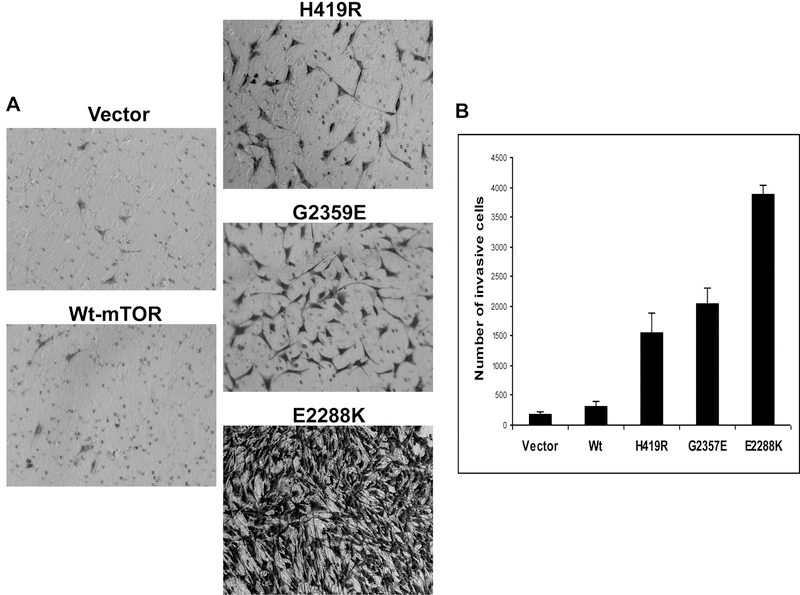
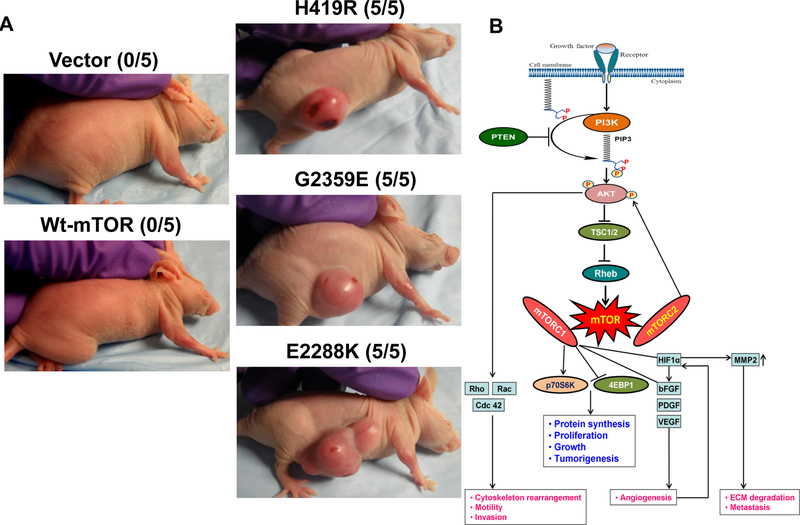
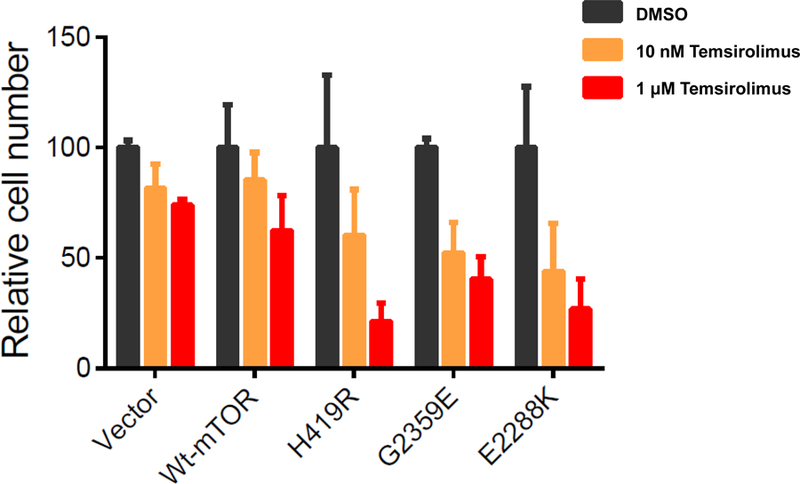
Mammalian target of rapamycin (mTOR) signaling is often aberrantly activated, particularly when genetically altered, in human cancers. mTOR inhibitors targeting the activated mTOR signaling are highly promising anti-cancer drugs. Knowing the activating genetic change in mTOR can help guide the use of mTOR inhibitors for cancer treatment. This study was conducted to identify and characterize novel oncogenic mTOR mutations that can potentially be therapeutic targets in human cancer. We sequenced 30 exons of the mTOR gene in 12 thyroid cancer cell lines, 3 melanoma cell lines, 20 anaplastic thyroid cancer (ATC) tumors, and 23 melanoma tumors and functionally characterized the identified novel mTOR mutations in vitro and in vivo. We identified a novel point mutation A1256G in ATC cell line and G7076A in melanoma tumor in exon 9 and exon 51 of the mTOR gene, respectively. Over-expression of the corresponding mTOR mutants H419R and G2359E created through induced mutagenesis showed markedly elevated protein kinase activities associated with the activation of mTOR/p70S6K signaling in HEK293T cells. Stable expression of the two mTOR mutants in NIH3T3 cells strongly activated the mTOR/p70S6K signaling pathway and induced morphologic transformation, cell focus formation, anchorage-independent cell growth, and invasion. Inoculation of these mutant-expressing cells in athymic nude mice induced rapid tumor development, showing their driving oncogenicity. We also demonstrated that transfection with the novel mutants conferred cells high sensitivities to the mTOR inhibitor temsirolimus. We speculate that human cancers harboring these mTOR mutations, such as ATC and melanoma, may be effectively treated with inhibitors targeting mTOR.
哺乳动物雷帕霉素靶蛋白(mTOR)信号通常异常激活,尤其是在发生遗传改变时,在人类癌症中更是如此。针对激活的 mTOR 信号的 mTOR 抑制剂是很有前途的抗癌药物。了解 mTOR 中的激活遗传变化可以帮助指导使用 mTOR 抑制剂进行癌症治疗。本研究旨在鉴定和表征新的致癌 mTOR 突变,这些突变可能成为人类癌症的治疗靶点。我们对 12 种甲状腺癌细胞系、3 种黑色素瘤细胞系、20 种间变性甲状腺癌(ATC)肿瘤和 23 种黑色素瘤肿瘤中的 mTOR 基因的 30 个外显子进行了测序,并在体外和体内对鉴定出的新的 mTOR 突变进行了功能表征。我们分别在 ATC 细胞系和黑色素瘤肿瘤中鉴定出 mTOR 基因外显子 9 和外显子 51 中的新点突变 A1256G 和 G7076A。通过诱导诱变产生的相应 mTOR 突变体 H419R 和 G2359E 的过表达显示与 mTOR/p70S6K 信号的激活相关的显著升高的蛋白激酶活性。在 NIH3T3 细胞中稳定表达这两种 mTOR 突变体强烈激活了 mTOR/p70S6K 信号通路,并诱导了形态转化、细胞焦点形成、非锚定依赖性细胞生长和侵袭。将这些表达突变体的细胞接种于无胸腺裸鼠中,可迅速诱导肿瘤发展,表明其具有驱动致癌性。我们还证明,转染这些新突变体赋予细胞对 mTOR 抑制剂替西罗莫司的高敏感性。我们推测,携带有这些 mTOR 突变的人类癌症,如 ATC 和黑色素瘤,可以有效地用靶向 mTOR 的抑制剂治疗。