Department of Anesthesiology, Renmin Hospital of Wuhan University, Wuhan, 430060 Hubei, China.
Department of Anesthesiology, Zhongnan Hospital of Wuhan University, 169, Donghu Road, Wuhan, 430071 Hubei, China.
Oxid Med Cell Longev. 2019 Feb 24;2019:8639618. doi: 10.1155/2019/8639618. eCollection 2019.
The potential mechanism of postoperative cognitive impairment is still largely unclear. The activation of NLRP3 inflammasome had been reported to be involved in neurodegenerative diseases, including postoperative cognitive change, and is closely related to mitochondrial ROS and mitophagy. Honokiol (HNK) owns multiple organic protective effects. This study is aimed at observing the neuroprotective effect of HNK in postoperative cognitive change and examining the role of HNK in the regulation of mitophagy and the relationship between these effects and NLRP3 inflammasome activation in mice induced by surgery/anesthesia.
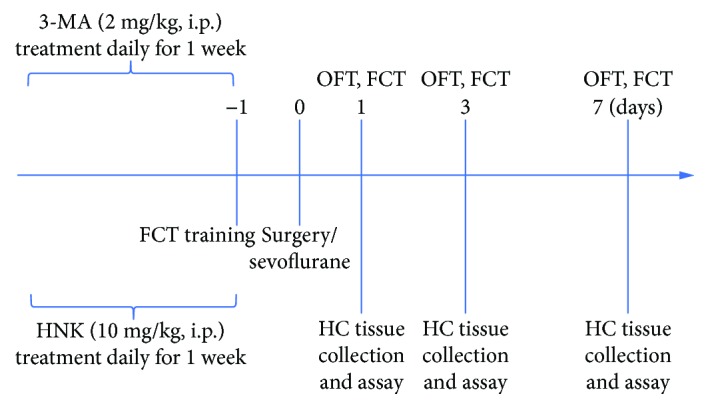
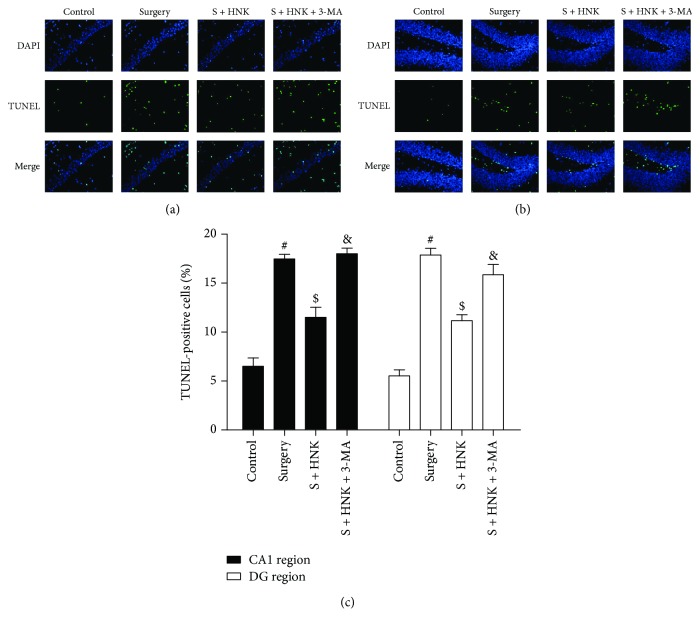
In this study, mice were divided into several groups: control group, surgery group, surgery+HNK group, and surgery+HNK+3-methyladenine (3-MA) group. Hippocampal tissue samples were harvested and used for proinflammatory cytokines, mitochondrial ROS, and malondialdehyde (MDA) assay. The process of mitophagy and the activation of NLRP3 inflammasome were observed by Western blot, immunohistochemistry, and transmission electron microscopy.
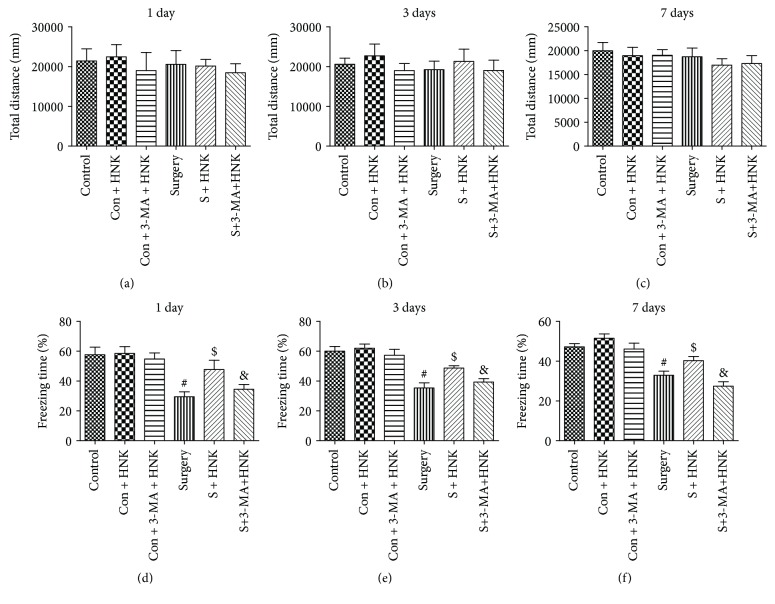
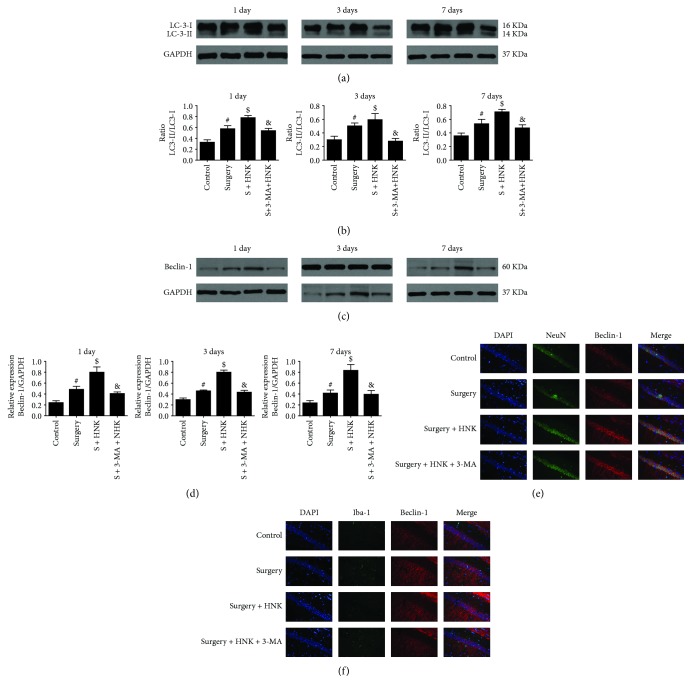
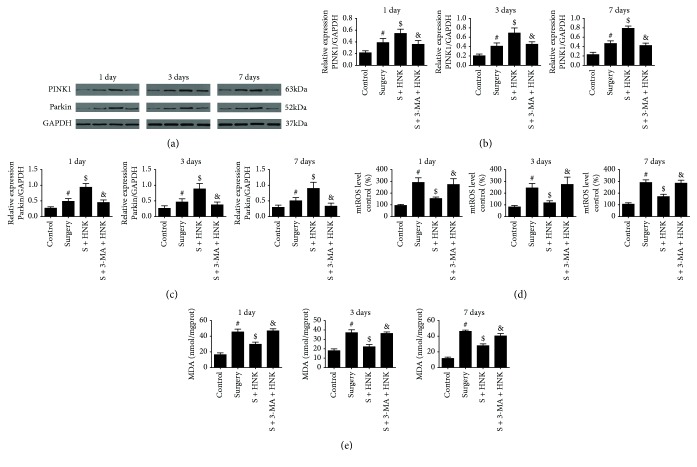
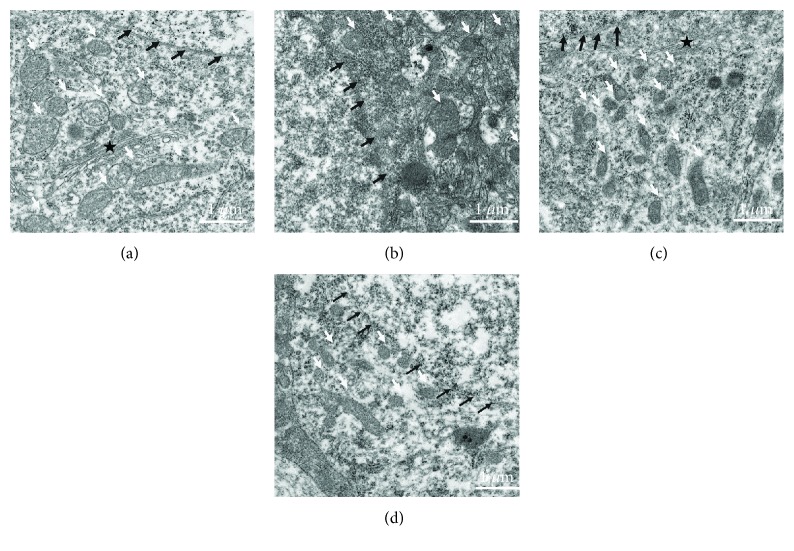
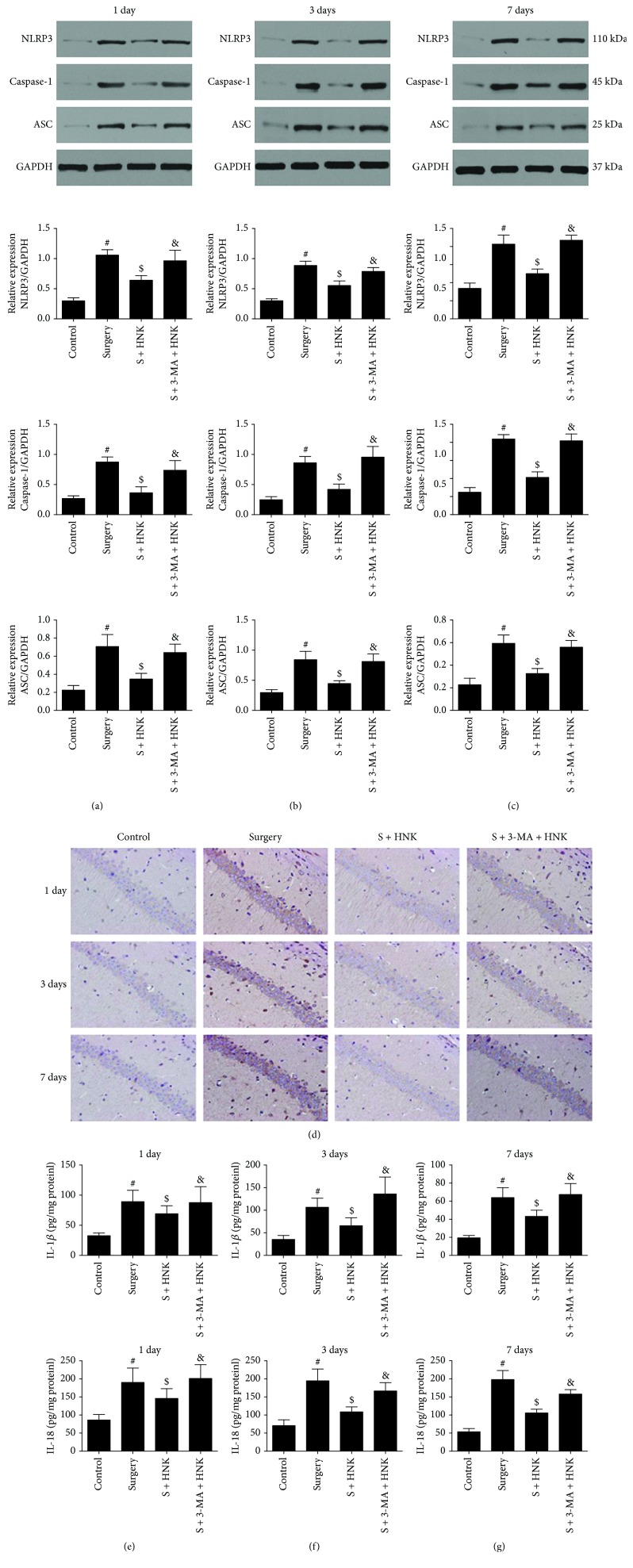
The results showed that HNK treatment obviously recovered the postoperative decline and enhanced the expressions of LC3-II, Beclin-1, Parkin, and PINK1 at protein levels after surgery/sevoflurane treatment, which are both an autophagy marker and a mitophagy marker. In addition, HNK attenuated mitochondrial structure damage and reduced mtROS and MDA generation, which are closely associated with NLRP3 inflammasome activation. Honokiol-mediated mitophagy inhibited the activation of NLRP3 inflammasome and neuroinflammation in the hippocampus. Using 3-MA, an autophagy inhibitor, the neuroprotective effects of HNK on mitophagy and NLRP3 inflammasome activation were eliminated.
These results indicated that HNK-mediated mitophagy ameliorates postoperative cognitive impairment induced by surgery/sevoflurane. This neuroprotective effect may be involved in inhibiting the activation of NLRP3 inflammasome and suppressing inflammatory responses in the hippocampus.
术后认知障碍的潜在机制在很大程度上仍不清楚。NLRP3 炎性小体的激活已被报道与神经退行性疾病有关,包括术后认知改变,并且与线粒体 ROS 和线粒体自噬密切相关。和厚朴酚(HNK)具有多种有机保护作用。本研究旨在观察 HNK 在术后认知改变中的神经保护作用,并研究 HNK 在调节自噬和这些作用与手术/麻醉诱导的小鼠 NLRP3 炎性小体激活之间关系中的作用。
在这项研究中,将小鼠分为对照组、手术组、手术+HNK 组和手术+HNK+3-甲基腺嘌呤(3-MA)组。采集海马组织样本,用于检测促炎细胞因子、线粒体 ROS 和丙二醛(MDA)。通过 Western blot、免疫组织化学和透射电镜观察自噬和 NLRP3 炎性小体的激活过程。
结果表明,HNK 处理明显恢复了手术后的下降,并增强了手术/七氟醚处理后 LC3-II、Beclin-1、Parkin 和 PINK1 的蛋白表达,它们既是自噬标志物,也是线粒体自噬标志物。此外,HNK 减轻了线粒体结构损伤,减少了 mtROS 和 MDA 的产生,这与 NLRP3 炎性小体的激活密切相关。和厚朴酚介导的线粒体自噬抑制了海马中 NLRP3 炎性小体的激活和神经炎症。使用自噬抑制剂 3-MA,消除了 HNK 对线粒体自噬和 NLRP3 炎性小体激活的神经保护作用。
这些结果表明,HNK 介导的线粒体自噬改善了手术/七氟醚引起的术后认知障碍。这种神经保护作用可能涉及抑制 NLRP3 炎性小体的激活和抑制海马中的炎症反应。