Zhao Wei, Zhang Jinping, Song Yun, Sun Lili, Zheng Meimei, Yin Hao, Zhang Jun, Wang Wei, Han Ju
Department of Neurology, Shandong Provincial Qianfoshan Hospital, Shandong University, Jinan, 250014, China.
BMC Neurol. 2019 Mar 28;19(1):46. doi: 10.1186/s12883-019-1279-5.
Contrast-induced encephalopathy (CIE) is a well-known complication of iodinated contrast agents during angiography and vascular interventions. It can manifest as hemiparesis, cortical blindness, speech changes, Parkinsonism, confusion, seizure, and coma. Most of the reported CIE cases have been transient and reversible. Irreversible fatal CIE cases have been rarely reported. All the fatal CIE cases reported involved the use of ionic high osmolar contrast agents. Here, we document a heretofore unreported fatal CIE after digital subtraction angiography (DSA) using iopamidol, which is a type of non-ionic monomer low osmolar contrast agent.
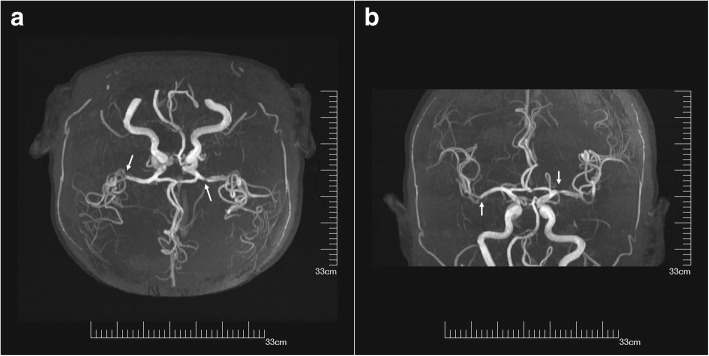
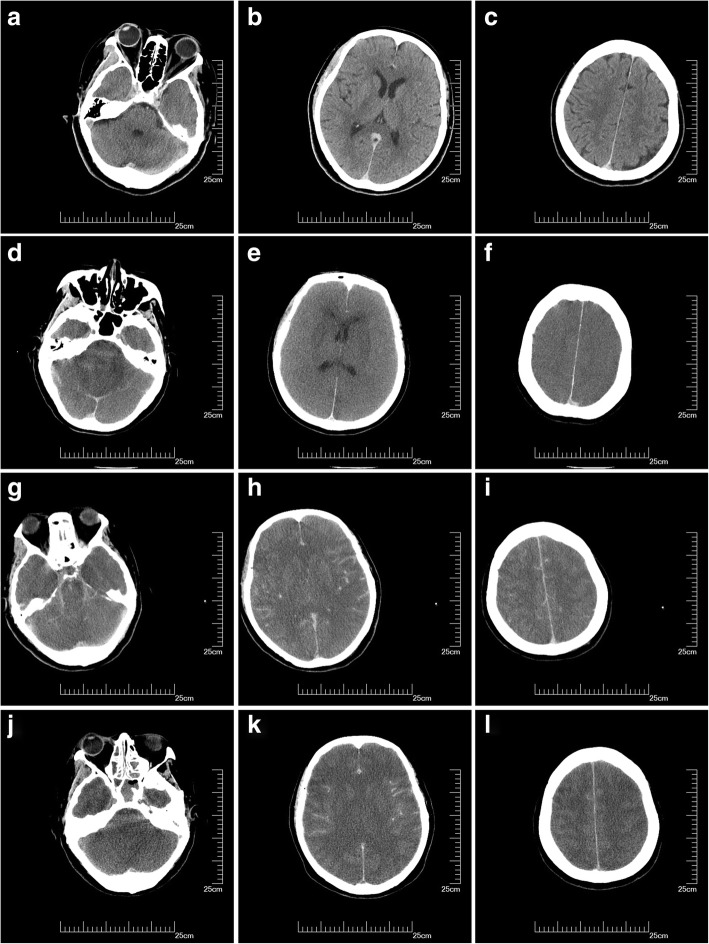
A 71-year-old woman was admitted to our Department of Neurology for tinnitus in the head. The cerebral magnetic resonance angiography (MRA) detected atherosclerotic cerebral arteries and bilateral stenosis of the middle cerebral arteries. The patient underwent DSA for further diagnostic work-up. The total amount of iopamidol used during the procedure was 110 ml. The patient experienced headache during the procedure, followed by dizziness with nausea and vomiting. Despite treatment with anti-oedema medications, her clinical status was gradually deteriorating and ended up with deep coma due to irreversible cerebral oedema which was confirmed by cerebral computed tomography (CT). Finally, the patient died 56 days after the procedure due to irreversible fatal cerebral oedema.
This report documents that iopamidol-induced encephalopathy may not always have a benign outcome and can result in irreversible fatal cerebral oedema.
对比剂诱导的脑病(CIE)是血管造影和血管介入过程中碘对比剂的一种已知并发症。它可表现为偏瘫、皮质盲、言语改变、帕金森综合征、意识模糊、癫痫发作和昏迷。大多数报道的CIE病例是短暂且可逆的。不可逆的致命CIE病例鲜有报道。所有报道的致命CIE病例均涉及离子型高渗对比剂的使用。在此,我们记录了一例使用碘帕醇(一种非离子单体低渗对比剂)进行数字减影血管造影(DSA)后发生的此前未报道的致命CIE病例。
一名71岁女性因头部耳鸣入住我院神经内科。脑磁共振血管造影(MRA)检测到脑动脉粥样硬化和双侧大脑中动脉狭窄。患者接受DSA进一步诊断检查。术中使用碘帕醇的总量为110毫升。患者术中出现头痛,随后出现头晕伴恶心呕吐。尽管使用了抗水肿药物治疗,但其临床状况仍逐渐恶化,最终因脑计算机断层扫描(CT)证实的不可逆脑水肿陷入深度昏迷。最终,患者在术后56天因不可逆的致命脑水肿死亡。
本报告记录了碘帕醇诱导的脑病可能并非总是有良性结局,可导致不可逆的致命脑水肿。