Department of Biology and Biochemistry, University of Bath, Bath, UK.
J Pathol. 2019 Aug;248(4):396-408. doi: 10.1002/path.5271. Epub 2019 May 16.
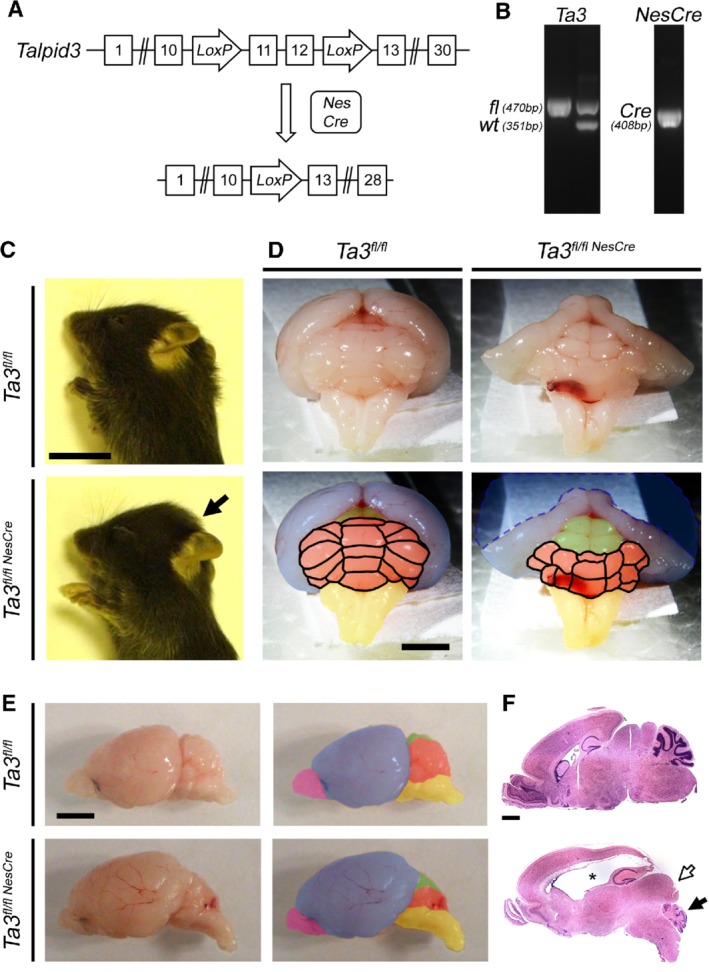
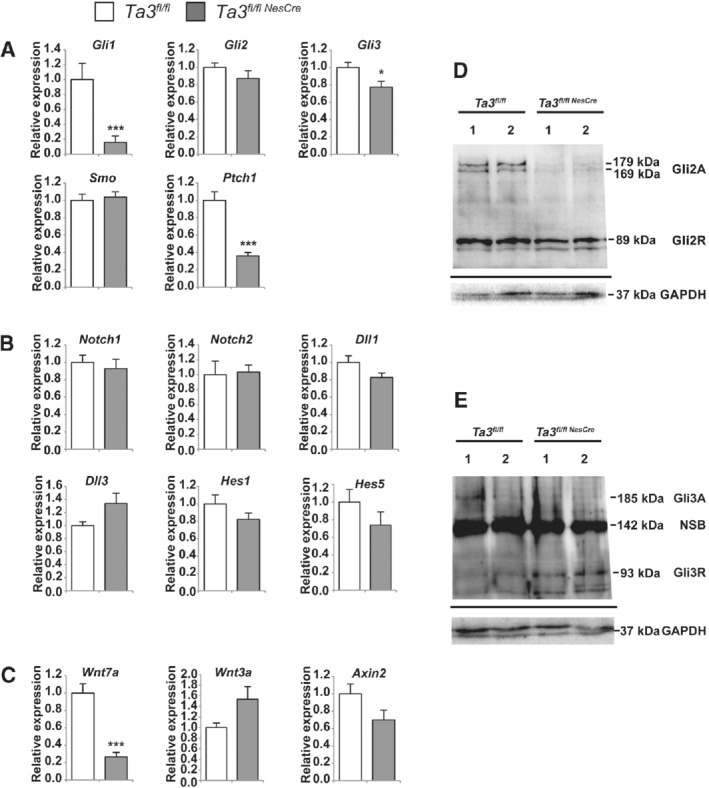
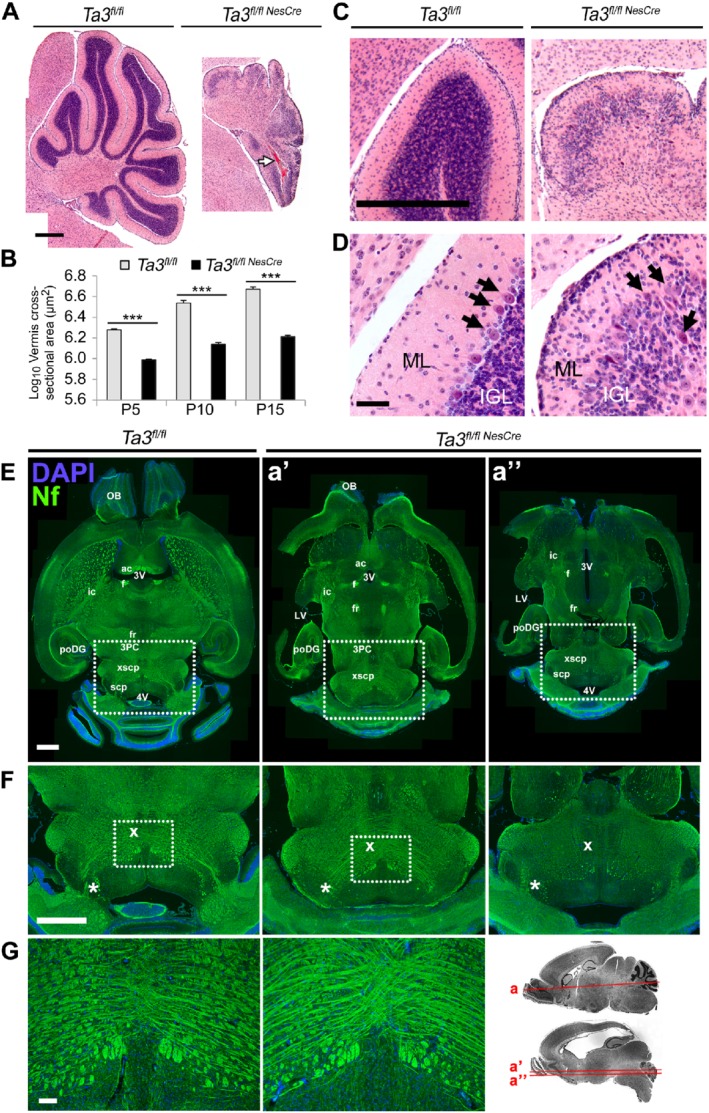
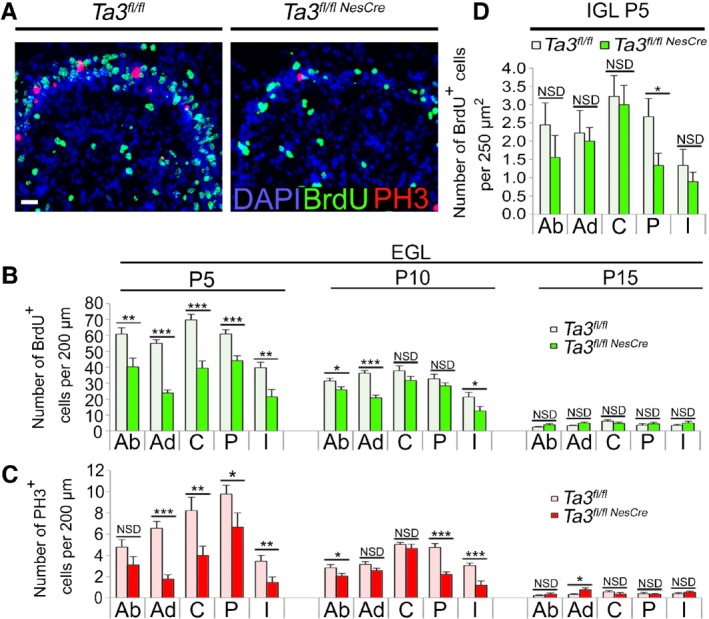
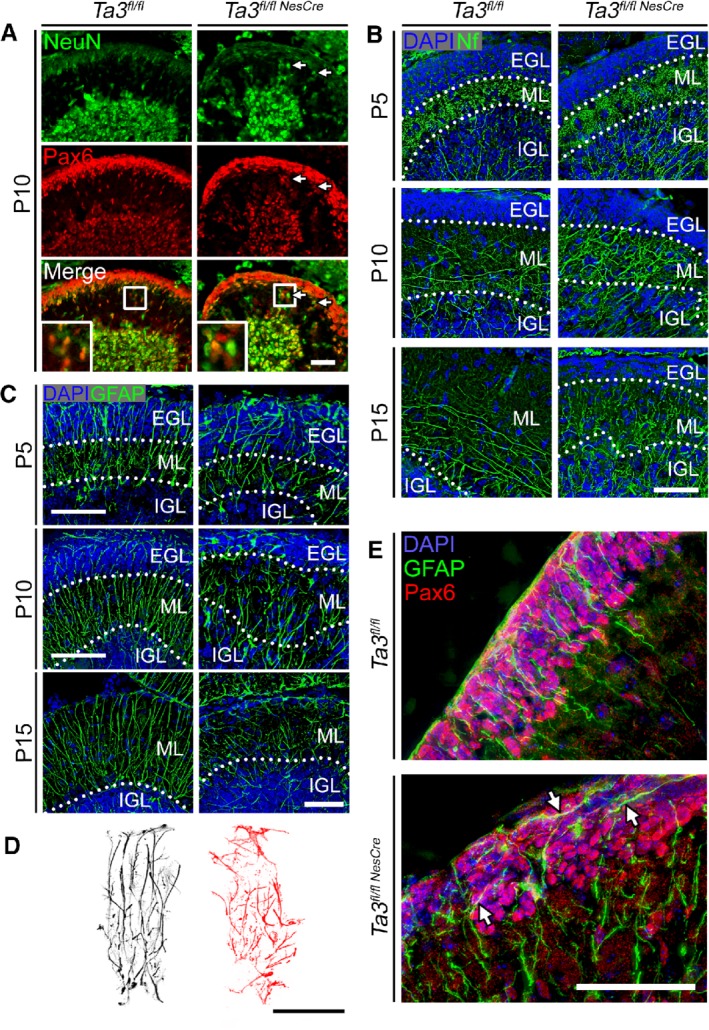
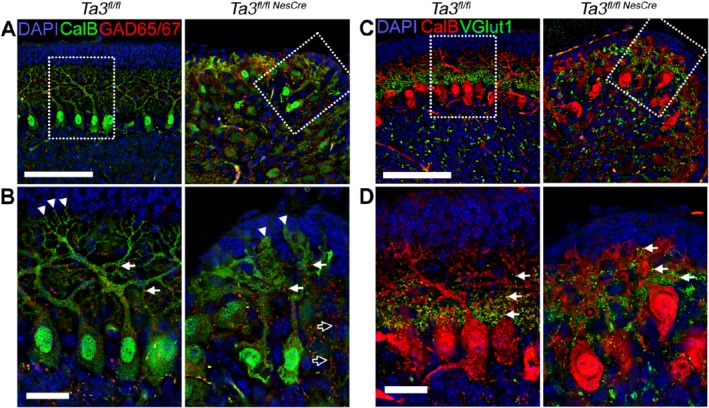
Joubert syndrome (JS) is a ciliopathy associated with mutations in numerous genes encoding cilia components. TALPID3 encoded by KIAA0856 in man (2700049A03Rik in mouse) is a centrosomal protein essential for the assembly of primary cilia. Mutations in KIAA0856 have been recently identified in JS patients. Herein, we describe a novel mouse JS model with a conditional deletion of the conserved exons 11-12 of Talpid3 in the central nervous system which recapitulates the complete cerebellar phenotype seen in JS. Talpid3 mutant mice exhibit key hallmarks of JS including progressive ataxia, severely hypoplastic cerebellar hemispheres and vermis, together with abnormal decussation of the superior cerebellar peduncles. The Purkinje cell layer is disorganised with abnormal dendritic arborisation. The external granule layer (EGL) is thinner, lacks primary cilia, and has a reduced level of proliferation. Furthermore, we describe novel cellular defects including ectopic clusters of mature granule neurons, and abnormal parallel fibre-derived synapses and disorientation of cells in the EGL. The defective glial scaffold results in abnormal granule cell migration which manifests as ectopic clusters of granule neurons. In addition, we show a reduction in Wnt7a expression suggesting that defects may arise not only from deficiencies in the Hedgehog (Hh) pathway but also due to the additional roles of Talpid3. The Talpid3 conditional knockout mouse is a novel JS model which fully recapitulates the JS cerebellar phenotype. These findings reveal a role for Talpid3 in granule precursor cell migration in the cerebellum (either direct or indirect) which together with defective Hh signalling underlies the JS phenotype. Our findings also illustrate the utility of creating conditional mouse models to assist in unravelling the molecular and cellular mechanisms underlying JS. © 2019 The Authors. The Journal of Pathology published by John Wiley & Sons Ltd on behalf of Pathological Society of Great Britain and Ireland.
杰伯综合征(JS)是一种纤毛病,与许多编码纤毛成分的基因突变有关。人类的 TALPID3(小鼠中的 2700049A03Rik)是一种中心体蛋白,对于初级纤毛的组装至关重要。KIAA0856 的突变最近在 JS 患者中被发现。在此,我们描述了一种新型的小鼠 JS 模型,其中枢神经系统中的 Talpid3 保守外显子 11-12 发生条件性缺失,重现了 JS 中所见的完整小脑表型。Talpid3 突变小鼠表现出 JS 的关键特征,包括进行性共济失调、小脑半球和蚓部严重发育不良,以及上小脑脚的异常交叉。浦肯野细胞层排列紊乱,树突分支异常。外颗粒层(EGL)变薄,缺乏初级纤毛,增殖水平降低。此外,我们描述了新的细胞缺陷,包括成熟颗粒神经元的异位簇,以及异常的平行纤维衍生的突触和 EGL 中细胞的定向紊乱。有缺陷的神经胶质支架导致颗粒细胞异常迁移,表现为颗粒神经元的异位簇。此外,我们还发现 Wnt7a 的表达减少,表明缺陷不仅可能源于 Hedgehog(Hh)途径的缺陷,还可能归因于 Talpid3 的其他作用。Talpid3 条件性敲除小鼠是一种新型的 JS 模型,完全重现了 JS 小脑表型。这些发现揭示了 Talpid3 在小脑颗粒前体细胞迁移中的作用(直接或间接),以及缺陷的 Hh 信号传导是 JS 表型的基础。我们的研究结果还说明了创建条件性小鼠模型以协助揭示 JS 背后的分子和细胞机制的实用性。