Research Institute for Microbial Diseases, Osaka University, Suita, Osaka, Japan.
Center for Drug Discovery, Baylor College of Medicine, Houston, TX, USA.
Andrology. 2019 Sep;7(5):644-653. doi: 10.1111/andr.12621. Epub 2019 Mar 29.
Spermatozoa become competent for fertilization during transit through the epididymis. As spermatozoa from the proximal caudal epididymis can fertilize eggs, proteins from the caput and corpus epididymis are required for sperm maturation.
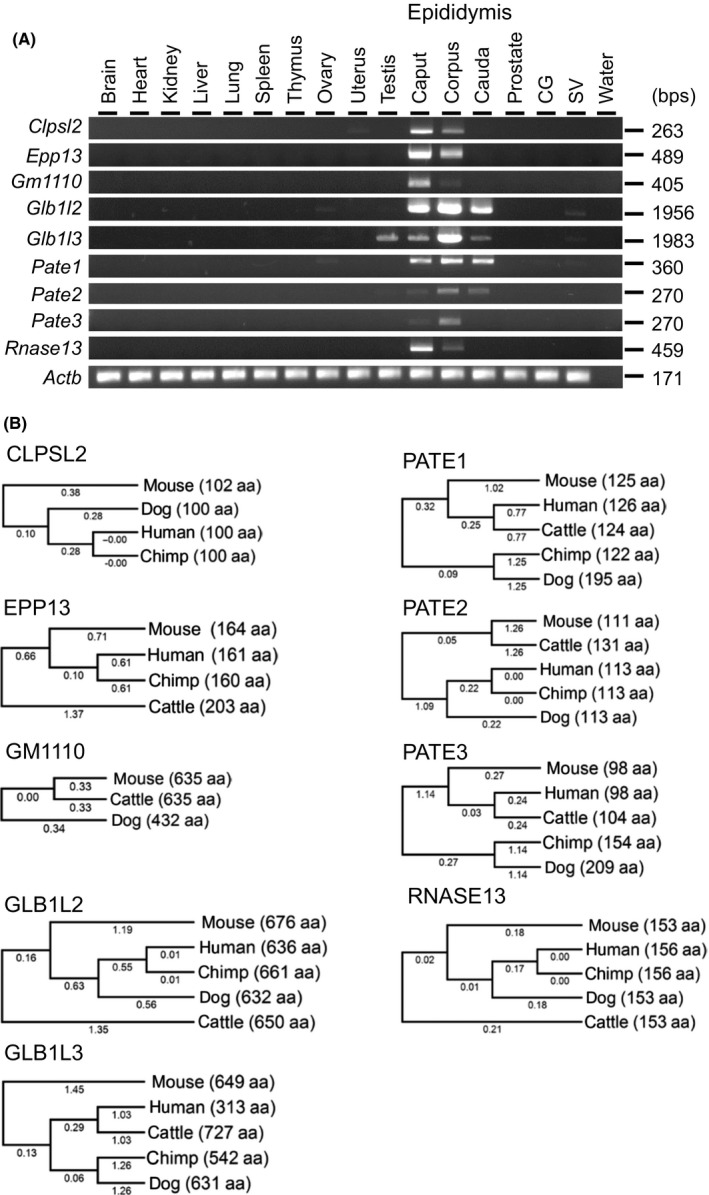
Microarray analysis identified that more than 17,000 genes are expressed in the epididymis; however, few of these genes demonstrate expression restricted to the epididymis. To analyze epididymis-enriched gene function in vivo, we generated knockout (KO) mutations in nine genes that are abundantly expressed in the caput and corpus region of the epididymis.
KO mice were generated using the CRISPR/Cas9 system. The histology of the epididymis was observed with hematoxylin and eosin staining. KO males were caged with wild-type females for 3-6 months to check fertility.
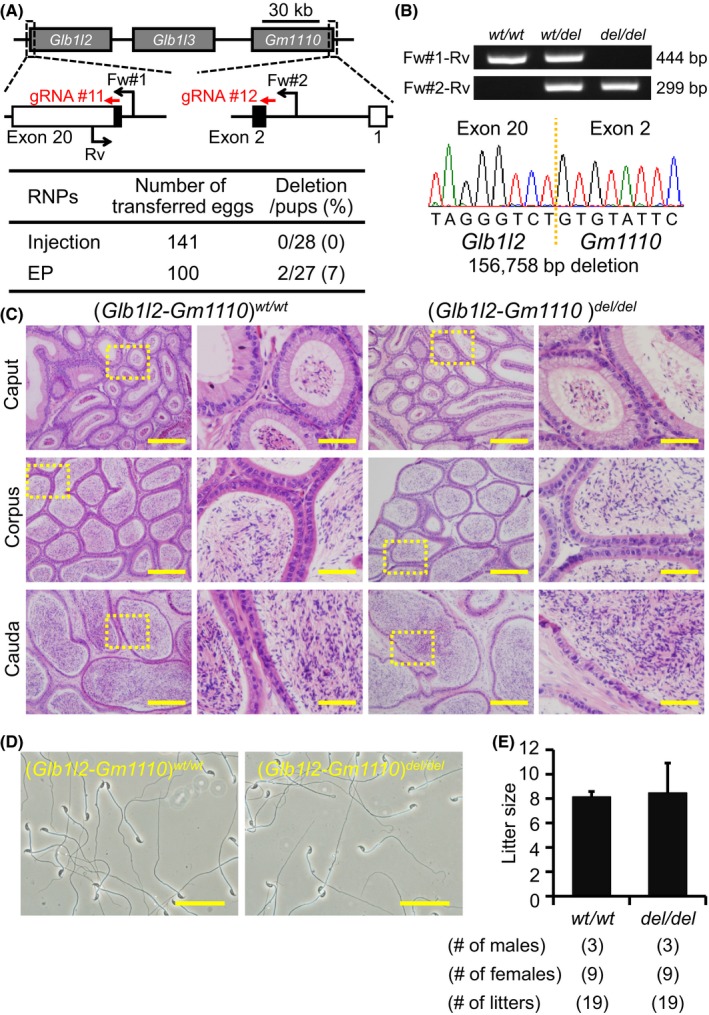
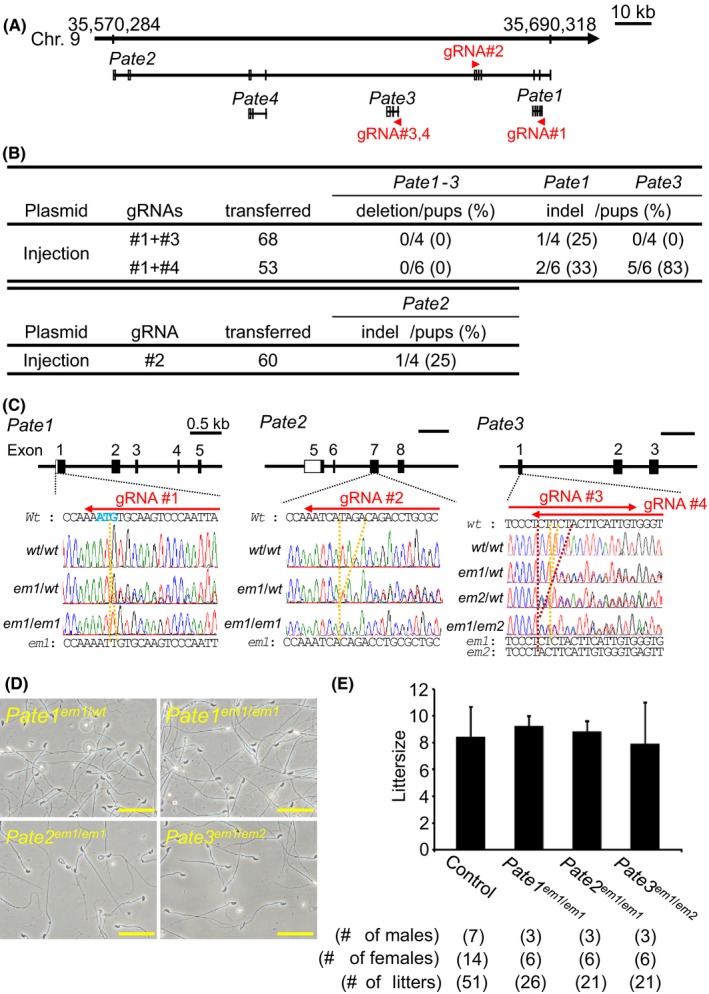
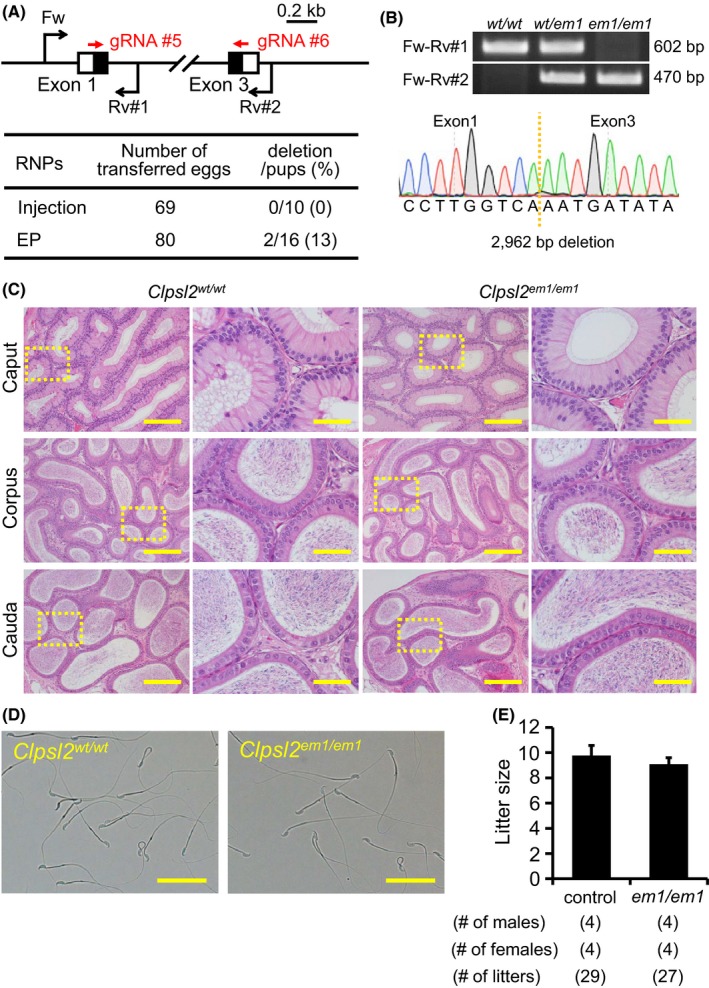
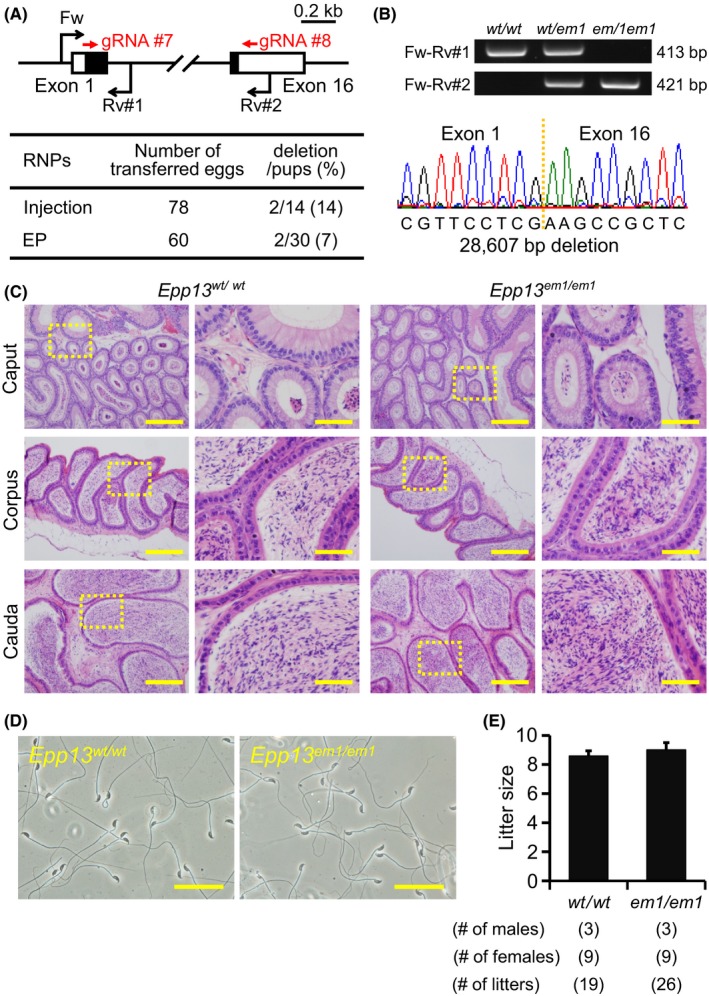
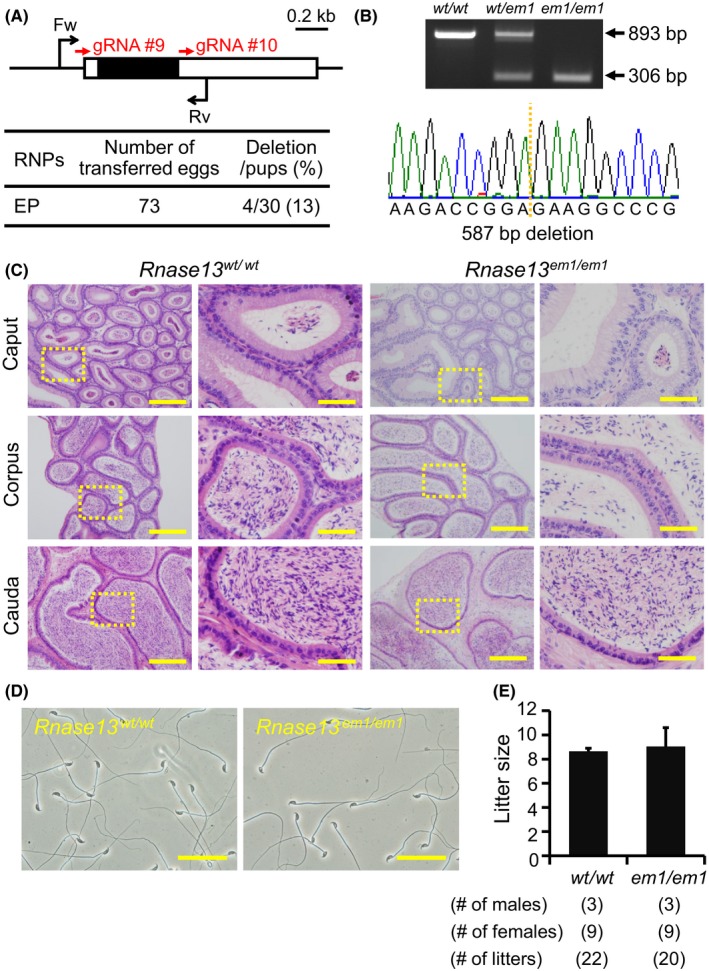
We generated individual mutant mouse lines having indel mutations in Pate1, Pate2, or Pate3. We also deleted the coding regions of Clpsl2, Epp13, and Rnase13, independently. Finally, the 150 kb region encoding Gm1110, Glb1l2, and Glb1l3 was deleted to generate a triple KO mouse line. Histology of the epididymis and sperm morphology of all KO lines were comparable to control males. The females mated with these KO males delivered pups at comparable numbers as control males.
We revealed that nine genes abundantly expressed in the caput and corpus epididymis are dispensable for sperm function and male fecundity. CRISPR/Cas9-mediated KO mice generation accelerates the screening of epididymis-enriched genes for potential functions in reproduction.
精子在通过附睾时变得能够受精。由于来自附睾近尾端的精子能够使卵子受精,因此需要头部和体部附睾中的蛋白质来使精子成熟。
微阵列分析表明,超过 17000 个基因在附睾中表达;然而,这些基因中只有少数基因的表达局限于附睾。为了分析附睾中丰富的基因在体内的功能,我们在头部和体部附睾中大量表达的九个基因中产生了敲除 (KO) 突变。
使用 CRISPR/Cas9 系统生成 KO 小鼠。使用苏木精和伊红染色观察附睾的组织学。将 KO 雄性与野生型雌性关在笼子里 3-6 个月,以检查生育能力。
我们生成了具有 Pate1、Pate2 或 Pate3 插入缺失突变的单个突变鼠系。我们还分别删除了 Clpsl2、Epp13 和 Rnase13 的编码区。最后,删除编码 Gm1110、Glb1l2 和 Glb1l3 的 150kb 区域,生成三重 KO 鼠系。所有 KO 系的附睾组织学和精子形态与对照雄性相似。与对照雄性相比,与这些 KO 雄性交配的雌性产下的幼仔数量相当。
我们揭示了头部和体部附睾中大量表达的九个基因对于精子功能和雄性生育力是可有可无的。CRISPR/Cas9 介导的 KO 小鼠生成加速了对附睾中丰富基因在生殖中潜在功能的筛选。