Department of Orthopaedics, Yijishan Hospital of Wannan Medical College, Wuhu, China.
Tissue Eng Part A. 2019 Dec;25(23-24):1605-1613. doi: 10.1089/ten.TEA.2018.0297. Epub 2019 Nov 21.
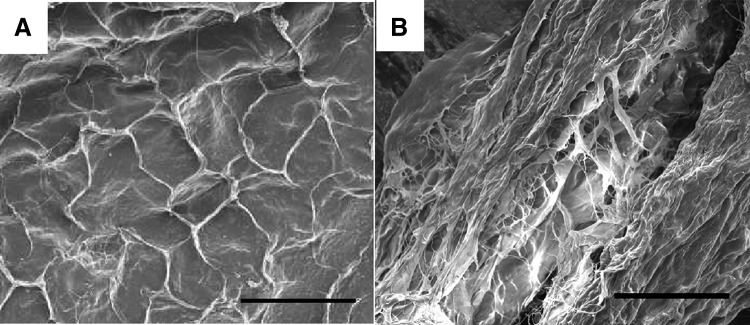
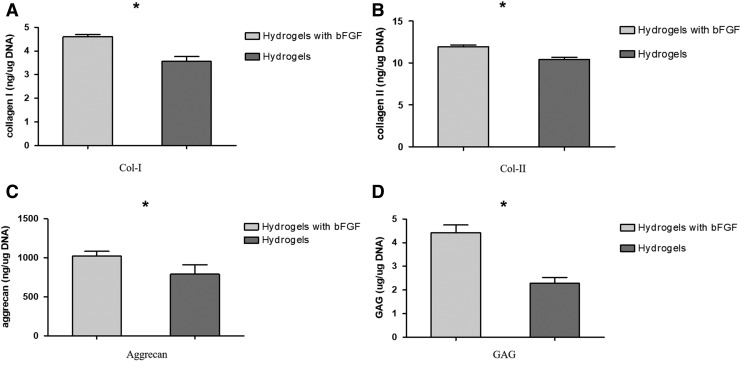
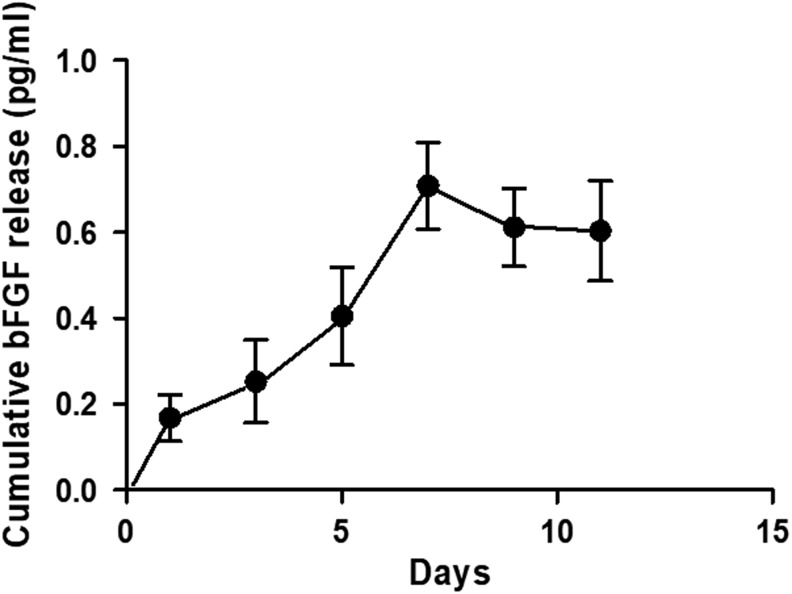
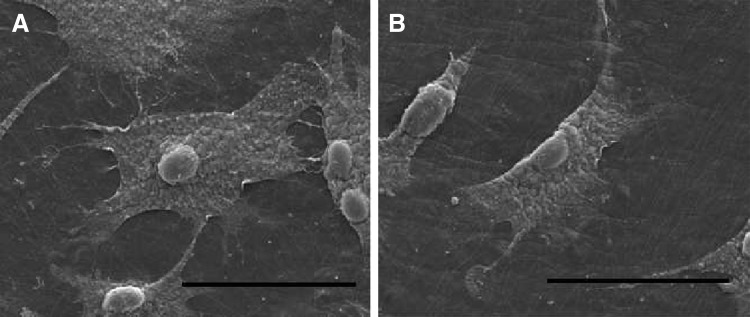
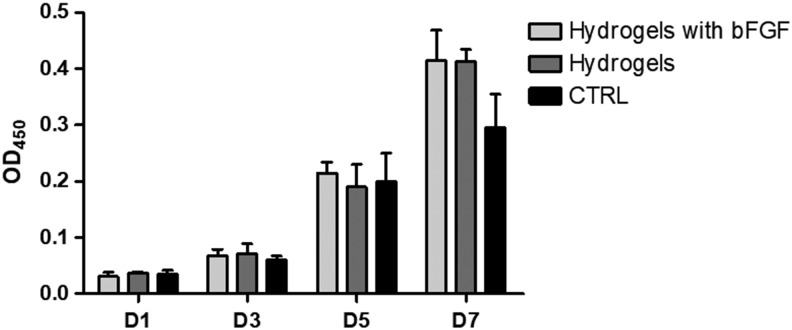
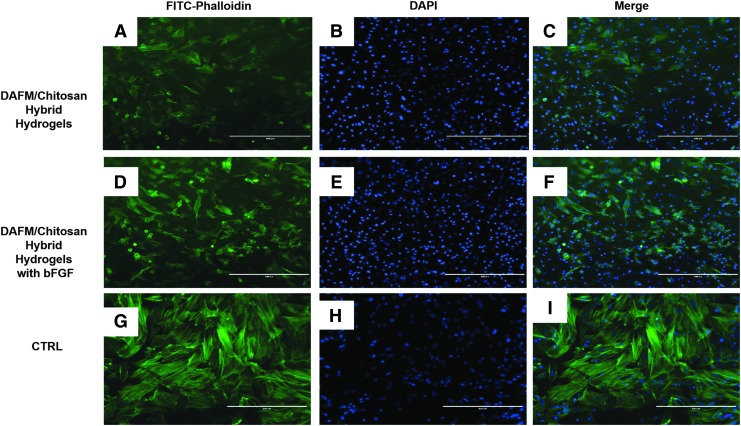
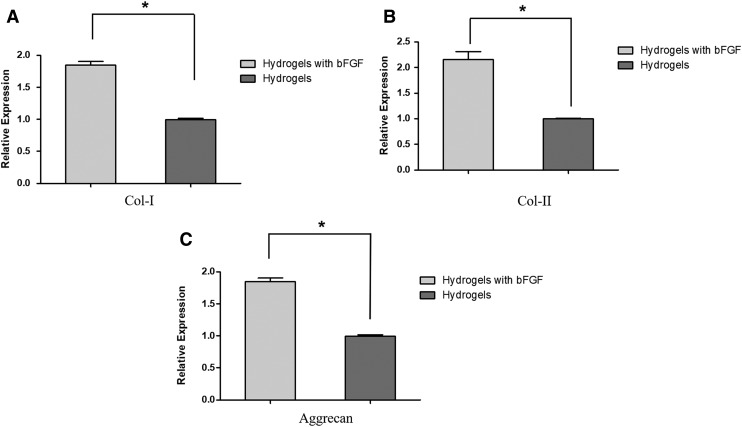
Low back pain caused by degenerative disc disease affects many people worldwide and brings huge economical burden. Thus, attentions have focused on annulus fibrosus (AF) tissue engineering for treatment of intervertebral disc degeneration. To engineer a functional replacement for the AF, it is important to fabricate scaffolds that mimic the structural and mechanical properties of native tissue. AF-derived stem cells are promising seed cells for AF tissue engineering due to their tissue specificity. In the present study, decellularized AF matrix (DAFM)/chitosan hybrid hydrogels were fabricated using genipin as a crosslinker. AF stem cells were cultured on hydrogel scaffolds with or without basic fibroblast growth factor (bFGF), and cell proliferation, morphology, gene expression, and AF tissue synthesis were examined. Overall, more , , and were secreted by AF stem cells grown on hydrogels with bFGF compared to those without. These results support the application of DAFM/chitosan hybrid hydrogels as an appropriate candidate for AF tissue engineering. Furthermore, incorporation of bFGF into hydrogels promoted AF-related tissue synthesis. Impact Statement The investigation of annulus fibrosus (AF)-related tissue secretion and gene expression in extracellular matrix (ECM) of AF-derived stem cells (AFSCs) provided theoretical and practical basis for the choice of scaffold materials and growth factors for AF tissue engineering. The innovations of the present work are obvious. First, AFSCs were used because they are more easily differentiated into AF cells, thereby producing more AF-related ECM. Second, the decellularized AF matrix (DAFM) was derived from native AF tissue, but had reduced immunogenicity after decellularization. Furthermore, the DAFM structure mimicked the fibrous network of actual AF tissue, which was advantageous to AFSC adhesion and growth. Third, basic fibroblast growth factor was successfully incorporated into the DAFM, showed gradual sustained release, and effectively promoted production of AF tissue ECM factors collagen-I, collagen-II, aggrecan, and glycosaminoglycan.
由退行性椎间盘疾病引起的下腰痛影响了全世界许多人,并带来了巨大的经济负担。因此,人们关注纤维环(AF)组织工程治疗椎间盘退变。为了构建具有功能的 AF 替代品,制造模仿天然组织结构和机械性能的支架非常重要。由于其组织特异性,AF 来源的干细胞是 AF 组织工程有前途的种子细胞。在本研究中,使用京尼平作为交联剂制备脱细胞纤维环基质(DAFM)/壳聚糖杂化水凝胶。将 AF 干细胞在具有或不具有碱性成纤维细胞生长因子(bFGF)的水凝胶支架上培养,并检测细胞增殖、形态、基因表达和 AF 组织合成。总的来说,与不含 bFGF 的水凝胶相比,在含 bFGF 的水凝胶上培养的 AF 干细胞分泌了更多的 、 和 。这些结果支持将 DAFM/壳聚糖杂化水凝胶作为 AF 组织工程的合适候选物的应用。此外,将 bFGF 掺入水凝胶中促进了 AF 相关组织的合成。
声明:本研究通过检测 AF 来源的干细胞(AFSCs)在 AF 细胞外基质(ECM)中分泌与基因表达情况,为 AF 组织工程中支架材料和生长因子的选择提供了理论和实践依据。本研究的创新点较为明显。首先,选择了更易分化为 AF 细胞的 AFSCs,使其产生更多的 AF 相关 ECM。其次,脱细胞纤维环基质(DAFM)来源于天然的 AF 组织,但脱细胞化后免疫原性降低。此外,DAFM 的结构模拟了实际 AF 组织的纤维网络,有利于 AFSC 的黏附和生长。再次,成功地将碱性成纤维细胞生长因子(bFGF)掺入 DAFM 中,使其实现了缓慢持续释放,并有效地促进了 AF 组织 ECM 因子 I 型胶原、II 型胶原、聚集蛋白聚糖和糖胺聚糖的产生。