Tan Jia-Jie, Wang Lu, Mo Ting-Ting, Wang Jie, Wang Mei-Gui, Li Xiang-Ping
1Department of Otolaryngology, Head and Neck Surgery, Nanfang Hospital, Southern Medical University, 1838 Guangzhou Avenue North, Guangzhou, 510515 China.
Department of Otolaryngology, Gaoyao District Traditional Chinese Medicine Hospital of Zhaoqing, No.3 of FuQian Avenue, Zhaoqing, 526100 Guangdong China.
Cancer Cell Int. 2019 Mar 20;19:64. doi: 10.1186/s12935-019-0772-7. eCollection 2019.
Laryngopharyngeal reflux (LPR), with its increasing morbidity, is attracting considerable attention. In recent years, the causal role between LPR and laryngeal carcinoma has been debated. The main harmful component of LPR is pepsin, which has been shown to induce mucosal inflammation by damaging the mucous membrane. Thus, pepsin is linked to an increased risk of laryngeal carcinoma, although the potential mechanism remains largely unknown.
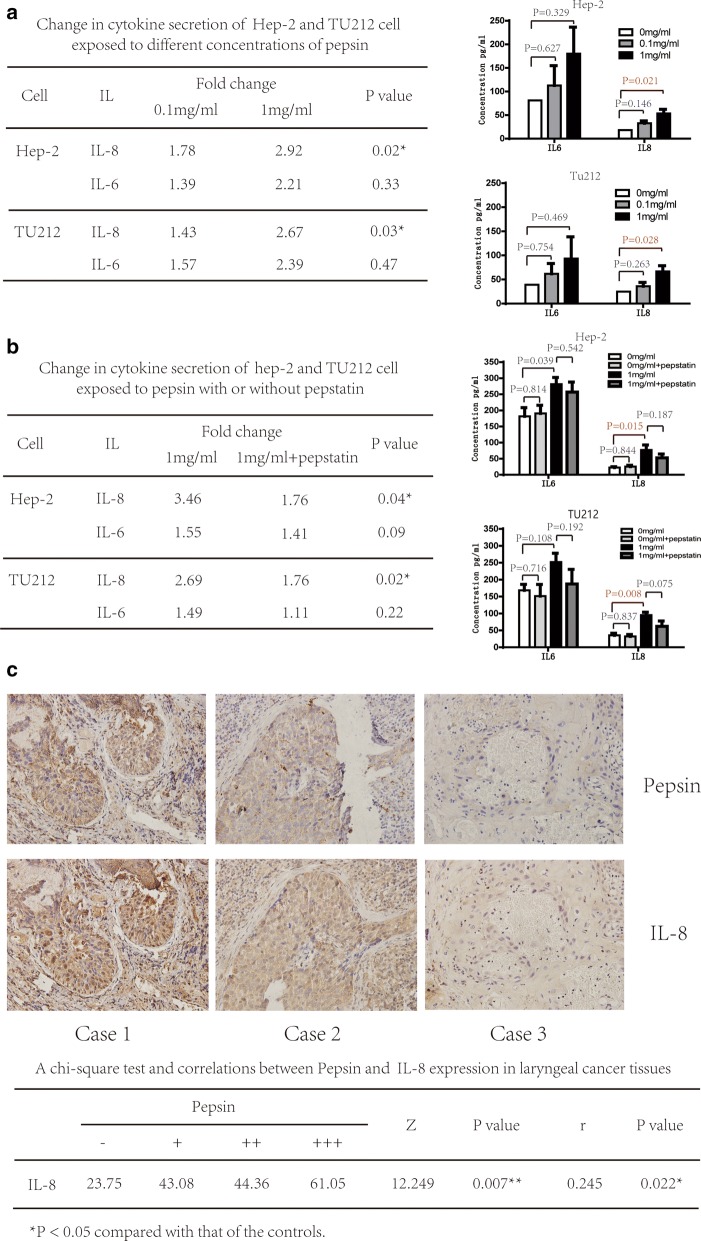
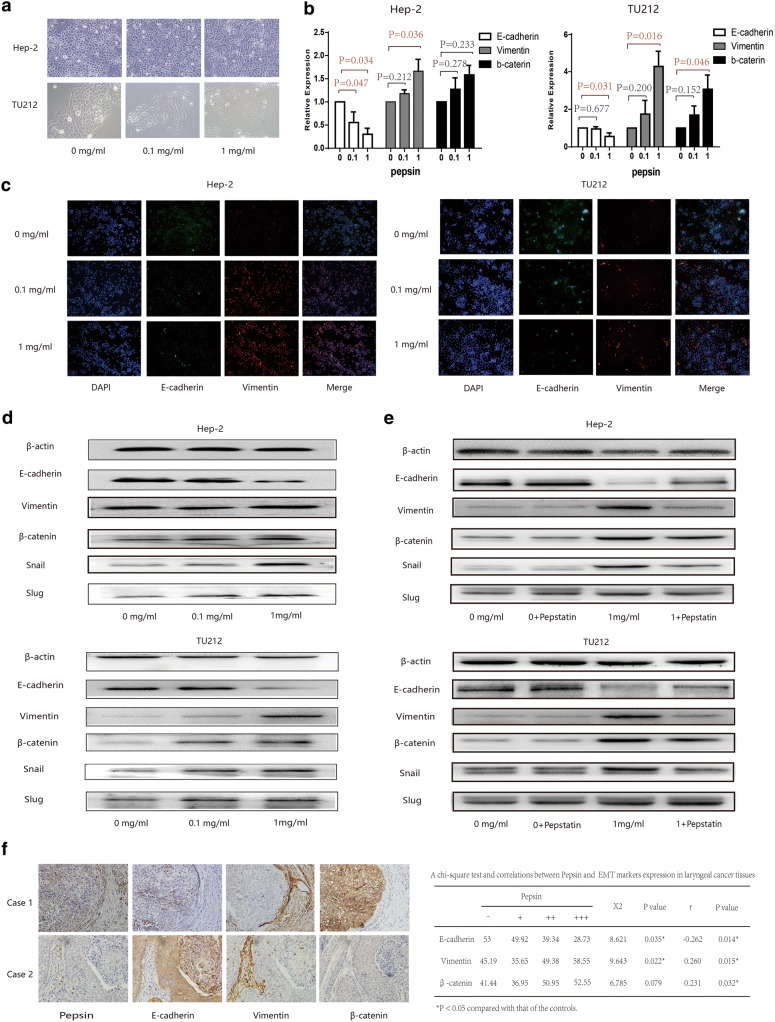
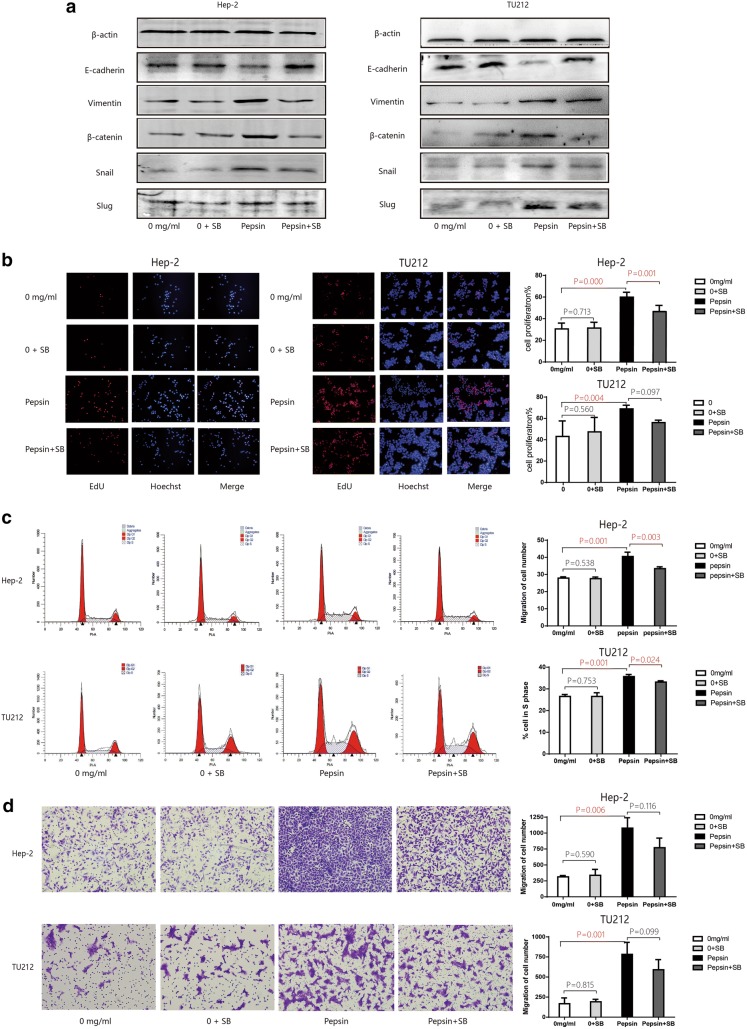
The human laryngeal carcinoma cell lines Hep-2 and Tu212 were exposed to different pepsin concentrations and the morphology, proliferation, migration, secretion of inflammatory cytokines, and epithelial-mesenchymal transition (EMT) of the cells were assessed. To evaluate whether interleukin-8 (IL-8) had a causal relationship with pepsin and EMT, an IL-8 inhibitor was used to suppress IL-8 secretion during pepsin exposure and the expression of EMT markers, cell proliferation, and migration were analyzed.
Pepsin promoted proliferation, colony formation, migration, and IL-8 secretion of Hep-2 and Tu212 cells in vitro. Furthermore, increased pepsin concentrations changed the morphology of Hep-2 and Tu212 cells; levels of the epithelial marker E-cadherin were reduced and those of mesenchymal markers vimentin and β-catenin and the transcription factors snail and slug were elevated. A similar effect was observed in laryngeal carcinoma tissues using immunohistochemistry. IL-8 level was reduced and EMT was restored when pepsin was inhibited by pepstatin. EMT was weakened after exposure to the IL-8 inhibitor, with significant reduction in pepsin-induced cell proliferation and migration.
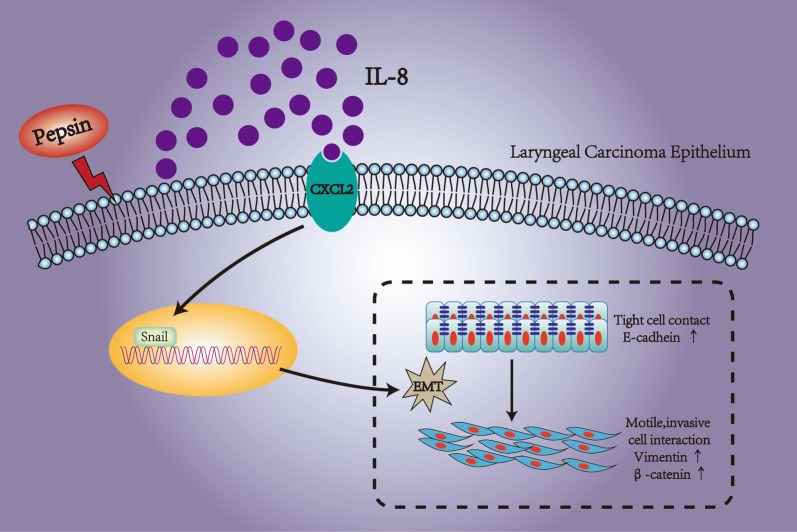
Pepsin may induce EMT in laryngeal carcinoma through the IL-8 signaling pathway, which indicates that it has potential role in enhancing cell proliferation and metastasis of laryngeal carcinoma.
喉咽反流(LPR)发病率不断上升,正引起广泛关注。近年来,LPR与喉癌之间的因果关系一直存在争议。LPR的主要有害成分是胃蛋白酶,已证明其可通过损伤黏膜诱导黏膜炎症。因此,胃蛋白酶与喉癌风险增加有关,尽管潜在机制仍 largely 未知。
将人喉癌细胞系Hep-2和Tu212暴露于不同浓度的胃蛋白酶,评估细胞的形态、增殖、迁移、炎性细胞因子分泌及上皮-间质转化(EMT)。为评估白细胞介素-8(IL-8)与胃蛋白酶和EMT是否存在因果关系,在胃蛋白酶暴露期间使用IL-8抑制剂抑制IL-8分泌,并分析EMT标志物的表达、细胞增殖和迁移情况。
胃蛋白酶在体外促进Hep-2和Tu212细胞的增殖、集落形成、迁移及IL-8分泌。此外,胃蛋白酶浓度增加改变了Hep-2和Tu212细胞的形态;上皮标志物E-钙黏蛋白水平降低,间质标志物波形蛋白、β-连环蛋白以及转录因子蜗牛蛋白和蛞蝓蛋白水平升高。在喉癌组织中使用免疫组化观察到类似效果。当胃蛋白酶被胃蛋白酶抑制剂抑制时,IL-8水平降低,EMT恢复。暴露于IL-8抑制剂后EMT减弱,胃蛋白酶诱导的细胞增殖和迁移显著减少。
胃蛋白酶可能通过IL-8信号通路诱导喉癌中的EMT,这表明其在增强喉癌细胞增殖和转移方面具有潜在作用。