Liu Shuangfeng, Zhou Fating, Shen Yang, Zhang Yingying, Yin Hongmei, Zeng Ye, Liu Jingxia, Yan Zhiping, Liu Xiaoheng
Institute of Biomedical Engineering, School of Preclinical and Forensic Medicine, Sichuan University, Chengdu 610041, China.
School of Medical Laboratory Science, Chengdu Medical College, Chengdu 610500, China.
Oncotarget. 2016 May 31;7(22):32876-92. doi: 10.18632/oncotarget.8765.
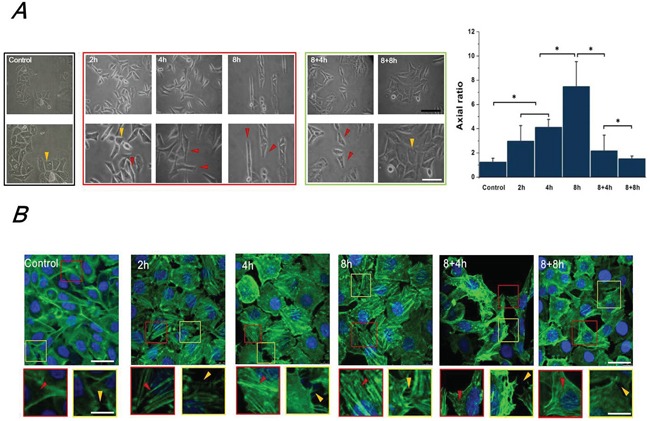
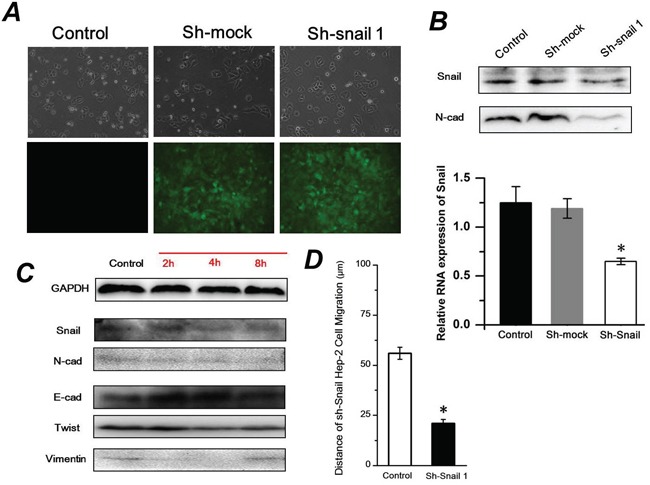
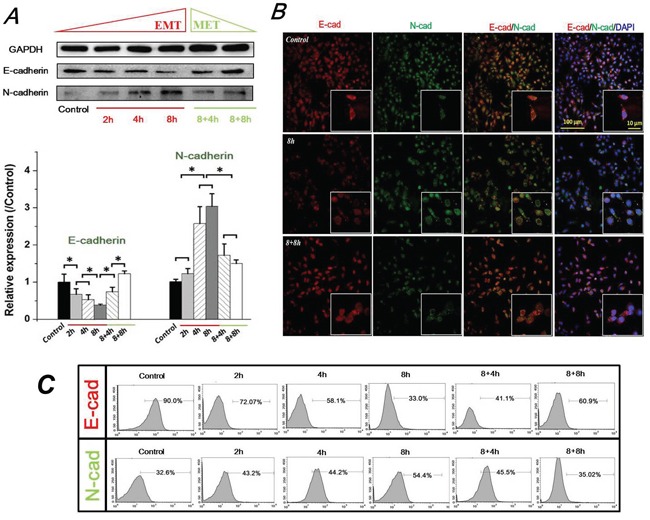
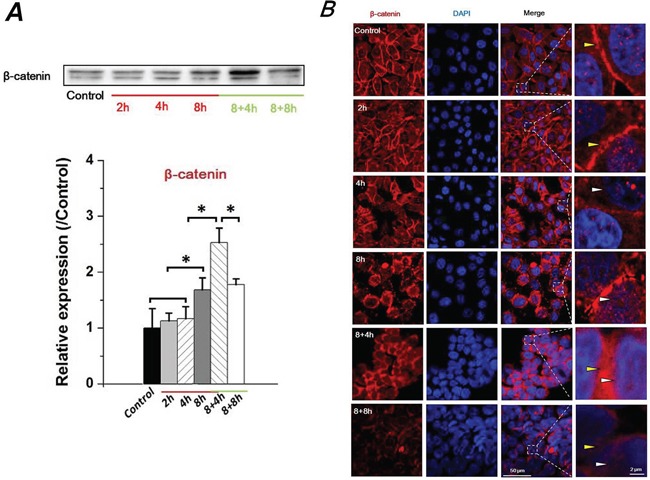
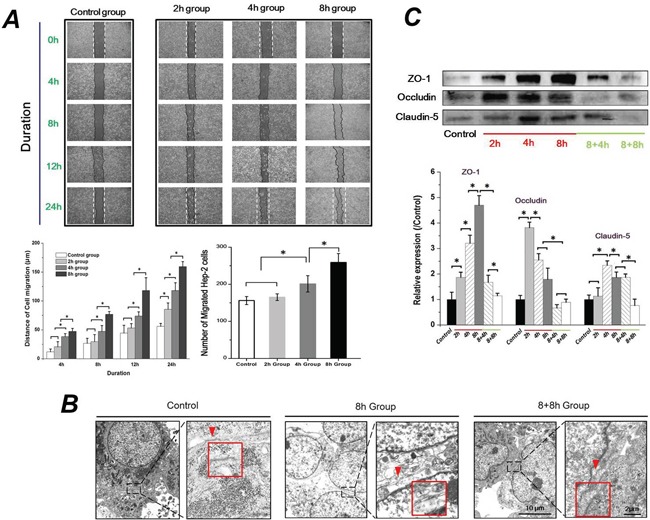
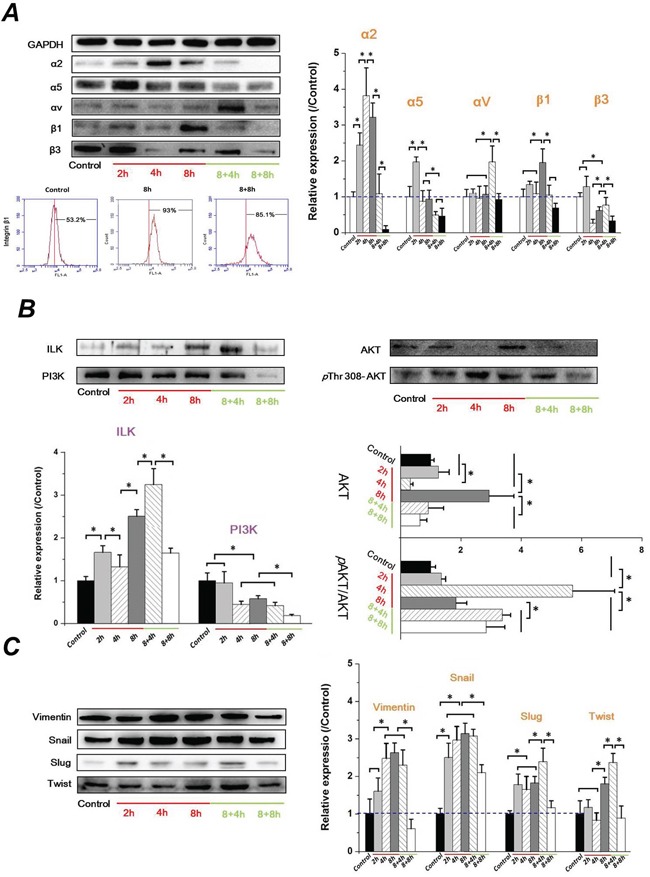
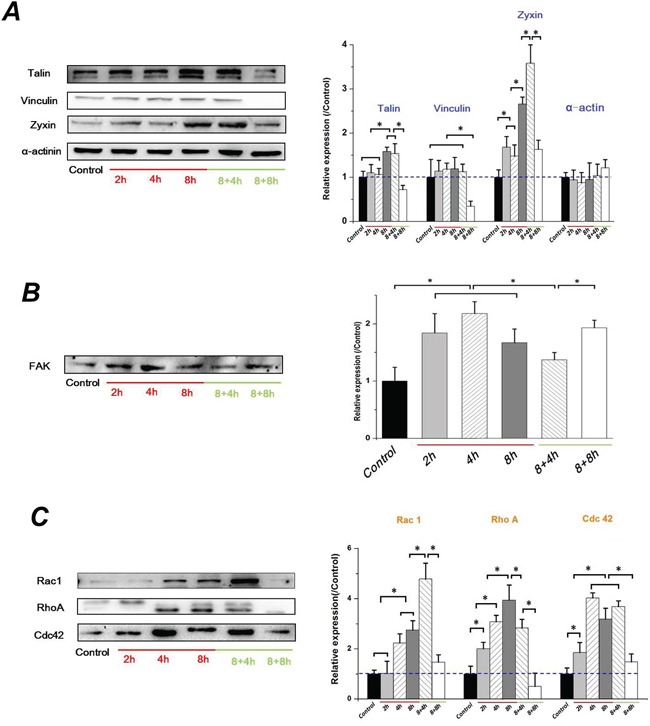
Laryngeal squamous cell carcinoma (LSCC) is one of the most commonly diagnosed malignancies with high occurrence of tumor metastasis, which usually exposes to fluid shear stress (FSS) in lymphatic channel and blood vessel. Epithelial-mesenchymal transition (EMT) is an important mechanism that induces metastasis and invasion of tumors. We hypothesized that FSS induced a progression of EMT in laryngeal squamous carcinoma. Accordingly, the Hep-2 cells were exposed to 1.4 dyn/cm2 FSS for different durations. Our results showed that most of cells changed their morphology from polygon to elongated spindle with well-organized F-actin and abundant lamellipodia/filopodia in protrusions. After removing the FSS, cells gradually recovered their flat polygon morphology. FSS induced Hep-2 cells to enhance their migration capacity in a time-dependent manner. In addition, FSS down-regulated E-cadherin, and simultaneously up-regulated N-cadherin, translocated β-catenin into the nucleus. These results confirmed that FSS induced the EMT in Hep-2 cells, and revealed a reversible mesenchymal-epithelial transition (MET) process when FSS was removed. We further examined the time-expressions of signaling cascades, and demonstrated that FSS induces the EMT and enhances cell migration depending on integrin-ILK/PI3K-AKT-Snail signaling events. The current study suggests that FSS, an important biophysical factor in tumor microenvironment, is a potential determinant of cell behavior and function regulation.
喉鳞状细胞癌(LSCC)是最常被诊断出的恶性肿瘤之一,肿瘤转移发生率高,其在淋巴管和血管中通常会受到流体剪切力(FSS)作用。上皮-间质转化(EMT)是诱导肿瘤转移和侵袭的重要机制。我们假设FSS可诱导喉鳞状细胞癌中EMT的进展。因此,将Hep-2细胞暴露于1.4达因/平方厘米的FSS下不同时长。我们的结果显示,大多数细胞的形态从多边形变为细长的纺锤形,F-肌动蛋白排列有序,突起中富含片状伪足/丝状伪足。去除FSS后,细胞逐渐恢复其扁平多边形形态。FSS以时间依赖性方式诱导Hep-2细胞增强其迁移能力。此外,FSS下调E-钙黏蛋白,同时上调N-钙黏蛋白,使β-连环蛋白转位至细胞核。这些结果证实FSS可诱导Hep-2细胞发生EMT,并揭示了去除FSS时可逆的间质-上皮转化(MET)过程。我们进一步检测了信号级联的时间表达,并证明FSS通过整合素-ILK/PI3K-AKT-Snail信号事件诱导EMT并增强细胞迁移。当前研究表明,FSS作为肿瘤微环境中的重要生物物理因素,是细胞行为和功能调节的潜在决定因素。