Department of Hepatobiliary Surgery, Beijing Chao-yang Hospital Affiliated to Capital Medical University, Beijing 100043, China.
BMB Rep. 2019 Apr;52(4):277-282. doi: 10.5483/BMBRep.2019.52.4.263.
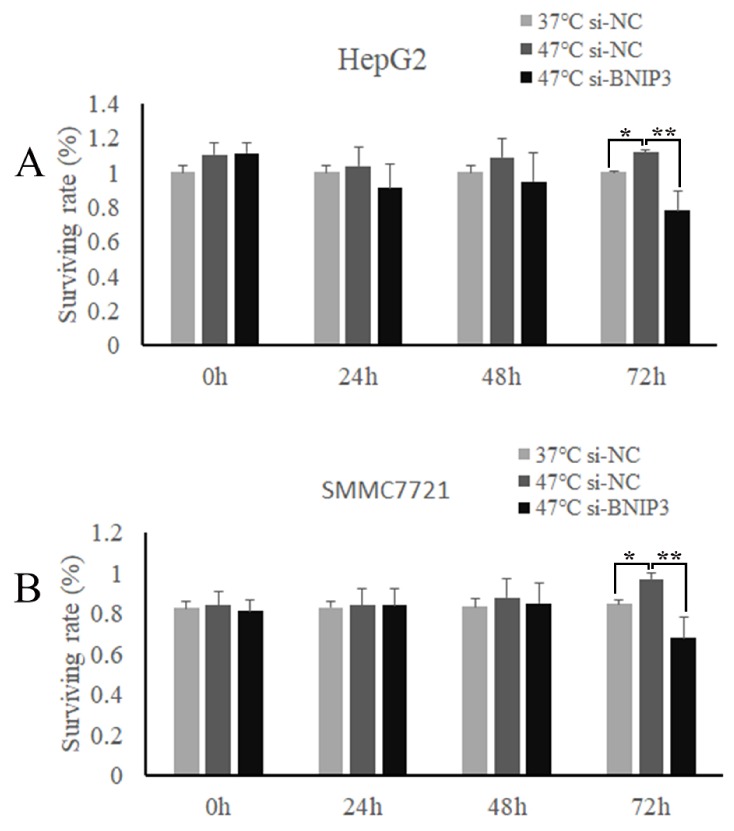
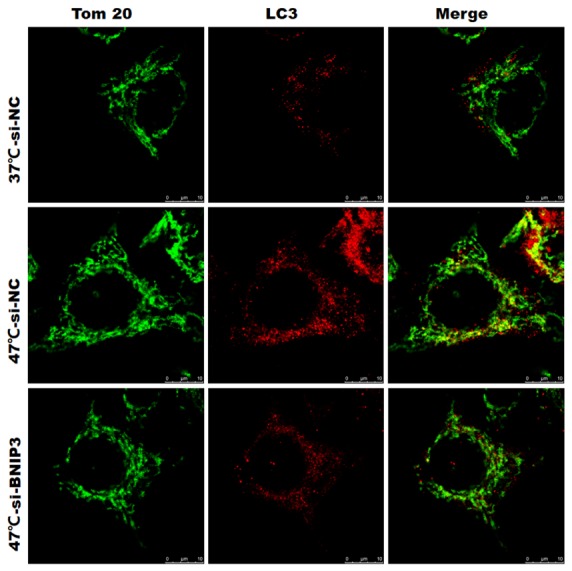
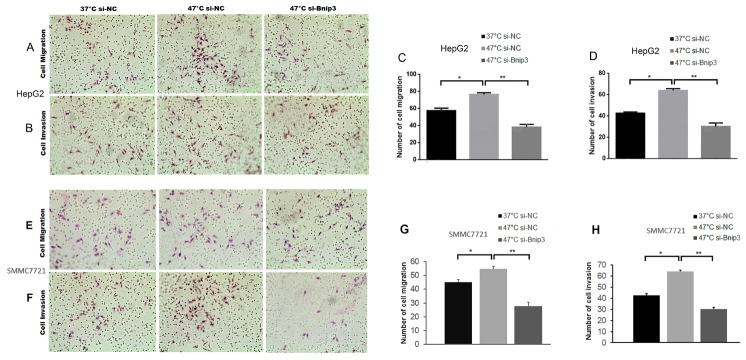
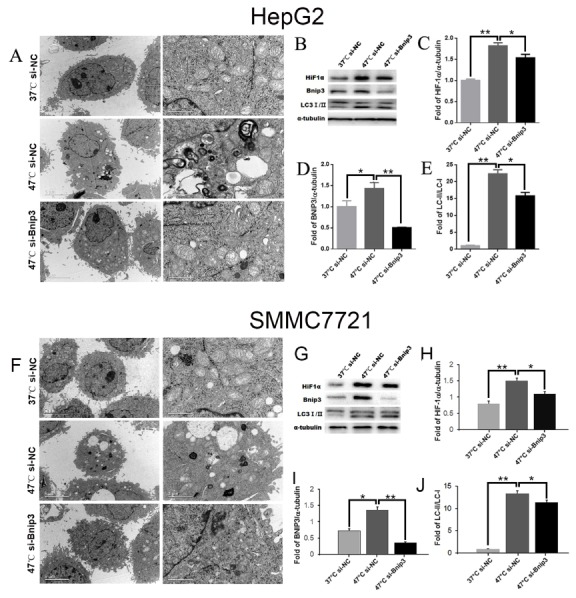
Currently speaking, it is noted that radiofrequency ablation (RFA) has been the most widely used treatment for hepatocellular carcinoma (HCC) occurring in patients. However, accumulating evidence has demonstrated that the incidence of insufficient RFA (IRFA) may result in the identified rapid progression of residual HCC in the patient, which can greatly hinder the effectiveness and patient reported benefits of utilizing this technique. Although many efforts have been proposed, the underlying mechanisms triggering the rapid progression of residual HCC after IRFA have not yet been fully clarified through current research literature reviews. It was shown in this study that cell proliferation, migration and invasion of residual HepG2 and SMMC7721 cells were significantly increased after the IRFA was simulated in vitro. In other words, it is noted that IRFA could do this by enhancing the image of autophagy of the residual HCC cell via the HIF-1α/BNIP3 pathway. Consequently, the down-regulation of BNIP3 may result in the inhibition of the residual HCC cell progression and autophagy after IRFA. Our present study results suggest that IRFA could promote residual HCC cell progression in vitro by enhancing autophagy via the HIF-1α/BNIP3 pathway. For this reason, it is noted that the targeting of the BNIP3 may be useful in preventing the rapid growth and metastasis of residual HCC after IRFA. [BMB Reports 2019; 52(4): 277-282].
目前研究表明,射频消融术(RFA)已成为治疗肝癌(HCC)患者最广泛应用的方法。然而,越来越多的证据表明,射频消融不彻底(IRFA)可能导致患者残留 HCC 的快速进展,这极大地阻碍了该技术的有效性和患者受益。尽管已经提出了许多努力,但通过当前的研究文献综述,尚未完全阐明触发 IRFA 后残留 HCC 快速进展的潜在机制。本研究表明,体外模拟 IRFA 后,残留 HepG2 和 SMMC7721 细胞的增殖、迁移和侵袭明显增加。换句话说,IRFA 可以通过 HIF-1α/BNIP3 通路增强残留 HCC 细胞的自噬来实现这一点。因此,下调 BNIP3 可能会抑制 IRFA 后残留 HCC 细胞的进展和自噬。本研究结果表明,IRFA 可以通过 HIF-1α/BNIP3 通路增强自噬来促进残留 HCC 细胞在体外的进展。因此,靶向 BNIP3 可能有助于预防 IRFA 后残留 HCC 的快速生长和转移。[BMB 报告 2019;52(4): 277-282]。